A garage door that starts down, reaches the floor, then suddenly heads back up can leave your home exposed and your schedule stalled. Understanding why garage doors reverse helps you separate a simple sensor issue from a mechanical problem that needs professional attention. The door is designed to reverse when it detects resistance or believes something is in its path. That safety feature matters, but repeated reversing is not something to ignore.
For Massachusetts homeowners, weather, road grit, moisture, and normal wear can all affect how a garage door closes. Start with the safe checks below. If the door still will not stay shut, avoid forcing it or disabling its safety systems.
Why Garage Doors Reverse When Closing
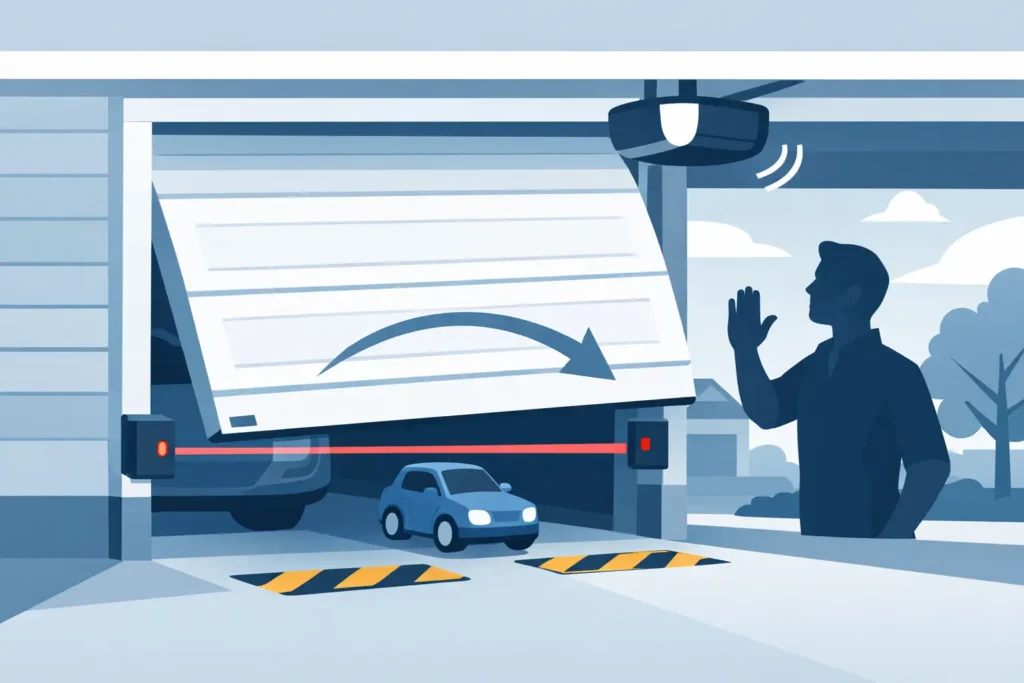
Modern openers use two primary safeguards: photo-eye sensors near the floor and force settings inside the opener. Photo eyes use an invisible beam across the doorway. If that beam is blocked or misaligned, the opener assumes a person, pet, or object is under the door and reverses it.
The opener also monitors resistance as the door moves. When it encounters more force than expected, it reverses to reduce the risk of injury or property damage. The challenge is that the opener cannot always tell the difference between a bicycle in the opening and a door that is binding in a worn track. Both can trigger the same response.
The point at which the door reverses offers a useful clue. A door that reverses immediately after starting down often has a sensor problem. One that travels most of the way down before reversing may be encountering track resistance, a limit-setting problem, or an issue at the floor.
Start With the Safety Sensors
The photo-eye sensors are mounted on each side of the garage door opening, usually four to six inches above the floor. Look for a small lens and an indicator light on each unit. One light may be solid while the other flickers or goes out when alignment is lost.
First, clear anything sitting between the sensors. Boxes, trash cans, tools, leaves, and a child’s toy can all interrupt the beam. Then wipe each lens gently with a soft, dry cloth. Dirt, cobwebs, moisture, or road salt residue can interfere with the signal, especially after a New England winter.
Next, inspect the sensor brackets. A bump from a car tire, snow shovel, or stored equipment can move one sensor just enough to break alignment. Both sensors should face one another at the same height, with their indicator lights steady. Do not bend the brackets aggressively or cut, tape, or bypass sensor wiring. A safety sensor that has been bypassed creates a serious hazard.
If the lights appear normal but the door still reverses, the wiring may be loose, damaged, or affected by corrosion. That calls for a qualified inspection rather than guesswork.
Check for Obstructions and Track Resistance
A garage door needs a clear, smooth path from fully open to fully closed. Even a small obstruction can create enough resistance for the opener to reverse. Check the threshold and the inside edge of the door for packed snow, ice, gravel, hardened leaves, or a raised object on the floor.
Then look along both vertical tracks. You may notice loose mounting brackets, dents, accumulated debris, or rollers that appear to drag. Tracks should be securely fastened and generally parallel, but they should not be adjusted casually. Garage doors are heavy, spring-loaded systems, and changing track position without the right tools can make a door bind worse or come off track.
Listen during operation as well. Scraping, grinding, popping, or a sudden increase in vibration can point to a roller, cable, hinge, or track issue. A noisy door is not always an emergency, but noise paired with reversing deserves prompt service before a smaller repair becomes a stuck or off-track door.
The Close Limit May Need Adjustment
A close-limit setting tells the opener when the door has reached the floor. If that setting is incorrect, the opener may continue pushing after the door is already closed. It senses the extra resistance, then reverses the door as a protective response.
This issue is especially likely when the door touches the floor, reverses within a second or two, and has no obvious sensor obstruction. Some openers use adjustment screws or dials, while newer models may use buttons and a programming sequence. The correct method depends on the opener brand and model.
A minor adjustment can solve the problem, but over-adjusting the close limit can create a different one. The door may stop short of the floor, leaving a gap for weather and pests, or it may press too hard against the floor and strain the opener. If you do not have the manufacturer instructions or the adjustment does not hold, schedule service. A technician can confirm whether the setting is actually the cause instead of masking a mechanical issue.
Force Settings Can Cause Reversing, Too
The opener’s down-force setting controls how much resistance it tolerates while closing. When the setting is too sensitive, a normally operating door may reverse because of minor friction. When it is set too high, the door may continue closing against an obstruction longer than it should.
That is why increasing the force is rarely the best first fix. It may get the door to close today while hiding worn rollers, a weak spring, damaged tracks, or a failing opener. It can also reduce the safety margin that protects people and property.
A properly balanced door should move smoothly with little effort when disconnected from the opener. However, testing balance involves releasing the emergency cord, which should only be done when the door is fully closed and the area is clear. If the door is heavy, crooked, moves unevenly, or will not stay in position during a manual test, stop and call a garage door professional. Springs and cables are under significant tension and are not safe DIY repair items.
Weather and Floor Conditions Matter
Cold temperatures can make lubricants thicken and expose worn parts that seemed fine in mild weather. Ice buildup at the bottom seal can also make the opener think the door has hit an obstruction. A wet or uneven garage floor may affect how the bottom seal contacts the ground, particularly on an older door.
Look for ice or debris along the threshold and clear it carefully. If the door reverses only during freezing weather, do not compensate by dramatically changing force settings. The issue may be temporary, but repeated seasonal trouble can indicate that the door needs lubrication, adjustment, or a new bottom seal.
When a Reversing Door Needs Professional Service
Some causes are easy to identify, but certain warning signs should move the issue from a homeowner check to a service call. Arrange prompt repair if the door reverses after sensors are cleaned and aligned, if it closes unevenly, or if you see frayed cables, bent tracks, loose hardware, or damaged rollers.
You should also call for help if the opener hums without moving the door, the door feels unusually heavy, or it reverses unpredictably. These symptoms can involve springs, cables, opener components, or door alignment. Continuing to run the system can put added strain on the motor and increase the chance of a larger failure.
Do not attempt to repair a broken spring, reset a cable, or straighten a track while the door is under tension. Those repairs require proper tools, training, and a careful assessment of the entire system. An honest technician should explain what is causing the reversal, outline repair options, and let you know whether replacement is truly necessary.
Prevent Repeat Problems With Basic Maintenance
A little attention can reduce surprise reversing and extend the life of the door system. Keep the sensor area clear, wipe the lenses periodically, and watch for changes in noise or movement. Have moving parts inspected and lubricated with products made for garage doors, not heavy grease that attracts dust and grit.
It also helps to test the opener’s reversal feature periodically. Place a piece of wood flat on the floor where the door closes, then operate the door. It should reverse after contacting the object. For the photo eyes, start the door closing and pass an object through the sensor beam without standing under the door. It should stop or reverse. If either safety test fails, stop using the opener until it has been serviced.
A garage door should protect your home without becoming a daily problem. If cleaning the sensors and clearing the opening does not solve the issue, Patriot Garage Door can provide a straightforward diagnosis and dependable repair so your door closes safely and stays closed.
Need Help With Your Garage Door?
From broken springs and opener issues to repairs and new installations, Patriot Garage Door provides dependable service when you need it.