A garage door that groans through an early Massachusetts morning can make the whole house feel like it needs repair. Often, the fix is straightforward: knowing how to lubricate a garage door can reduce ordinary friction, quiet moving parts, and help the system operate more smoothly. But lubricant is maintenance, not a cure-all. Used in the wrong place, it can collect dirt or hide a problem that needs professional attention.
What Lubricating a Garage Door Actually Does
Your garage door is a heavy moving system, not just a panel that goes up and down. Rollers travel along tracks, hinges pivot, springs coil and uncoil, and bearings support the shaft above the door. Those parts need the right amount of lubrication to limit metal-on-metal wear and reduce the noise that comes with dry joints.
A properly lubricated door may sound noticeably quieter and move with less chatter. It will not, however, fix a bent track, frayed cable, failing opener gear, worn-out rollers, or a weak spring. If the door is jerking, hanging unevenly, stopping partway, or making a loud bang, do not assume a spray lubricant will solve it. Those symptoms call for an inspection.
For most homes, lubricating the moving parts twice a year is a sensible routine. Doors exposed to road salt, moisture, dust, or frequent daily use may need attention more often. A quick check in spring and fall is an easy way to keep small maintenance tasks from becoming inconvenient repairs.
What You Need Before You Start
Use a garage-door-specific lubricant or a white lithium grease designed for moving metal parts. Silicone-based garage door lubricant also works well for many components, especially nylon rollers with sealed bearings. These products leave a protective film without becoming excessively sticky.
Avoid using standard penetrating oil as your long-term lubricant. It can loosen grime and displace moisture, which is useful in limited situations, but it does not provide durable lubrication for the door’s working components. Also avoid heavy automotive grease. It tends to trap dirt, stiffen in cold weather, and create more mess than benefit.
Before starting, gather a clean rag, your lubricant, a step stool if needed, and safety glasses. Keep children and pets away from the area while you work. If you are comfortable doing so, unplug the opener or switch off power to it. That prevents someone from activating the door while your hands are near moving parts.
How to Lubricate a Garage Door Step by Step
Start with the door fully closed. This keeps the system stable and gives you safer access to most hinges, rollers, and spring components. Do not pull the emergency release or attempt to manually operate the door while inspecting springs and cables.
Clean Off Loose Dirt First
Wipe visible dust, old grease buildup, and debris from the hinges, roller stems, and bearing areas. You do not need to make every part spotless. The goal is simply to avoid spraying lubricant onto a layer of grit that will act like sandpaper.
Take a moment to look for obvious damage as you clean. Cracked hinges, rollers that wobble, loose bolts, rusted hardware, and black dust around roller bearings can point to wear that lubrication alone cannot address.
Lubricate the Hinges
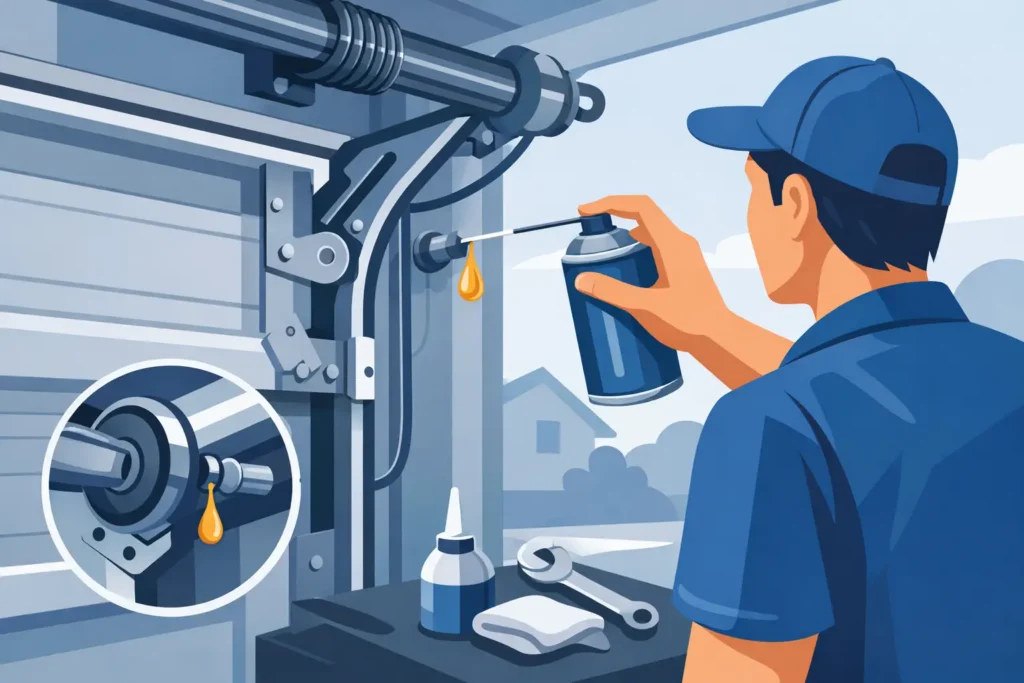
Apply a short, controlled spray to the pivot point of each hinge. Focus on the barrel or center joint where the hinge folds as the door travels. Wipe away excess immediately so it does not drip onto the door panels or floor.
Do not soak the hinges. A thin coat is enough. Excess lubricant attracts dust and may eventually leave marks on the door.
Lubricate the Rollers Carefully
For metal rollers, apply lubricant to the small bearings inside the wheel and to the roller stem where it enters the hinge. Spin the wheel by hand only if the door is closed and the roller moves freely without forcing it.
For nylon rollers, check whether they have exposed bearings. If they do, use a small amount of silicone-based garage door lubricant on the bearings and stem. Do not spray the nylon wheel surface itself. If the rollers are cracked, noisy even after lubrication, or visibly loose in the track, replacement may be the better repair.
Lubricate the Springs and Bearing Plates
Torsion springs sit above the garage door opening and carry a tremendous amount of stored energy. You can lightly spray the outside of an intact torsion spring with garage door lubricant while the door is closed, then wipe off any drips. This can help limit coil-on-coil friction and surface corrosion.
Do not touch, adjust, loosen, or attempt to replace torsion springs. The same rule applies to cables, bottom brackets, and hardware connected to the springs. These are not homeowner repair items. If you see a gap in a torsion spring, a dangling cable, or a door that suddenly feels unusually heavy, stop using the door and schedule service.
Apply a small amount of lubricant to the end bearing plates near each side of the torsion shaft. If your system has a center bearing, lubricate that as well. These bearings help the shaft turn as the door opens and closes.
Lubricate the Opener Rail and Chain or Screw Drive
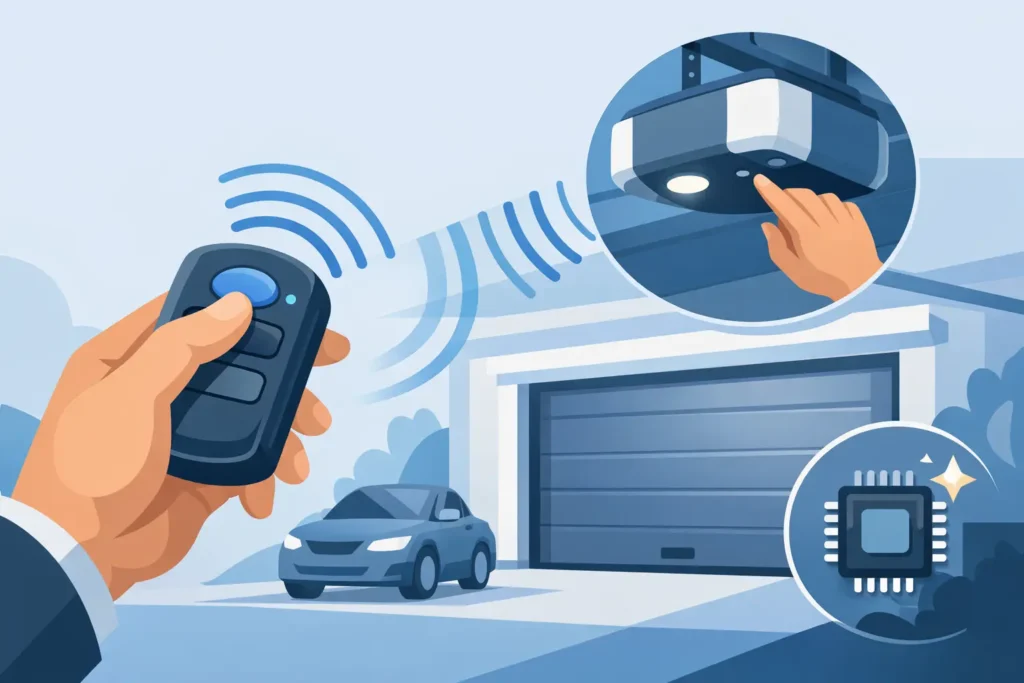
The opener itself needs a different approach depending on its design. For a chain-drive opener, use a light garage-door lubricant on the chain if the manufacturer’s instructions allow it. For a screw-drive opener, apply the lubricant recommended for that specific model. Belt-drive openers generally do not need belt lubrication.
The rail may need a light coating where the trolley travels, but do not overspray. Consult the opener manual when possible, since manufacturer guidance takes priority over a general maintenance routine.
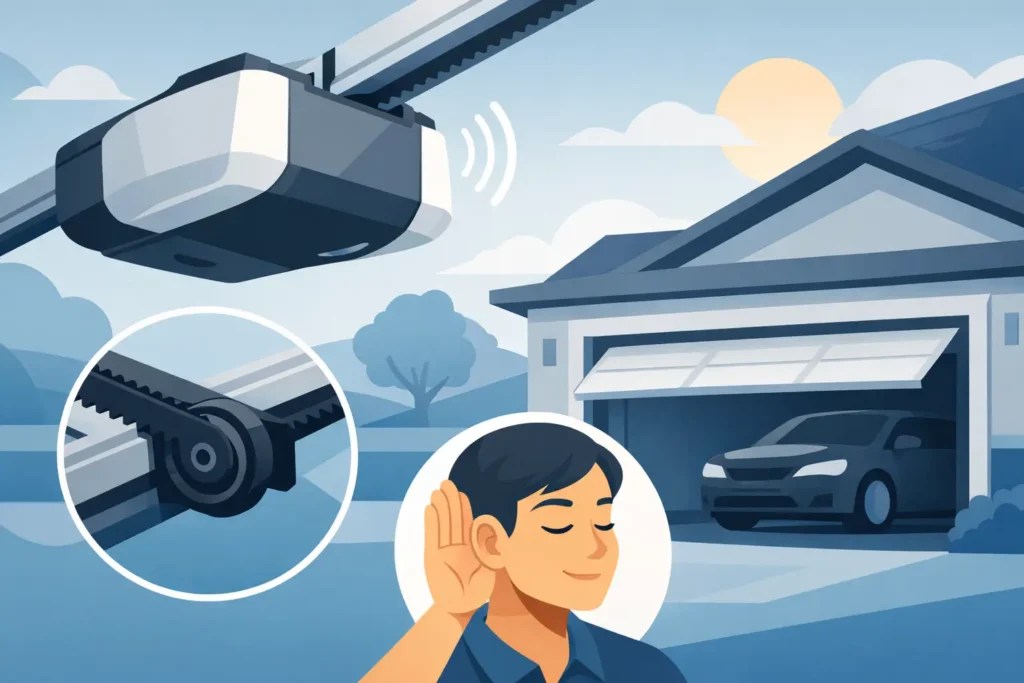
After lubricating, reconnect power if you disconnected it. Run the door through two or three full open-and-close cycles. Listen for changes and wipe off any lubricant that has worked its way out of the joints.
Parts You Should Not Lubricate
The tracks are the most common mistake. Garage door tracks should be clean, dry, and properly aligned. Spraying lubricant inside them creates a sticky surface that collects dust, leaves, and road grit. That buildup can interfere with roller movement and make the door noisier over time.
Instead, wipe the tracks with a clean rag. If there is heavy grime, use a mild household cleaner, dry the tracks thoroughly, and leave them unlubricated.
You should also avoid lubricating the weather seal along the bottom of the door, the photo-eye sensors, the opener’s safety sensor lenses, and electrical components. These parts have different maintenance needs and do not benefit from grease or spray lubricant.
When Noise Means More Than Dry Parts
A little squeaking that improves after lubrication is normal maintenance territory. Grinding, scraping, popping, or sharp banging is different. Those sounds can signal a damaged roller, loose hinge, misaligned track, failing bearing, worn opener component, or spring issue.
Pay attention to how the door moves, not just how it sounds. A healthy door should open and close steadily without shaking, binding, or reversing unexpectedly. It should also sit level when closed. If one side appears lower, the cables look uneven, or the door comes off its track, keep clear and arrange a professional repair.
Homeowners should also test the automatic reverse feature periodically. Place a piece of wood flat on the floor under the center of the door and close it using the opener. The door should reverse after contacting the object. If it does not, do not use the opener until the safety system has been serviced.
Make Lubrication Part of Preventative Maintenance
Lubrication works best as one part of a broader maintenance habit. While you are working, tighten accessible hardware only if it is clearly loose, inspect weatherstripping for cracks, and check that the photo-eye sensors are clean and aligned. Never tighten or adjust spring hardware yourself.
If your door remains loud after proper lubrication, it is worth having the full system checked rather than continuing to add product. Patriot Garage Door helps homeowners identify whether the issue is routine wear, a part that needs replacement, or a safety concern requiring prompt repair. A quiet door is nice, but dependable operation and safe access to your home matter more.
Need Help With Your Garage Door?
From broken springs and opener issues to repairs and new installations, Patriot Garage Door provides dependable service when you need it.