A garage door that will not open is more than an inconvenience when your car is trapped inside. In many cases, the problem is a failed counterbalance spring. Spring repair is one of the most common garage door service needs because springs carry the weight of the door every time it moves. When one breaks or loses tension, the entire system can become difficult, noisy, or unsafe to operate.
The right response is not to force the door or keep pressing the opener remote. A professional inspection can identify whether the spring is the issue, check for related damage, and get your door operating safely again with a repair that is built to last.
Why Garage Door Springs Matter So Much
Most residential garage doors weigh far more than they appear to. A spring system offsets that weight so the door can lift smoothly by hand and so the opener does not have to do all the heavy lifting. Without properly functioning springs, even a good opener may struggle, stop midway, or suffer unnecessary wear.
There are two common spring setups. Torsion springs are mounted on a metal shaft above the garage door opening. Extension springs run along the horizontal tracks on either side of the door. Both types are under substantial tension, and both can cause serious injury or property damage if handled incorrectly.
A spring does not usually fail without warning, but its final break can be sudden. Springs are rated by cycles, meaning one full opening and closing of the door. Daily use, heavy insulated doors, temperature swings, corrosion, and an improperly balanced door can all shorten their working life.
Signs You May Need Spring Repair
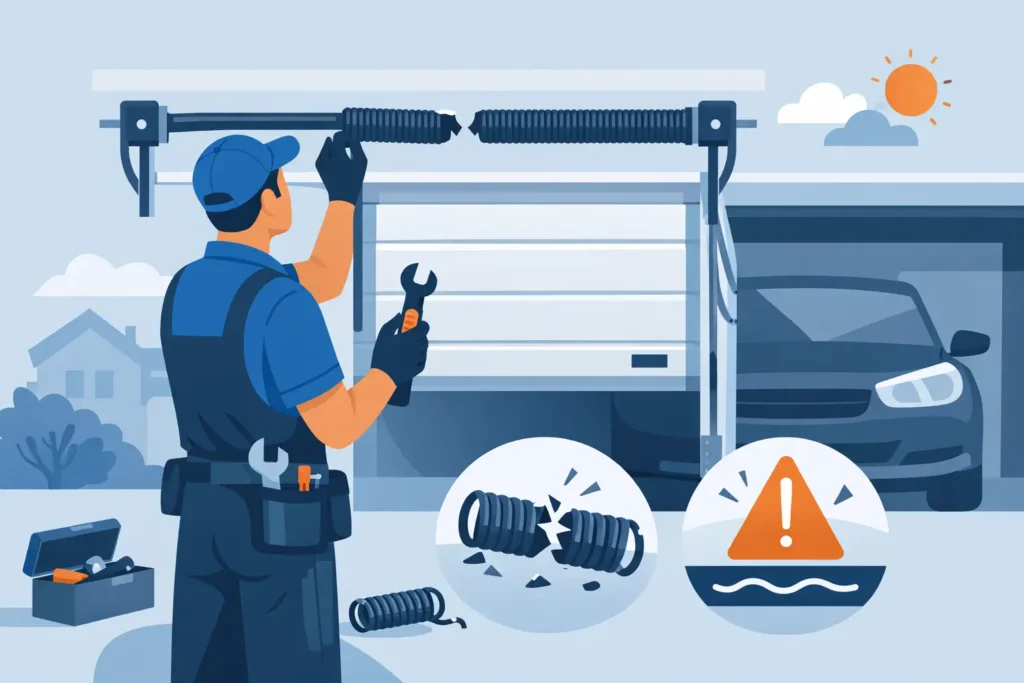
The most obvious sign is a loud bang from the garage followed by a door that will not lift. Homeowners often describe the sound as something heavy hitting the floor. That noise can be a torsion spring snapping under tension.
Other warning signs can be less dramatic. Your door may open only a few inches before stopping, close too quickly, or feel unusually heavy when you try to lift it manually. You may also notice a visible gap in a torsion spring above the door. On doors with extension springs, one side may hang lower than the other or the door may lift unevenly.
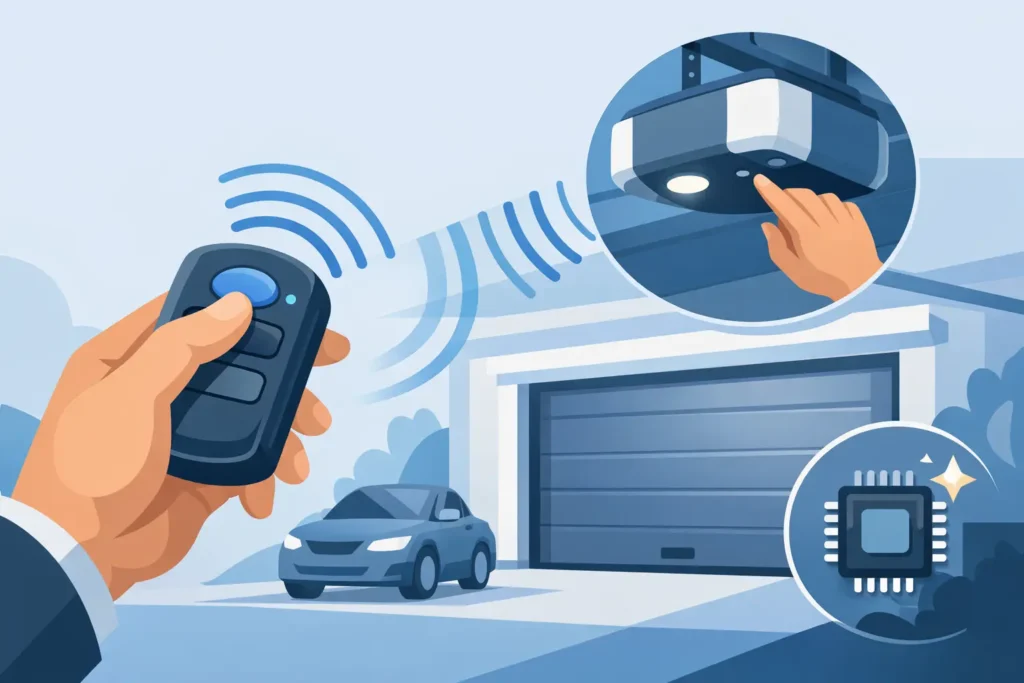
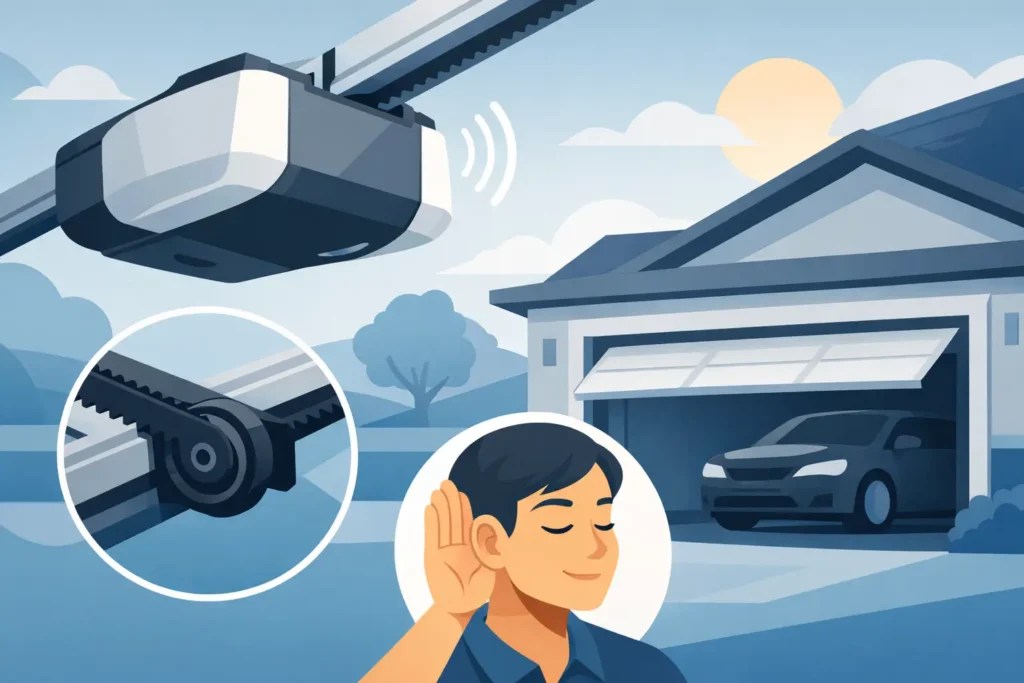
A struggling opener is another clue. The opener may hum without moving the door, reverse unexpectedly, or make more noise than usual. The opener itself may still be in good condition. It simply cannot safely lift a full garage door when the spring system is no longer counterbalancing the load.
Do not overlook slow changes, either. A door that becomes louder, jerks during travel, or sits crooked in the opening needs attention before it becomes a full breakdown. Cables, rollers, tracks, and brackets work alongside the springs. When one component is out of alignment, the strain can spread through the system.
When Spring Repair Is the Right Call
People use the phrase spring repair to describe the whole process, but a broken garage door spring is generally replaced rather than patched. Springs are tightly wound steel components that weaken over time. Welding, bending, or trying to reconnect a broken spring is not a dependable or safe fix.
A qualified technician will confirm the spring type, door weight, and required spring size before recommending replacement. The goal is not simply to make the door move again. The replacement must be correctly matched to the door so it stays balanced and operates as designed.
If your garage door has a pair of torsion springs and one has broken, replacing both is often the practical choice. They were installed at the same time and have completed roughly the same number of cycles. Replacing only the broken one may cost less today, but the older spring could fail soon after. Still, the best option depends on the condition of both springs, the door’s age, and your plans for the property. Honest service means explaining that trade-off clearly rather than pushing a replacement you do not need.
During service, a technician should also inspect the cables, center bearing, end bearings, rollers, drums, tracks, and opener settings. A new spring installed on a door with worn cables or a binding track will not solve every problem. Addressing related issues early can prevent a second service call and help protect the new parts.
Why DIY Spring Work Is a Serious Risk
There are many household projects that reward a confident do-it-yourself approach. Replacing a garage door spring is not one of them. Torsion springs store enough energy to cause severe injury if a winding bar slips, a set screw is loosened at the wrong time, or the correct tools are not used. Extension springs can also whip loose if they break without proper containment.
Another concern is the door itself. Once spring tension is removed, a garage door can become extremely heavy. It can fall unexpectedly, damage a vehicle, bend sections, or injure anyone beneath it.
Avoid using the opener to force a door with a broken spring. Avoid pulling on cables, loosening brackets, or attempting to wind a spring with screwdrivers or improvised tools. If the door is open and will not stay in position, keep people and vehicles clear of the area and arrange professional service as soon as possible.
What Professional Service Should Include
A dependable spring service begins with diagnosis, not assumptions. The technician should identify what failed, explain the condition of the overall door system, and provide straightforward options before work begins. That is especially valuable when a spring failure has also damaged a cable, roller, or opener component.
Proper replacement includes selecting springs rated for your door’s weight and use, installing them with the correct tension, and balancing the door. A balanced door should move smoothly and remain near the intended position when tested correctly. The opener’s force and travel settings may then need adjustment so it can operate safely with the restored spring system.
Quality workmanship also includes a final safety check. The door should travel evenly, the photo-eye sensors should function, and the opener should reverse properly when it encounters an obstruction. These details matter because a garage door is one of the largest moving objects in your home.
For Massachusetts homeowners, seasonal conditions can add wear. Moisture, road salt carried into the garage, and cold temperatures can contribute to rust and stiff operation. Regular inspection and lubrication of appropriate moving parts can help, but lubricant will not restore a worn or broken spring. It is a maintenance step, not a repair.
Help Your New Springs Last Longer
You cannot prevent normal spring wear forever, but you can reduce unnecessary strain. Keep the tracks clear of debris, avoid repeatedly cycling the door when something is wrong, and have unusual noises checked before they turn into a failure. If the door is out of balance, do not assume the opener is the problem.
A preventative maintenance visit is useful for doors that see frequent use, doors with older hardware, and households that rely on the garage as the main entrance. A technician can catch loose hardware, worn rollers, fraying cables, and early balance issues while the repairs are usually simpler.
If your door is noisy but working, service may be all it needs. If panels are damaged, the door is repeatedly off track, or the system has multiple aging parts, replacement may be worth considering. The right recommendation depends on safety, reliability, cost, and how long you expect the current door to serve your home.
A broken spring can make a normal day stop quickly, but the fix does not have to be confusing. Patriot Garage Door can assess the problem, explain your options in plain language, and restore safe, reliable operation so your garage is ready when you need it.
Need Help With Your Garage Door?
From broken springs and opener issues to repairs and new installations, Patriot Garage Door provides dependable service when you need it.