A garage door can weigh hundreds of pounds, move with enough force to cause injury, and serve as one of the main entry points to your home. That is why a garage door safety checklist should be part of regular home maintenance, not something you think about only after the door stops working. A few careful checks can reveal a worn part, a failing safety feature, or a problem that deserves professional attention before it becomes an emergency.
Start With a Safe Visual Inspection
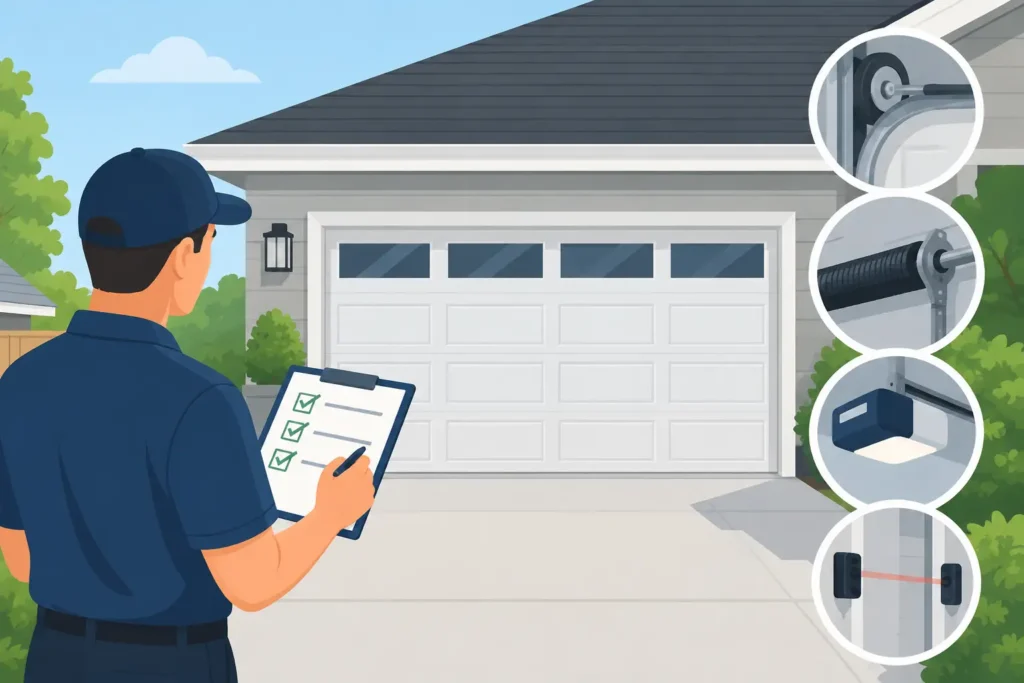
Begin with the door fully closed and the opener disconnected from the test. Stand back and look at the entire system. The door should sit level on the floor, with no obvious gaps at the bottom or one side hanging lower than the other. Look at the panels for cracks, dents, loose hinges, or damage around the roller brackets.
Next, inspect the tracks, rollers, cables, and springs without touching them. Tracks should be securely mounted and free of bends, heavy rust, or obstructions. Rollers should move smoothly in the track, not wobble or bind. Cables should look tight and evenly seated on their drums.
Pay close attention to the springs. Extension springs run along the horizontal tracks, while torsion springs sit above the door opening. Both types store tremendous tension. If you see a gap in a torsion spring, a hanging cable, a loose bracket, or a damaged spring, stop using the door and arrange service. Springs, cables, bottom brackets, and related hardware are not safe homeowner repairs.
Test the Door’s Movement by Hand
With the door closed, pull the emergency release cord to disconnect the opener. Do this only while the door is down. Pulling the release when a door is open and poorly balanced can allow it to fall quickly.
Lift the door by hand. It should move without excessive resistance and stay roughly in place when opened halfway. A properly balanced garage door is not weightless, but it should not slam shut, race upward, or require a hard pull to move.
If the door feels unusually heavy, crooked, jerky, or difficult to lift, reconnecting the opener will not solve the underlying issue. The opener is designed to guide a balanced door, not force a failing door through its travel. Continuing to operate an unbalanced door can strain the opener and turn a manageable repair into a larger one.
Check the Auto-Reverse Features
Every modern automatic garage door opener should have two safety reversal systems: photo-eye sensors near the floor and a force-reversal feature that responds to contact with an object. Test both features monthly, especially in homes with children, pets, or frequent garage traffic.
Test the Photo-Eye Sensors
Look for the two small sensors mounted on either side of the garage door opening, typically four to six inches above the floor. Make sure both lenses are clean, the brackets are secure, and nothing is blocking their path. Leaves, snow, stored items, and even a bumped sensor can interrupt the beam.
Open the door with the remote, then press the wall button to close it. As the door moves down, pass a long-handled object through the sensor beam without putting any part of your body under the door. The door should immediately stop and reverse. If it continues closing, the sensors may be misaligned, damaged, or improperly wired.
Test the Contact Reversal
Place a solid piece of wood, such as a 2-by-4 laid flat, on the floor under the center of the door. Close the door using the opener. When the door touches the wood, it should reverse promptly.
Do not use a fragile item, a vehicle, or anything that could be damaged during this test. If the door fails to reverse, stop using the opener until it is adjusted or repaired. A reversal problem is a direct safety concern, not a minor inconvenience.
Listen for Changes That Signal Trouble
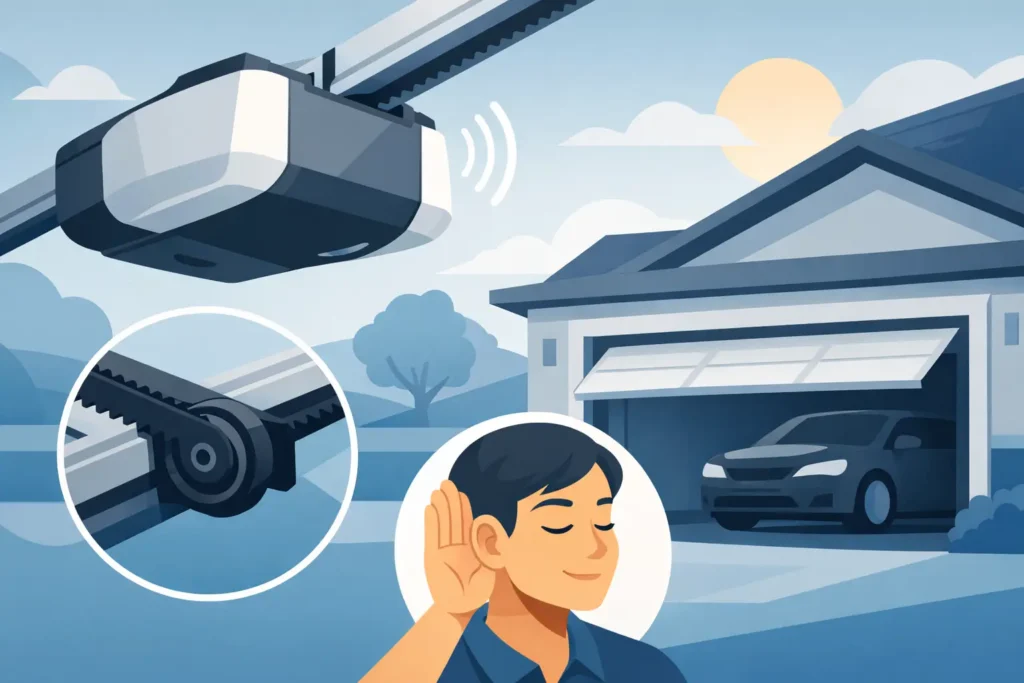
Garage doors make some noise, but sharp banging, grinding, squealing, scraping, or repeated clicking deserve attention. A new sound is often more meaningful than a familiar one. It may point to worn rollers, loose hardware, an opener issue, a dry moving part, or a door that is no longer balanced.
Avoid the temptation to silence every noise with a household lubricant. Some parts need a garage-door-specific lubricant, while tracks generally should be kept clean rather than coated. Grease in the tracks can collect dirt and interfere with roller movement. If the door is loud and you cannot identify a simple cause, a maintenance visit is the safer choice.
Keep the Area Around the Door Clear
A safe garage door needs room to operate. Keep bicycles, trash bins, sports equipment, and seasonal storage away from the door’s path and away from the photo-eye sensors. Teach children that garage door remotes are not toys and that they should never run under a moving door, hang from it, or play near springs, cables, and tracks.
Wall controls should be installed high enough to stay out of reach of young children while remaining visible from the doorway. Before closing the door, look through the opening and make sure people, pets, and vehicles are clear. Never try to beat a closing garage door on foot or in a car.
For households that use the garage as a primary entrance, this routine matters even more. Familiarity can lead people to assume the door will always respond normally. A quick visual check before pressing the button takes seconds and can prevent an avoidable accident.
Make Sure the Opener and Remote Are Secure
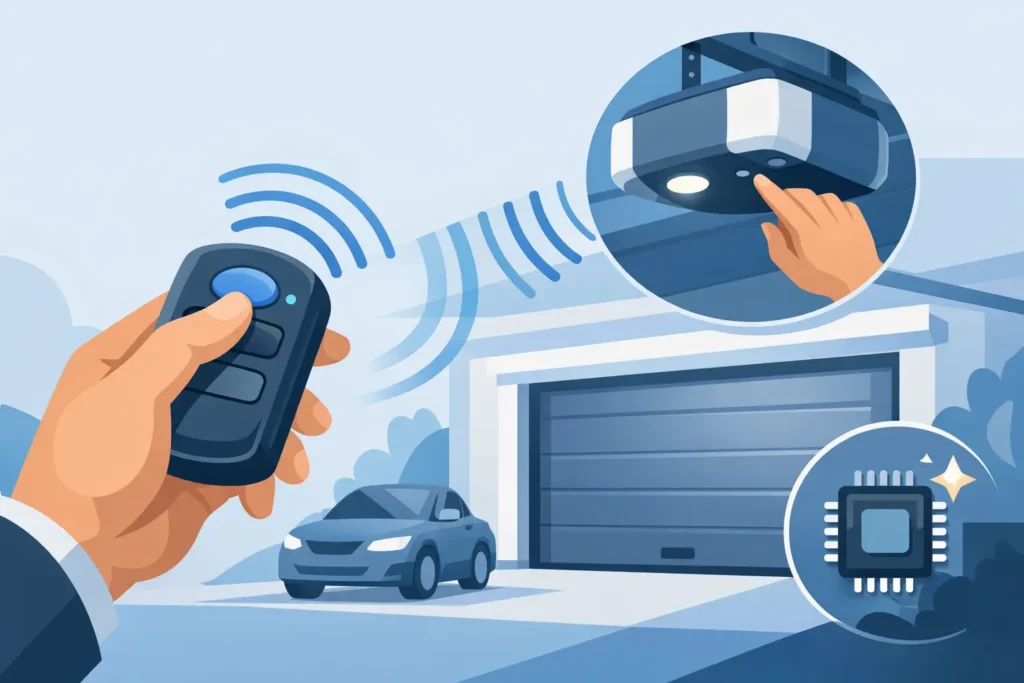
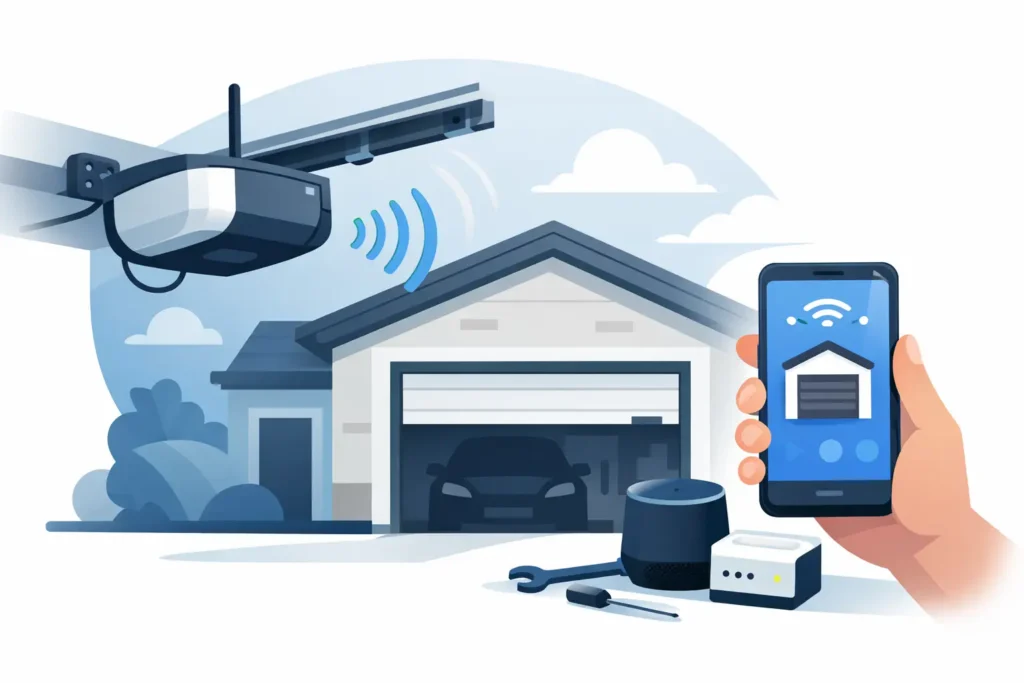
Test the wall button, remote controls, keypad, and any app-enabled opener functions from time to time. A remote that works only intermittently may need a battery, but it can also indicate interference or an opener issue. Replace weak batteries before they fail at an inconvenient time.
Security is part of safety, too. Do not leave a remote visible in a parked car outside. If you move into a home with an existing opener, erase old remote and keypad codes and set new ones. For connected openers, use a strong account password and review who has access to the app.
During a power outage, know how to use the emergency release and how to secure the garage afterward. If your door is heavy or you are unsure whether it is balanced, do not force it. Ask a professional to show you the proper operation during a service visit.
Adjust Your Garage Door Safety Checklist for Massachusetts Weather
Cold temperatures, road salt, wind-driven moisture, and freeze-thaw cycles can accelerate wear on a garage door system. In winter, clear snow and ice from the threshold so the bottom seal does not freeze to the floor. Forcing a frozen door open can damage the opener, cables, or panels.
After storms, check for water intrusion, loose weatherstripping, and debris in the tracks. If a vehicle slides into a panel or the door takes a hard impact, do not assume the damage is cosmetic. Even a door that still opens may have a bent track, weakened hinge, or misaligned safety system.
When to Call a Garage Door Professional
Homeowners can safely handle basic observation, cleaning sensor lenses, replacing remote batteries, and keeping the area clear. Repairs involving springs, cables, drums, tracks, bottom brackets, or opener force settings are different. Those components affect the door’s weight, movement, and ability to stop safely.
Call for service if the door is off track, hanging unevenly, stuck open or closed, moving on its own, reversing unexpectedly, or making a sudden loud bang. The same applies if you find a broken spring, frayed cable, damaged roller bracket, or failed auto-reverse test. Do not park a vehicle under a door that appears unstable.
A professional preventive maintenance visit can also be worthwhile for aging doors or doors used several times a day. A trained technician can check balance, inspect high-tension parts, tighten hardware, test safety features, and explain whether a repair or replacement is the more sensible investment. Patriot Garage Door approaches that decision with straightforward recommendations, so you can address the actual problem without paying for work you do not need.
A garage door rarely fails without leaving clues. Make time for these checks, trust what you see and hear, and treat any change in the door’s movement as a reason to slow down and get reliable help.
Need Help With Your Garage Door?
From broken springs and opener issues to repairs and new installations, Patriot Garage Door provides dependable service when you need it.