A garage door that feels heavy, slams shut, or will not stay halfway open is more than an inconvenience. It can put added strain on the opener, wear out moving parts early, and create a real safety concern. Knowing how to test garage door balance gives you a simple way to spot a problem before it turns into a stuck door or a costly emergency repair.
Your garage door springs do the heavy lifting. When they are properly adjusted and in good condition, the door should feel surprisingly manageable by hand. When the springs lose tension, break, or become mismatched, the opener has to work harder than it was designed to. A quick balance check can tell you a lot, but it should never involve adjusting springs, cables, or brackets yourself.
Why Garage Door Balance Matters
A balanced garage door moves with controlled, even resistance. The springs offset most of the door’s weight, while the opener guides the door rather than lifting hundreds of pounds on its own. That is why a well-balanced door tends to open quietly, close smoothly, and place less stress on the motor, chain, belt, and gears.
An unbalanced door can show up in subtle ways at first. You may notice the opener hesitating, the door reversing unexpectedly, or a new squeal or groan during operation. In other cases, the warning is obvious: the door drops when released or is too heavy to lift. Ignoring those signs can damage the opener and leave your home without reliable vehicle access or security.
Balance can change as springs age. Cold Massachusetts winters can also make an already worn component more likely to fail. A door that worked normally last season may need attention now, especially if it is older, heavily used, or exposed to moisture and temperature changes.
Safety Checks Before You Test Garage Door Balance
Before testing, make sure the doorway is clear. Move vehicles, bicycles, tools, and anything else away from the door’s path. Keep children and pets inside and away from the garage while you work. A garage door is heavy, and a door with a broken spring may move suddenly.
Look over the system without touching the hardware. If you see a broken or loose cable, a bent track, a roller out of the track, a visible gap in a torsion spring above the door, or damage around the bottom brackets, stop there. Do not perform a balance test. These conditions need professional service because cables and springs are under significant tension.
You should also stop if the door is already crooked, scraping hard against one side, or visibly hanging from one cable. Trying to lift an off-track door can make the damage worse and may cause the door to fall or bind.
How to Test Garage Door Balance Safely
Start with the garage door fully closed. Unplug the automatic opener or turn off power to it if you can do so safely. Then pull the emergency-release cord to disconnect the door from the opener carriage. On most systems, this is the red cord hanging from the rail. The door must be disconnected so you can test the door itself, not the strength of the opener.
Lift the Door Slowly
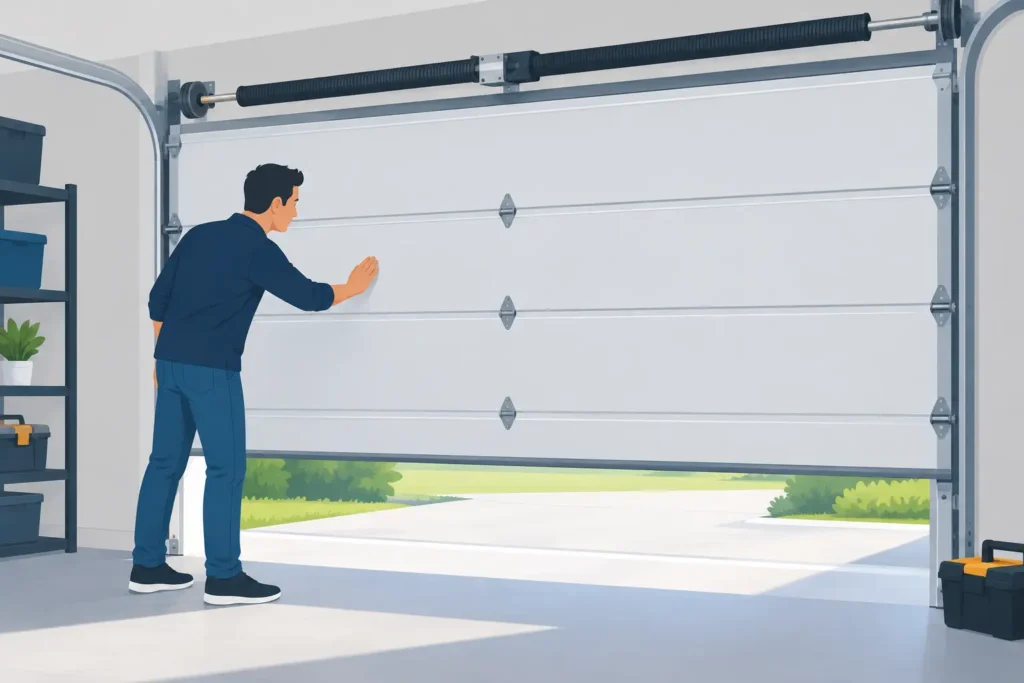
With both hands placed around the lower sections of the door, lift it slowly. Do not jerk it upward or try to force it if it feels unusually heavy. A balanced door should rise with steady, moderate effort. It will not be weightless, but it should not feel like you are lifting the full weight of the door.
If the door is extremely difficult to raise, the springs may have lost tension or one may be broken. Stop lifting if you cannot control the door comfortably. Do not rely on the opener to make up the difference. That can burn out the motor or strip internal gears.
Pause at the Halfway Point
Raise the door to about waist or chest height, then carefully let go while standing clear of its path. A properly balanced door should remain close to that position. It may drift slightly, but it should not race upward or fall toward the floor.
If the door drops quickly, it is generally under-sprung or has a spring problem. If it rises on its own, it may be over-sprung. Either condition deserves a professional evaluation. Spring adjustment is not a homeowner repair, even for experienced DIYers, because the stored force can cause serious injury.
Check the Open Position
If the door stayed near the halfway point and still feels controlled, lift it slowly to the fully open position. It should stay open without falling back down. If it begins to close on its own, hold it securely and lower it with control. Do not stand underneath it or try to prop it open with a ladder, lumber, or a vehicle.
A door that will not stay open can indicate weak springs, but worn rollers, damaged tracks, and cable issues can also affect movement. The balance test points to a problem area. It does not replace a full inspection.
Reconnect the Opener Correctly
Once the test is complete, lower the door fully before reconnecting the opener. Re-engage the emergency release according to your opener’s instructions, restore power, and run the door through one complete open-and-close cycle while watching from a safe distance.
Pay attention to how the opener sounds after the test. Straining, jerking, excessive vibration, or a door that moves unevenly are signs that service is needed. If the door was not balanced by hand, avoid repeated opener use until a technician can inspect it.
What the Results Usually Mean
A door that stays in place around the halfway point and at the open position is generally well balanced. That is a good sign, though routine maintenance still matters. Lubrication, roller wear, track alignment, and opener safety settings can affect performance even when the springs are doing their job.
A door that falls closed often has weak or broken springs. You might also see a gap in a torsion spring or notice that one side of the door sits lower than the other. With extension-spring systems, a spring can break or stretch unevenly without being immediately obvious. In either case, the safest next step is a garage door service call.
A door that lifts itself may have too much spring tension. It can still close when powered by the opener, but that does not mean the system is operating safely. An over-sprung door can interfere with proper closing force and cause unnecessary wear on components.
If the door binds, shakes, or moves unevenly, balance may not be the only issue. Worn rollers, damaged tracks, loose hardware, failing bearings, or frayed cables can all create similar symptoms. This is where an honest inspection matters. A qualified technician should explain whether the issue is limited to one component or whether several parts need attention.
What Not to Do After a Failed Balance Test
Do not adjust torsion springs with winding bars, remove bottom brackets, loosen cable drums, or attempt to reset a cable yourself. These are not ordinary hardware-store repairs. The tension in a garage door system can release suddenly and cause severe injury or property damage.
It is also best not to keep cycling an unbalanced door with the opener. One or two necessary uses may be unavoidable, but continued operation can turn a spring repair into an opener replacement. If the door is stuck open and cannot be safely lowered, secure the area and request prompt service rather than trying to force it down.
When to Call for Garage Door Service
Call a professional if the door feels heavy, will not hold at the halfway point, drops from the open position, has a broken spring, or shows cable or track damage. A technician can measure spring tension, inspect the complete door system, and make the correct adjustment or replacement without putting your household at risk.
Patriot Garage Door helps homeowners across Massachusetts with straightforward diagnostics, spring replacement, opener service, and preventative maintenance. The goal is not to sell a full replacement when a focused repair will restore safe, reliable operation. You should know what is wrong, what your options are, and what work is being done before the repair begins.
A five-minute balance check is a practical habit, particularly if your door is noisy, older, or used several times a day. If the door does not move smoothly and stay where you place it, trust what the test is telling you: stop using it unnecessarily and have the system checked before a small issue leaves your garage door out of service.
Need Help With Your Garage Door?
From broken springs and opener issues to repairs and new installations, Patriot Garage Door provides dependable service when you need it.