A power outage, a failed opener, or a car trapped in the garage can turn a normal morning into a stressful one. This garage door emergency release guide explains how to disconnect your opener safely, move the door by hand when appropriate, and recognize when the problem calls for professional repair instead.
The emergency release is useful, but it is not a cure for a broken garage door. If the door is unusually heavy, crooked, hanging from one side, or stuck partway open, forcing it can create a much larger safety problem. A garage door is the heaviest moving feature in many homes, and its springs, cables, and tracks are under significant tension.
What the Emergency Release Does
Most automatic garage door openers use a trolley that connects the opener rail to the door. The emergency release disconnects that trolley, allowing the door to be operated manually when the opener has no power or is not working correctly.
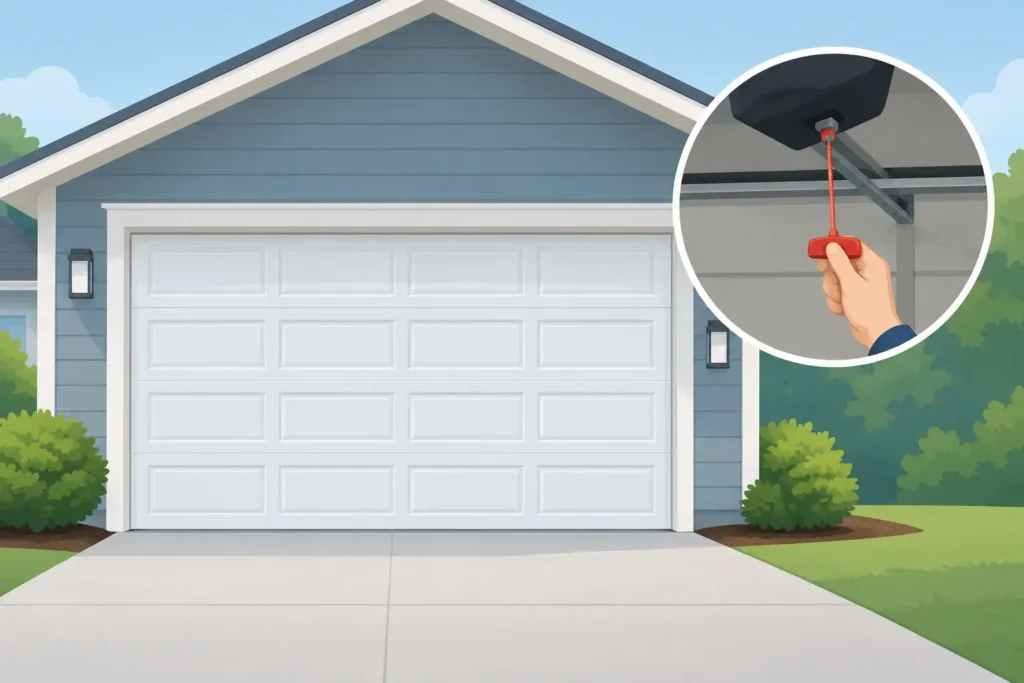
You will usually find the release inside the garage, hanging from the opener rail on a red cord with a red handle. Pulling that handle releases the trolley from the opener carriage. Once disconnected, the opener motor can no longer lift or lower the door until the system is re-engaged.
This feature is designed for a functioning, balanced door. It should not be used to compensate for a snapped spring, broken cable, damaged track, or door that has come off its rollers. In those situations, the door can drop suddenly or bind in place.
Before You Pull the Red Handle
Start by looking at the position of the door. The safest time to use the emergency release is when the garage door is fully closed. A closed door is supported by the floor, so there is far less risk of it falling.
If the door is open or partially open, do not pull the emergency release unless you are certain the door is properly balanced and can be held securely. A door with a broken spring may look stable one moment and come down quickly the next. Keep children, pets, and anyone not helping well away from the opening.
Also check for obvious warning signs. Stop and schedule service if you see a loose or broken cable, a visible gap in a torsion spring above the door, bent tracks, rollers outside the track, or a door that is tilted to one side. Do not touch springs or cables. These parts can cause serious injury when handled without the right training and tools.
If the issue is simply a power outage, make sure the opener is unplugged or that you are aware it may begin operating again when power returns. This helps prevent an unexpected movement while you are working near the door.
Garage Door Emergency Release Guide: Safe Steps
With the door fully closed, pull the red emergency release handle straight down. On some opener models, you may need to pull the cord down and slightly toward the rear of the garage to disengage the trolley. You should hear or feel a click as the connection releases.
Next, lift the door slowly using the handles or the bottom edge, keeping your fingers away from panel joints, hinges, and the tracks. Use both hands and lift evenly. A properly balanced garage door should move with reasonable effort and remain in place when opened about halfway.
If the door feels extremely heavy, will not move, or starts drifting down, stop immediately. Those are common signs of a spring problem or another mechanical failure. Do not try to hold the door open with a ladder, a board, or a vehicle. Close it carefully if you can do so safely, then call a qualified garage door technician.
When opening the door manually to get a vehicle out, move the car only after the door is fully open and appears stable. Do not park beneath a manually raised door, even for a short time. If you need to leave the home, close the door manually behind you if possible to protect your garage and home from unauthorized entry.
How to Reconnect the Opener
Once power is restored or the opener issue has been addressed, the trolley needs to reconnect before the automatic opener can operate the door again. First, make sure the garage door is fully closed if you can safely close it.
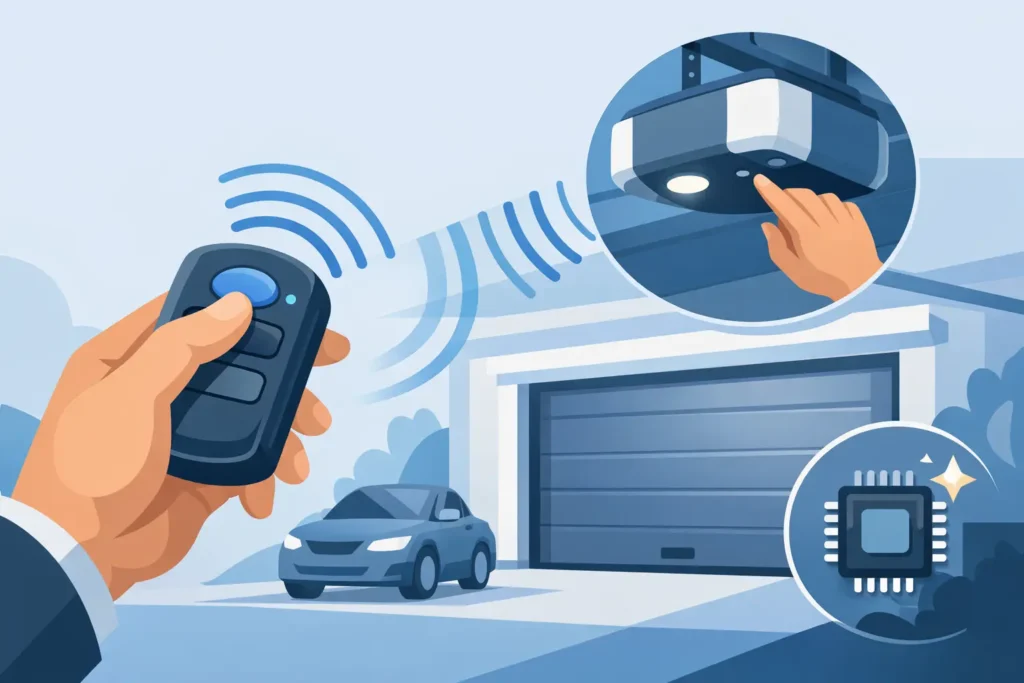
Many modern openers reconnect automatically. Pull the emergency release cord toward the opener rail if needed, then press the wall button or remote. As the opener runs, the trolley should catch and lock back into place. You may hear a distinct click.
Older models may require you to manually slide the trolley along the rail until it reconnects. Check your opener manual for the exact method if the trolley does not engage on its own. Never stand directly under the rail or pull hard on the release mechanism if it seems stuck.
After reconnecting, test the door from a safe position. Watch one full open-and-close cycle. The door should move evenly, stop correctly, and reverse when its safety sensors detect an obstruction. If it jerks, strains, makes grinding noises, or fails to close, leave it disconnected only if necessary and arrange service.
Common Situations and the Right Response
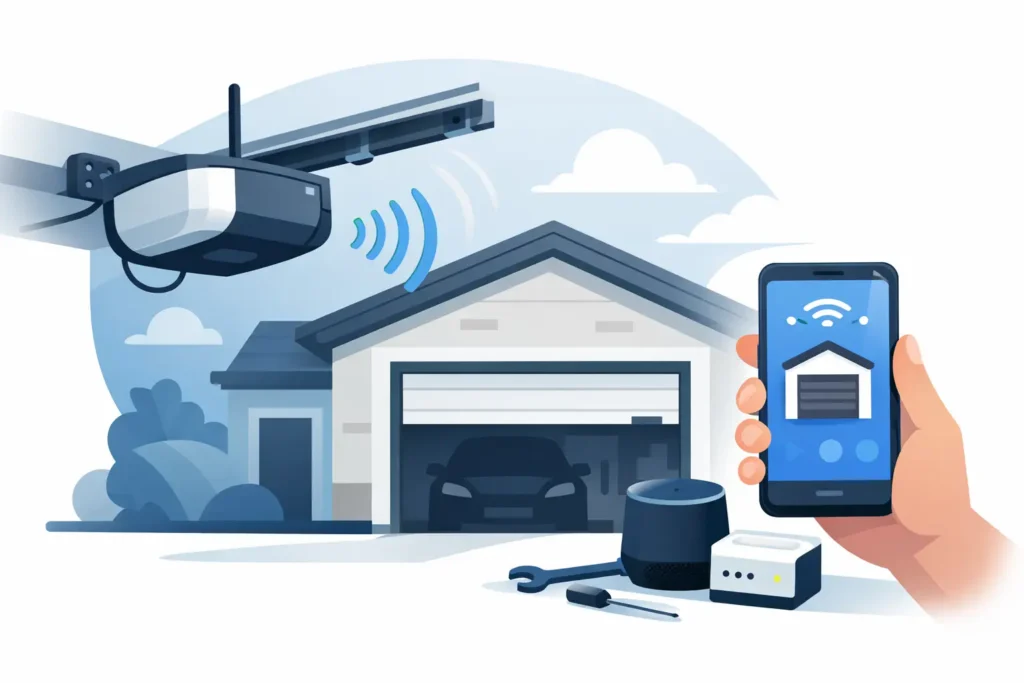
A power outage is the most straightforward reason to use the emergency release. If the door is closed, disconnect it, lift it manually, and reconnect the opener after power returns. Homeowners who frequently lose power may benefit from an opener with a battery backup, which can operate the door during an outage without manual release.
An opener that hums but does not move the door requires more caution. The opener may have a stripped gear, failed capacitor, travel-limit issue, or a door that has become too heavy for the motor to lift. Release the door only when it is closed and only if there are no signs of spring or cable damage. A manual balance check can help identify whether the issue is the opener or the door itself.
A garage door that stops halfway is not automatically an emergency-release situation. Something may be blocking the sensors, the track could be bent, or a roller may be binding. Pulling the release with the door overhead can make the problem more dangerous. Keep clear of the opening and contact a professional for an inspection.
If you are locked outside and your only access is through the garage, do not try to force the top of the door open or pull an emergency release through a gap. That can damage the door and compromise home security. Use another entry point, contact a trusted locksmith if appropriate, or call for garage door service.
When Not to Use the Emergency Release
There are times when leaving the door alone is the safest choice. Do not use the release if the door is open and you suspect a broken spring, if a cable is off the drum, if the tracks are bent or detached, or if the door has been hit by a vehicle. The same applies when one side of the door is higher than the other or the door is visibly off track.
A loud bang from the garage is often the sound of a torsion spring breaking. After that happens, the opener may still make noise but will not have the lifting support it needs. The door can weigh several hundred pounds, and attempting to lift it manually may cause injury or further damage to the opener.
This is where an honest inspection matters. A reliable technician can identify whether the problem is limited to a spring, cable, roller, opener component, or track repair rather than recommending replacement before it is necessary.
Keep the Release Ready Before an Emergency
Take a moment to locate the red release handle before you need it. Make sure it hangs within reach but is not accessible from outside through the top of the garage door. If the cord is missing, too short to reach safely, or damaged, have it corrected during routine service.
Test your door’s balance and safety features periodically, but do not make emergency release testing a casual project when the door is open. Regular maintenance can catch worn rollers, loose hardware, aging springs, and opener issues before they leave you stuck at home or unable to secure the garage.
If your door will not move smoothly by hand, does not stay balanced, or shows any sign of damaged springs, cables, or tracks, the safest next step is to leave it alone and get help. Patriot Garage Door provides clear repair options for Massachusetts homeowners, with service focused on safe operation, dependable workmanship, and repairs that last.
Need Help With Your Garage Door?
From broken springs and opener issues to repairs and new installations, Patriot Garage Door provides dependable service when you need it.