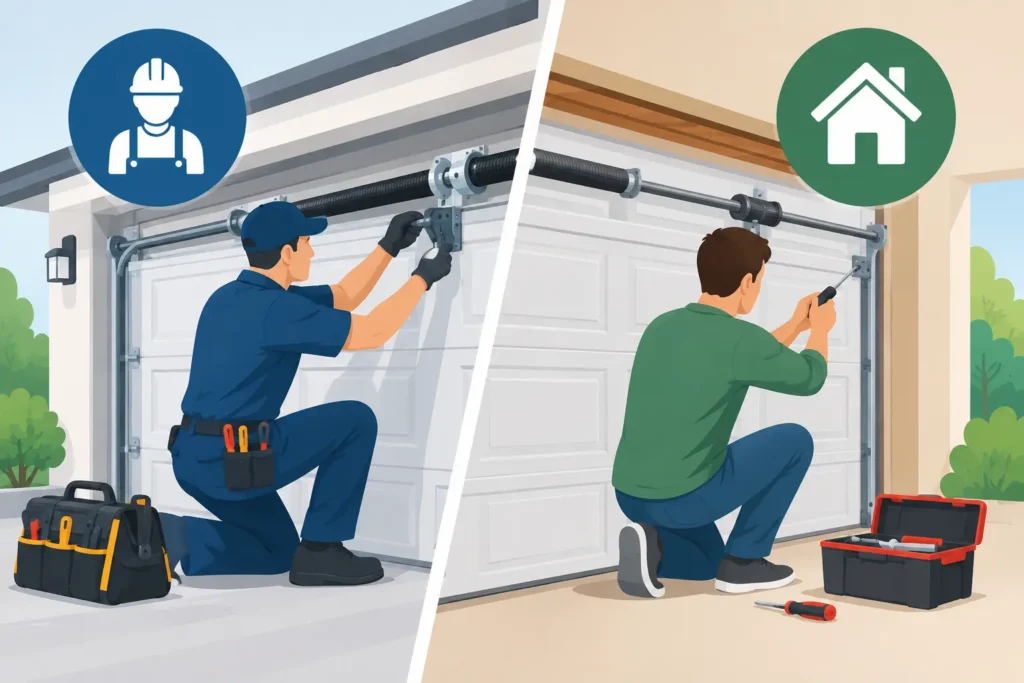
A garage door that will not open can turn an ordinary morning into a real problem. Your car may be trapped, your home may be less secure, and a heavy moving door is not something to force. When weighing professional versus DIY garage door repairs, the right choice comes down to more than cost. It depends on the part that failed, the tools required, and whether the repair affects the door’s balance, tension, or safety systems.
Some simple upkeep tasks belong on a homeowner’s to-do list. Other problems call for a trained technician because a garage door is a large mechanical system under significant force. Knowing the difference can help you avoid injury, prevent further damage, and spend money where it makes sense.
The real risk behind a garage door repair
A typical residential garage door can weigh well over 100 pounds. Springs counterbalance that weight, cables guide the lifting force, tracks keep the door aligned, and the opener provides controlled movement. When one part fails, the rest of the system can be affected.
This is why a door that suddenly feels extremely heavy, hangs crooked, or makes a sharp bang should not be treated as a routine weekend project. A broken spring, loose cable, or off-track roller can allow the door to shift unexpectedly. The risk is not just a damaged panel or opener. It can be a falling door, a snapped cable, or an injury to someone standing nearby.
DIY repair videos can make complex jobs look quick, but they rarely show the full condition of the door, the correct spring sizing, or the safety checks performed after the repair. A reliable solution means restoring the whole system to safe operation, not simply getting the door to move once.
Professional versus DIY garage door repairs: what you can handle
Homeowners can safely take care of several basic tasks, especially when the door is operating normally and no tensioned components need adjustment. Regular attention can reduce noise, spot small concerns early, and extend the life of moving parts.
A practical DIY routine includes keeping the photo-eye sensors clean and aligned, replacing remote batteries, checking weatherstripping for cracks, and clearing leaves or debris from the track area. You can also look for loose visible hardware and gently tighten accessible bolts if the door is fully closed and you are not working near springs, cables, or brackets.
Lubrication is another worthwhile task when done correctly. Use a garage-door-specific lubricant on rollers, hinges, and bearings according to the product instructions. Avoid coating the tracks themselves. Tracks need to remain clean so rollers can travel properly; excessive lubricant can collect dirt and create more trouble.
You can also test the opener’s auto-reverse function. Place a small piece of wood, such as a 2-by-4 laid flat, under the door and close it using the opener. The door should reverse after contacting the object. If it does not, stop using the opener until the issue is corrected. For photo eyes, wave an object in front of the sensors while the door is closing. The door should reverse immediately.
These checks are helpful because they involve observation and basic maintenance, not changing the forces that hold and lift the door.
Repairs best left to a trained technician
Certain garage door parts should never be treated as a trial-and-error repair. Torsion springs, extension springs, lift cables, bottom brackets, and track realignment all involve stored tension or a door that may no longer be properly supported.
A broken spring is one of the clearest examples. The opener may hum without lifting the door, or you may hear a loud bang from the garage. Replacing a spring requires matching the correct type, size, wire diameter, and cycle rating to the door. Installing the wrong spring can make the door unsafe, strain the opener, and shorten the life of other components.
Cables deserve the same caution. A cable that has come off its drum or appears frayed is not something to pull back into place. The door may be unevenly supported, and moving it can make the problem worse. Do not loosen bottom brackets, either. Those brackets are connected to the lift cables and are under spring tension.
Call for professional service if you notice any of these conditions:
- The door is off its tracks, crooked, or stuck partway open.
- A spring is broken, stretched out, separated, or making unusual noise.
- A cable is loose, frayed, or wrapped unevenly around a drum.
- The door slams shut, feels unusually heavy, or will not stay open manually.
- Panels are badly damaged, tracks are bent, or rollers repeatedly come out.
- The opener runs but the door does not move correctly or reverses without cause.
A technician can identify whether the visible issue is the root cause or a symptom of a larger balance, alignment, or opener problem. That honest diagnosis often prevents a small repair from becoming a full replacement later.
Cost is not the only comparison
DIY work can save money when the task is simple and you already have the right materials. Replacing a remote battery or cleaning photo eyes does not require a service call. But the price of a part is not the full cost of a major repair.
If a spring is installed incorrectly, a track is adjusted out of alignment, or an opener is forced to lift an unbalanced door, the result can be more expensive than the original issue. You may damage the opener’s gear, bend additional hardware, crack a panel, or create a safety concern that needs urgent attention.
Professional repair includes more than labor. A qualified technician brings the proper tools, replacement parts designed for the door, and the experience to test balance, travel limits, force settings, sensors, and overall operation. That matters because a garage door should open smoothly by hand when disengaged from the opener. The opener is meant to guide a balanced door, not compensate for failing springs or damaged hardware.
There is also value in clear options. Sometimes a single roller, hinge, cable, or sensor adjustment is enough. In other cases, an aging opener or extensively damaged door may justify replacement. A trustworthy service provider should explain what is needed now, what can wait, and why.
A simple way to decide before you start
Ask three questions before reaching for a tool. First, is the repair limited to cleaning, batteries, lubrication, or a clearly accessible non-tensioned part? Second, can you complete the work without placing yourself under the door or near springs, cables, or bottom brackets? Third, will the repair require changing the door’s balance, track position, or opener force settings?
If the answer to the first two questions is yes and the third is no, careful DIY maintenance may be reasonable. Read the owner’s manual, disconnect power before working near the opener, and keep children and pets out of the garage while testing the door.
If the issue involves weight, tension, alignment, or unpredictable movement, schedule service instead. Do not pull the emergency release when the door is open and supported only by a failing spring or cable. The door can come down quickly. If your door is stuck open, avoid leaving the home unsecured when possible and keep the area clear until help arrives.
Prevent problems before they become urgent
Many garage door failures give small warnings first: squealing or grinding sounds, slower movement, uneven gaps, a door that shakes as it travels, or an opener that works harder than usual. Addressing those changes early is usually safer and less disruptive than waiting for a complete failure.
Preventative maintenance is particularly useful for Massachusetts homeowners because seasonal temperature swings, moisture, road salt carried into garages, and frequent daily use can wear on moving parts. A professional tune-up can catch worn rollers, loose hardware, declining springs, and sensor issues before they leave you with a door that will not close.
Patriot Garage Door approaches repairs with straightforward recommendations and careful workmanship, so homeowners can make an informed decision without pressure. Whether the solution is basic maintenance, a targeted repair, or a replacement part, the goal should be the same: a door that operates safely, reliably, and without unnecessary expense.
When your garage door is acting differently, trust what you see and hear. Take care of the simple maintenance you can perform safely, and let a trained professional handle the components that carry the weight of the system. That choice protects your home, your time, and the people who use the garage every day.
Need Help With Your Garage Door?
From broken springs and opener issues to repairs and new installations, Patriot Garage Door provides dependable service when you need it.