
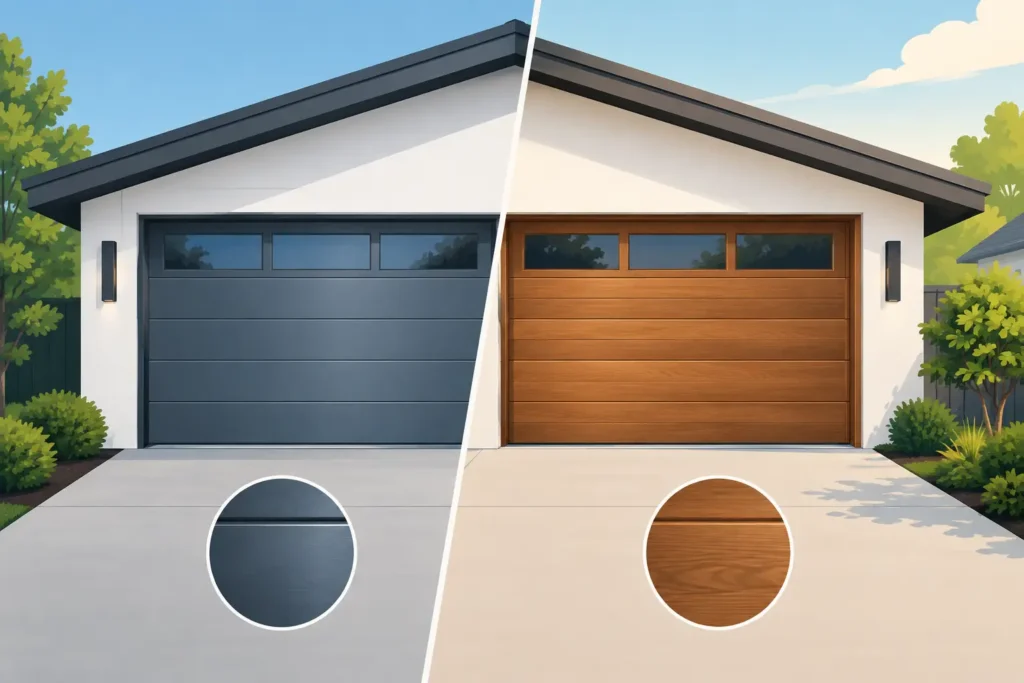
A garage door can take up a large portion of your home’s front exterior, so material choice affects more than appearance. When homeowners compare steel versus wood garage doors, they are usually balancing curb appeal against maintenance, upfront cost against long-term value, and a classic look against practical performance in New England weather.
Neither material is automatically right for every home. The better choice depends on your budget, the style of your house, whether the garage is attached or climate-controlled, and how much upkeep you are realistically willing to take on year after year.
Steel Versus Wood Garage Doors: The Main Difference
Steel garage doors are built for durability, low maintenance, and broad design flexibility. They are available in many colors, panel profiles, insulation levels, and wood-look finishes. For most homeowners, steel provides a dependable, cost-conscious option that works well with everyday use.
Wood garage doors offer a level of natural warmth and architectural character that manufactured materials cannot fully duplicate. A real wood door can be an excellent fit for historic homes, custom homes, carriage-house designs, and properties where exterior detail is a priority. It also requires more regular care, especially in Massachusetts, where snow, rain, humidity, and seasonal temperature swings can be tough on exterior finishes.
The question is not simply which door looks better. It is which door will serve your home reliably without creating maintenance demands or repair costs you did not expect.
Cost: Upfront Price and Long-Term Ownership
Steel is generally the more affordable choice at installation. Basic non-insulated steel doors are often among the least expensive replacement options, while insulated steel doors and premium wood-grain finishes cost more but still tend to come in below a comparable custom wood door.
Wood doors can vary widely in price. A simple wood door may be reasonably priced, but custom sizing, detailed trim, windows, overlay designs, and higher-end wood species can raise the final cost quickly. Installation may also be more involved because wood doors are often heavier and need the garage door system to be properly matched to that weight.
Long-term costs matter, too. A steel door may need occasional cleaning, lubrication, hardware adjustments, and repairs after an impact. A wood door needs those same system services plus periodic staining, painting, sealing, and close attention to moisture damage. If a wood finish is allowed to fail, the repair can become more extensive than a routine refinishing job.
For homeowners planning to stay in the house for many years, a well-maintained wood door can be a worthwhile investment in appearance. For those who want predictable ownership costs and less exterior maintenance, steel usually has the advantage.
Weather Resistance in Massachusetts
Massachusetts garages see winter snow, spring rain, humid summers, road salt, and freeze-thaw cycles. Those conditions should be part of the decision.
Steel does not absorb moisture, so it will not rot, warp, or split like natural wood can. A quality factory finish helps protect the door from corrosion, but steel can still dent from a vehicle, sports equipment, or a hard impact. Scratches should be addressed promptly, particularly near the bottom of the door, where moisture and salt exposure are greatest.
Wood naturally expands and contracts as humidity changes. That movement is normal, but it can stress paint, stain, joints, and sealants over time. Water that gets into exposed edges or unprotected areas may lead to swelling, cracking, or rot. A wood door can perform well in New England, but it needs a consistent maintenance schedule and good drainage around the garage opening.
If your garage faces a heavily traveled road where winter salt spray is common, or if the door receives strong afternoon weather exposure, steel is often the more forgiving material. If you choose wood, plan on inspecting the finish at least once or twice a year rather than waiting for visible damage.
Insulation and Garage Comfort
The material alone does not determine insulation. Door construction matters just as much.
Steel garage doors are available in single-layer, double-layer, and insulated multi-layer designs. Insulated models often use polystyrene or polyurethane cores, which help reduce heat loss, outside noise, and temperature swings. For an attached garage, a garage workshop, or a room located above the garage, insulated steel can make a noticeable difference in comfort.
Wood has natural insulating value, especially when built with thicker sections. However, a wood door is not always as energy-efficient as a modern insulated steel door with a high R-value. The overall result also depends on weatherstripping, bottom seals, gaps around the opening, and the condition of the door sections.
If keeping the garage warmer in winter or cooler in summer is a priority, compare the insulation rating and full construction details rather than assuming wood is warmer because it is a natural material. A properly installed insulated steel door is often the practical choice for energy-conscious homeowners.
Appearance: Traditional Character or Flexible Design
This is where wood often earns its reputation. The grain, depth, and natural variation of real wood give a home a distinctive appearance. Wood can be painted or stained in a wide range of colors, and custom builders can create designs that complement shutters, front doors, trim, and historic architectural details.
Steel has come a long way from the plain raised-panel doors many homeowners remember. It can be made to resemble wood, including carriage-house styles with decorative hardware, flush modern panels, long windows, and realistic wood-grain finishes. For many homes, a high-quality wood-look steel door delivers the visual effect homeowners want without the same maintenance commitment.
A wood door is often the strongest visual choice when the rest of the home already features genuine wood details or when the garage is highly visible from the street. Steel is especially appealing when you want a clean, coordinated look with more color and style options at a manageable price.
Before deciding, look at the whole exterior. A garage door should complement the roof color, siding, brick or stone, trim, windows, and front entry. The most expensive door is not always the best-looking door if it competes with the home’s existing design.
Maintenance and Repair Expectations
Every garage door needs basic mechanical service. Springs, cables, rollers, hinges, tracks, safety sensors, and the opener all need to work together. Material choice changes the surface maintenance, but it does not eliminate the need for professional inspection when the door is noisy, uneven, damaged, or difficult to operate.
Steel doors are relatively simple to maintain. Wash them periodically with mild soap and water, inspect for scratches or dents, keep the bottom weather seal in good shape, and have the moving components serviced as needed. A dented steel panel may sometimes be repaired, but deeper damage can require panel replacement depending on the door model and the location of the impact.
Wood doors need more attention. Check for peeling paint, faded stain, soft spots, cracks, and separation at joints. Repaint or reseal the door before bare wood is exposed to extended moisture. Small finish issues are far less expensive to address than rot or structural damage.
Weight is another consideration. Wood doors can be substantially heavier than steel doors. The springs must be correctly sized, and an opener must be suitable for the load. Never try to adjust garage door springs yourself. Springs are under high tension, and incorrect adjustment can cause serious injury or damage to the door.
When Steel Is the Better Choice
Steel is usually the right fit if you want a durable door with minimal maintenance, strong insulation options, and a wide range of styles. It is also a sensible choice for busy households where the garage door opens and closes frequently, or for homeowners who want dependable performance without adding another exterior refinishing project to the calendar.
It can also be a smart way to improve curb appeal before selling a home. A new insulated steel door with a carriage-house or wood-look finish can provide a significant visual update while keeping the investment practical.
When Wood Is Worth the Extra Care
Wood makes sense when authenticity matters. If your home has a historic, coastal, craftsman, colonial, or high-end custom design, real wood may be the material that completes the exterior properly. It is especially worthwhile when the garage is prominent and the homeowner is prepared to maintain the finish.
Choose wood with clear expectations. It is not a set-it-and-forget-it door, but with proper installation, weather protection, and regular care, it can remain a beautiful feature of the home for many years.
A garage door should look right, operate safely, and hold up through the seasons. If you are weighing materials or replacing a door that has become damaged, noisy, or unreliable, a professional evaluation can clarify which option fits your home, your budget, and the way you use your garage. Patriot Garage Door can help homeowners make that decision with straightforward recommendations and quality installation work that lasts.
Need Help With Your Garage Door?
From broken springs and opener issues to repairs and new installations, Patriot Garage Door provides dependable service when you need it.