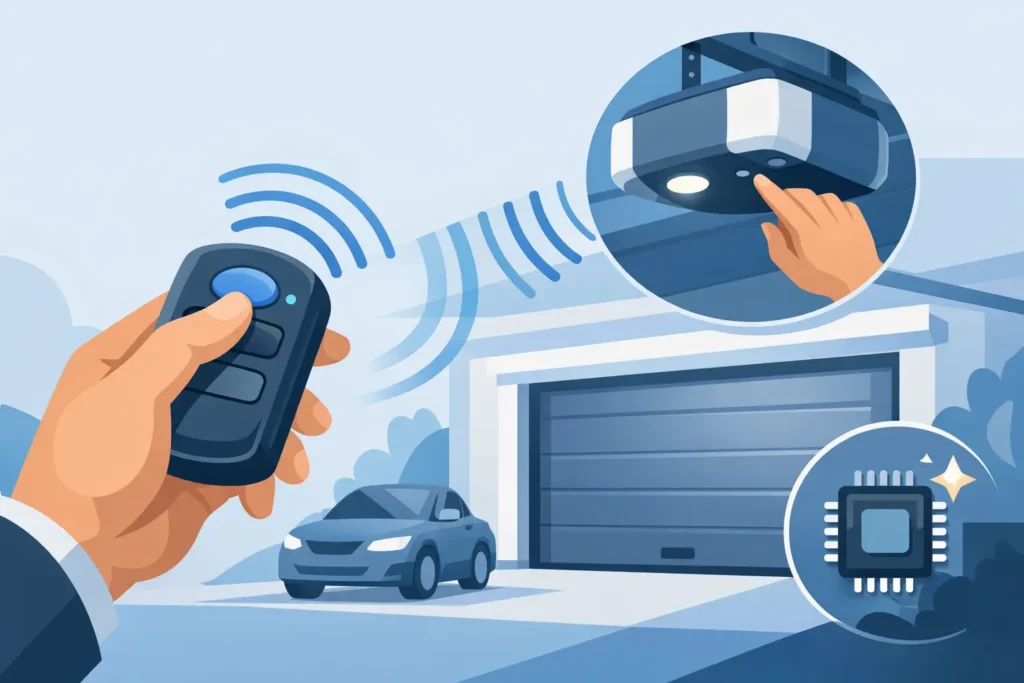
A garage door that suddenly will not lift, slams shut, or sounds like a gunshot came from the garage often has one problem behind it: a broken spring. This garage door spring guide helps Massachusetts homeowners understand what springs do, how to spot trouble early, and why spring work is rarely a safe do-it-yourself repair.
Your garage door may look like one large moving panel, but it is a carefully balanced system. Springs carry most of the door’s weight so the opener can guide it up and down. When that balance disappears, the door becomes difficult to operate, harder on the opener, and potentially dangerous around people, vehicles, and pets.
What Garage Door Springs Actually Do
A typical residential garage door can weigh anywhere from 130 to more than 300 pounds, depending on its size, material, insulation, and windows. The opener does not truly lift all that weight on its own. The springs store mechanical energy as the door closes, then release that energy to assist with lifting it.
When springs are properly sized and adjusted, a disconnected garage door should feel manageable and stay near the middle of its travel instead of crashing down or shooting upward. That balance protects the opener, cables, rollers, and tracks from unnecessary strain.
Springs are rated by cycles, meaning one full opening and closing of the door. Many standard springs are designed for roughly 10,000 cycles. For a household using the garage as the primary entrance, that can mean replacement is needed sooner than expected. Higher-cycle springs can be a worthwhile option for busy families, though the right choice depends on the door’s weight and daily use.
The Two Main Types of Garage Door Springs
Most homes use either torsion springs or extension springs. Both do the same job, but their placement and operation are different.
Torsion Springs
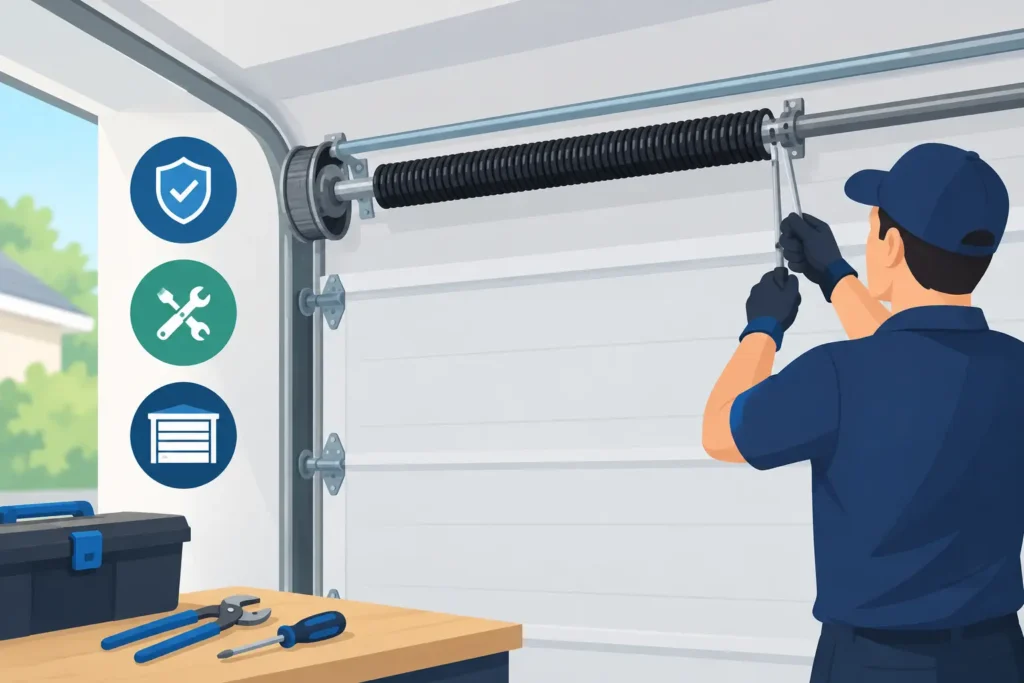
Torsion springs sit on a metal shaft above the garage door opening. As the door closes, the springs twist and build tension. As it opens, they unwind in a controlled way to help lift the door.
Torsion systems are common because they provide smooth, even lifting force and tend to last well when correctly installed. They are also under significant tension. A broken torsion spring may leave a visible gap in the coil, but homeowners should not touch the spring, shaft, winding cones, or cables to investigate further.
Extension Springs
Extension springs run alongside the horizontal tracks, usually near the ceiling. They stretch as the door closes and contract as it opens. These systems are often found on older or lighter doors.
Extension springs should have containment safety cables running through their centers. If a spring breaks without a safety cable, it can become a dangerous projectile. If you see a stretched, damaged, or hanging extension spring, keep the door closed and arrange professional service.
Signs Your Garage Door Spring May Be Failing
Springs can break without much warning, especially as they approach the end of their cycle life. Still, many homeowners notice changes in the door’s movement before a complete failure.
A door that feels unusually heavy, opens only a few inches, or will not open at all is a common sign. You may also hear the opener humming while the door stays in place. In that situation, continuing to press the opener can damage the motor or strip internal gears.
Watch for a door that closes too quickly, sits unevenly, or jerks during travel. A visible gap in a torsion spring, loose cables, or a door that will not remain open are also reasons to stop using the system. Loud squealing or grinding does not always mean a broken spring, but it does call for an inspection. Worn rollers, dry bearings, bent tracks, or an opener issue can produce similar symptoms.
One important distinction: a garage door can be off balance even when the springs are not broken. Springs gradually lose effectiveness, and improper adjustment can make the door feel heavy or unstable. That is why a full system check matters more than replacing a part based on a guess.
Why Spring Replacement Is Not a DIY Project
Homeowners can safely handle basic care, such as keeping the floor near the door clear, changing remote batteries, and watching for obvious damage. Spring replacement is different.
Garage door springs hold a large amount of stored energy. Incorrect tools, a poor fit, or one wrong movement during adjustment can cause severe injury or property damage. The risk is not limited to the spring itself. Cables, drums, brackets, and the door can move unexpectedly when tension is released.
There is also a practical reason to call a trained technician: springs must be matched to the specific door. Door width, height, weight, track setup, insulation, and hardware all affect the proper spring size and tension. Installing the wrong spring may make the door operate poorly, shorten opener life, or create an ongoing safety issue.
A qualified professional should inspect the cables, drums, bearings, center bracket, rollers, tracks, and opener settings during a spring repair. Replacing only the broken component without checking the rest of the system can leave the underlying cause untouched.
What to Do When a Spring Breaks
If you hear a sharp bang from the garage and the door will not open, treat it as a possible spring failure. Do not keep cycling the opener, and do not attempt to lift a heavy door by yourself. If the door is open when the failure occurs, keep people and vehicles away from the opening until it can be secured.
If possible, use another entry to your home rather than forcing the garage door. Avoid pulling the emergency release while the door is open or unstable. Releasing the opener does not make a broken-spring door safer, and the door may fall quickly.
A service technician can determine whether the spring is the issue, confirm the correct replacement, and restore balance before testing the opener. For homeowners with one-car garages or a vehicle trapped inside, prompt service can make a major difference in getting the household back to normal.
Maintenance That Helps Springs Last
No maintenance plan can prevent every spring from eventually wearing out, but regular care can reduce strain on the system. A seasonal visual check is a good starting point. With the door closed, look for frayed cables, loose hardware, worn rollers, rust, and signs that the door is rubbing against the tracks.
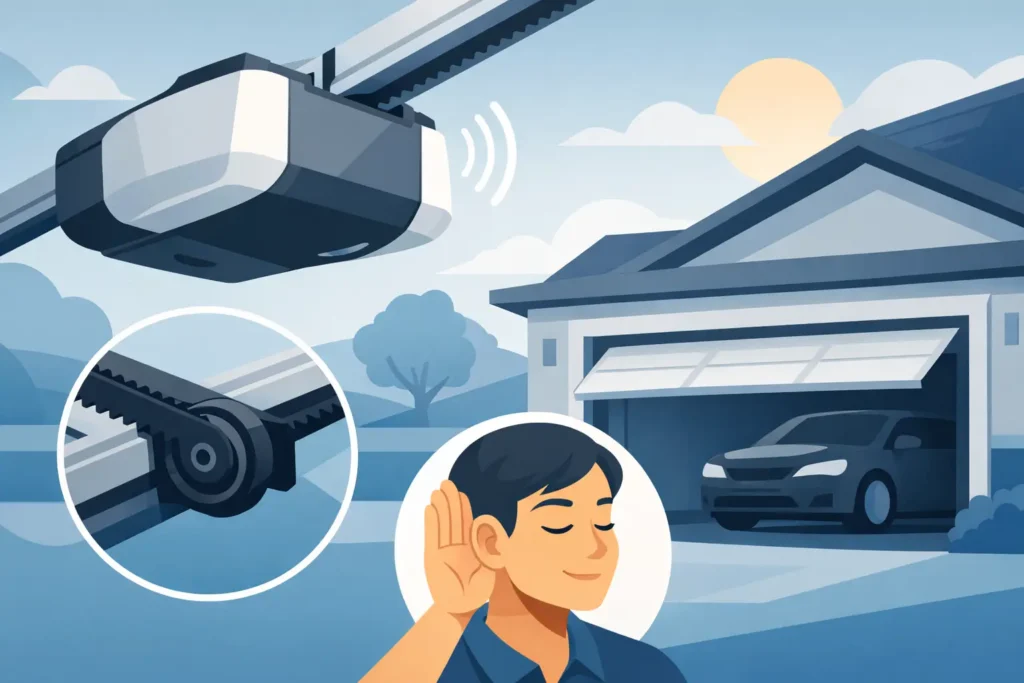
Listen to the door as it operates. A healthy door should move steadily without excessive shaking, scraping, or banging. Keep photo-eye sensors clean and clear, since a door that repeatedly reverses or stops can lead people to force the system in ways that create bigger problems.
Lubrication can help moving metal components operate more quietly, but use a garage-door-specific lubricant and avoid coating the tracks. Tracks need to stay clean so rollers can move properly. Springs may receive light professional-grade lubrication as part of maintenance, but lubrication does not repair a worn or cracked spring.
It is also wise to have the door’s balance checked periodically, particularly on older doors, heavily used doors, or doors that have received new insulation, panels, or hardware. Added weight changes the demands on the springs.
Choosing Between One Spring and Two
Some garage doors use one torsion spring, while others use two. If one spring breaks on a two-spring system, the second spring has often experienced a similar number of cycles. Replacing both at the same time may cost more upfront, but it can prevent a second service call soon afterward and restore more even performance.
That said, the best recommendation depends on the condition, size, and age of the existing springs. An honest technician should explain the options clearly, including the expected benefit of standard versus high-cycle springs, rather than pushing a replacement that does not fit your needs.
A Safer, More Reliable Door Starts With the Right Repair
A broken spring can turn an ordinary morning into a security concern, a missed appointment, or a vehicle stuck in the garage. Fast service matters, but so does getting a clear explanation of what failed and what the repair involves.
Patriot Garage Door approaches spring repairs with that balance in mind: careful diagnosis, straightforward options, and workmanship built to keep the entire door operating safely. If your door feels heavy, moves unevenly, or stops working altogether, leave it closed when possible and have the system inspected before a small mechanical issue becomes a larger repair.
Need Help With Your Garage Door?
From broken springs and opener issues to repairs and new installations, Patriot Garage Door provides dependable service when you need it.