A garage door opener is easy to overlook until it is noisy, unreliable, or taking up space you need. When homeowners compare jackshaft versus trolley openers, the decision usually comes down to more than convenience. Your door’s construction, ceiling clearance, garage layout, and budget all matter.
A trolley opener is the familiar ceiling-mounted system found in many Massachusetts garages. A jackshaft opener mounts beside the door, directly on the torsion bar. Both can provide dependable daily operation when properly matched to the door and professionally installed. The better choice is the one that fits your garage without creating new access, safety, or service issues later.
Jackshaft Versus Trolley: The Basic Difference
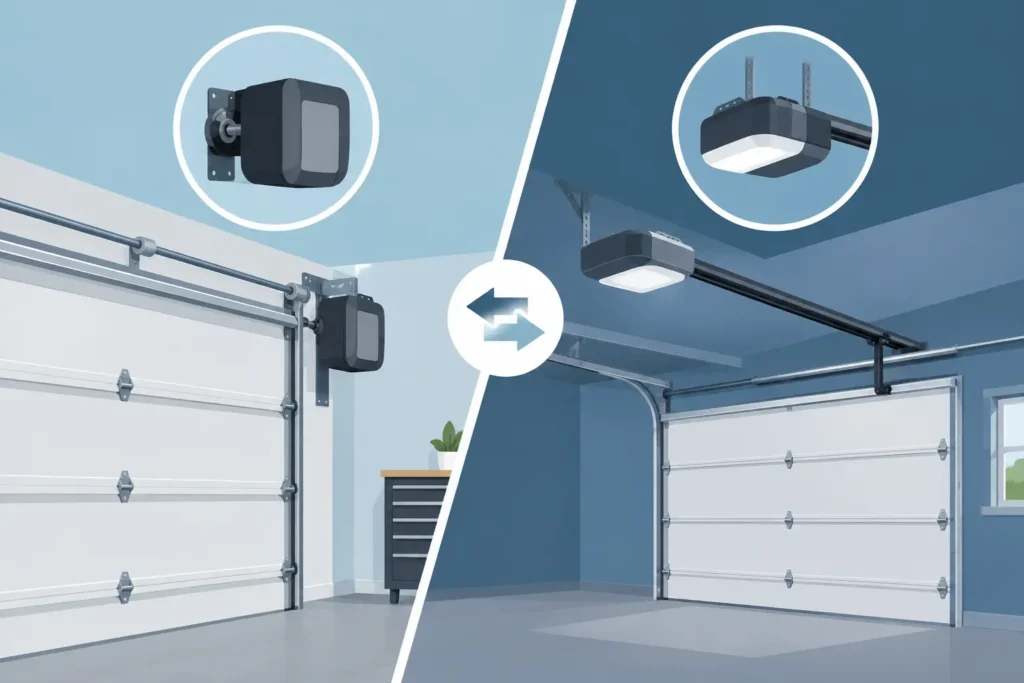
A trolley opener sits overhead and uses a rail to move a trolley back and forth. The trolley connects to the garage door with an arm, pulling the door open and pushing it closed. Belt-drive, chain-drive, and screw-drive models are all forms of trolley openers, although belt drives are the most common choice for quieter residential operation.
A jackshaft opener, sometimes called a wall-mount opener, installs on the wall next to the garage door. Instead of using an overhead rail, it turns the torsion shaft above the door. That shaft transfers power to the cable drums and lifting cables, which raise and lower the door.
The difference sounds simple, but it changes where the opener can go, what kind of door it can operate, and how the garage ceiling can be used.
When a Trolley Opener Is the Better Fit
For many homes, a trolley opener remains the straightforward and cost-conscious choice. It works with a wide range of standard sectional garage doors and is usually the easiest type to replace when an existing ceiling-mounted opener wears out.
If your garage has a conventional ceiling, adequate room for a center rail, and no special clearance needs, a trolley system is often a practical answer. It is also a good fit when the torsion setup does not have enough room for a side-mounted motor or when the door uses hardware that is not compatible with a jackshaft system.
Trolley openers offer familiar, flexible options
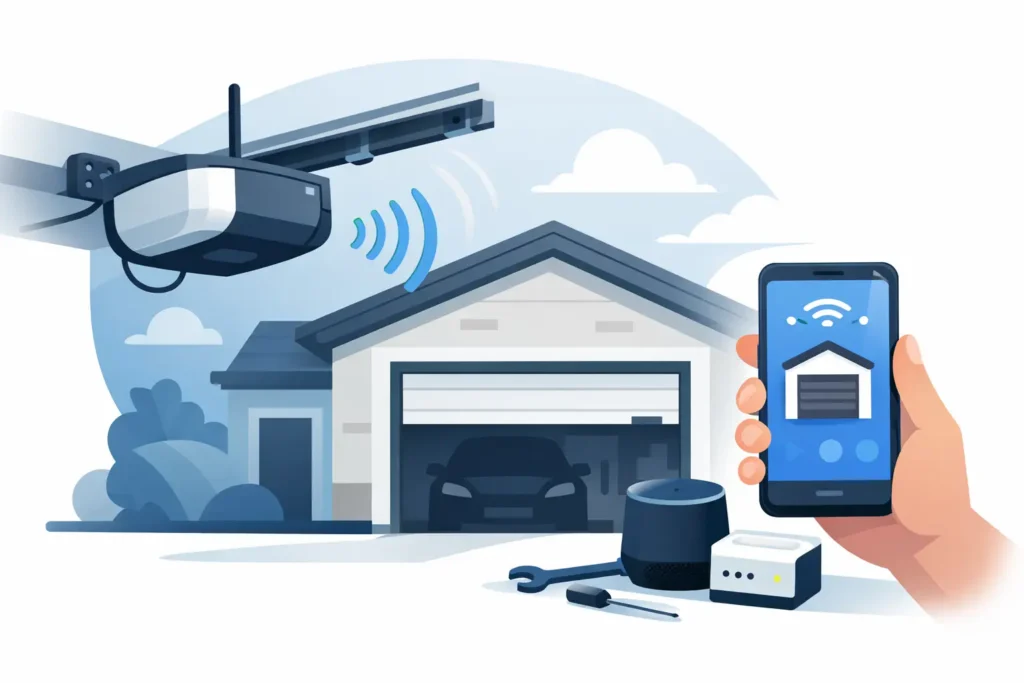
Modern trolley openers are far from basic. Belt-drive units can be very quiet, which matters when a bedroom, nursery, or living area sits above or next to the garage. Many models also include battery backup, Wi-Fi control, security lighting, and app-based alerts.
A trolley opener may be the better investment when you want reliable everyday performance without changing the overall layout of the garage. Replacement parts and service procedures are familiar to most qualified garage door technicians, and there are many opener choices at different price points.
The trade-off is overhead space
The rail and motor take up ceiling space. That can be a problem in garages where homeowners want to install a car lift, overhead storage racks, kayaks, bikes, or tall vehicles. The center rail can also interfere with certain lighting plans or make a finished garage feel more crowded.
A trolley opener needs the correct clearance and support. It should never be hung from weak framing, attached improperly, or installed without properly adjusted safety sensors. The door must be balanced as well. An opener guides a balanced door – it is not designed to compensate for worn springs or a heavy, dragging door.
When a Jackshaft Opener Makes Sense
A jackshaft opener is designed for garages where ceiling space has real value. By moving the motor to the wall beside the door, it leaves the overhead area clear. This is the main reason homeowners choose one.
It can be an excellent option for a garage with cathedral ceilings, high ceilings, overhead storage, or a lift. It is also popular in finished garages where a homeowner wants a cleaner look and fewer mechanical components overhead.
Jackshaft systems can create a cleaner garage layout
Without an opener rail running down the center of the ceiling, lighting and storage are easier to plan. The open ceiling can make a compact garage feel less cluttered, especially when the garage serves as a workshop, fitness space, or storage area in addition to parking.
Jackshaft openers can also operate quietly because they do not use a long rail and trolley assembly. Still, quiet operation depends on the full system. A door with dry rollers, loose hinges, worn cables, or an unbalanced spring system will make noise regardless of the opener style.
Jackshaft installation has stricter requirements
A wall-mount opener is not a universal upgrade. It generally requires a sectional door with a torsion spring system and enough clearance beside the torsion bar. The available side room, headroom, electrical access, cable drums, track arrangement, and door weight all need to be checked before choosing the opener.
This matters in older garages, where framing, electrical outlets, or nonstandard door hardware may limit the installation. Some doors use extension springs rather than torsion springs, while others have low-headroom or specialty track systems that need careful evaluation. A technician should measure the opening and inspect the hardware instead of assuming that a jackshaft model will fit.
Jackshaft openers also tend to cost more upfront than a standard trolley opener. That added cost may be worthwhile when ceiling clearance is the priority, but it does not automatically make a jackshaft system the better choice for every home.
Compare the Factors That Matter Most
The right opener choice is rarely about one feature. Consider how the system will work with your door, your garage, and the way you use the space.
Garage layout and available space
Choose a jackshaft opener when freeing up ceiling space is a clear benefit. If you are adding storage, planning a car lift, or have a high or unusual ceiling, moving the operator to the wall can solve a real layout problem.
Choose a trolley opener when your ceiling is open and standard, and there is no reason to pay more for a wall-mounted design. It is the efficient option for many typical two-car and one-car garages.
Door type and condition
A trolley opener can work with a broad selection of residential door setups. A jackshaft opener is more dependent on compatible torsion hardware and sufficient side clearance.
In either case, the door must be in good mechanical condition. Frayed cables, bent tracks, worn rollers, damaged sections, and weak or broken springs need attention before a new opener is installed. Installing a stronger or more expensive opener will not correct a door that is off track or poorly balanced.
Noise and living space nearby
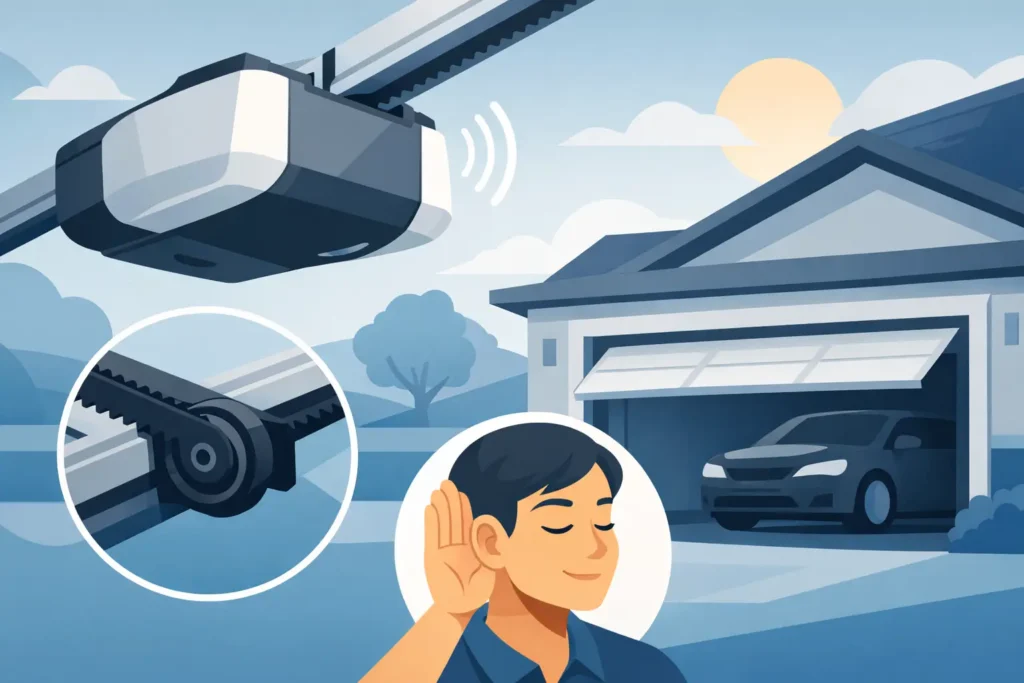
If noise is your main concern, compare specific drive systems rather than assuming one opener type is always quieter. A quality belt-drive trolley opener is an excellent choice for garages below bedrooms. A properly installed jackshaft can also be quiet, particularly because it eliminates the overhead trolley movement.
The quietest result usually comes from a complete approach: a balanced door, nylon rollers where appropriate, lubricated moving parts, tight hardware, and an opener selected for the weight and use of the door.
Cost and long-term value
Trolley openers usually offer a lower initial installation cost and a wide range of reliable models. A jackshaft system may require more planning, compatible equipment, and installation labor, which can increase the total price.
Value is not just the purchase price. If a wall-mount opener allows you to use a garage lift or makes overhead storage possible, it may bring more value to your home and daily routine. If the added ceiling space will go unused, a well-installed trolley opener may be the more sensible investment.
Safety Features Are Not Optional
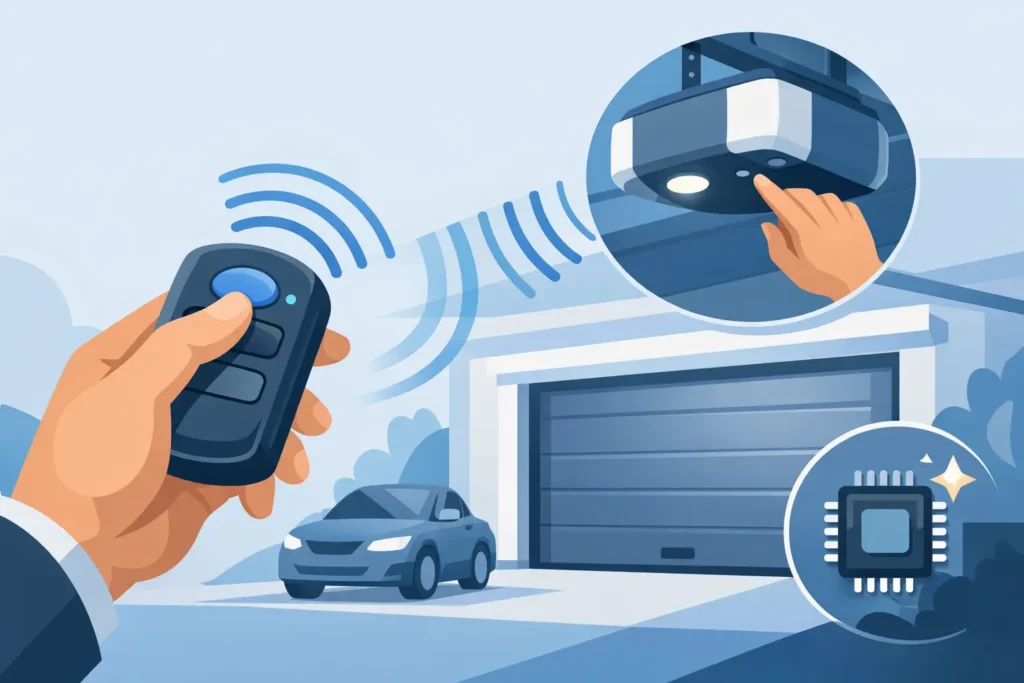
Both opener types should include properly functioning photo-eye sensors that stop or reverse the door when an object crosses the opening. A modern opener should also have a reliable wall control, remote access that is properly programmed, and an emergency release that household members can use if power is lost.
Battery backup is worth considering, especially for homes that rely on the garage as the main entry point. During a storm or outage, it allows the opener to operate for a limited number of cycles. Smart controls can add useful alerts and remote operation, but they should complement basic safety practices, not replace them.
Do not try to modify torsion springs, cables, drums, or opener mounting yourself. Those components carry significant stored force. A professional inspection can identify whether the problem is the opener, the door hardware, or both.
Get the Opener Matched to the Entire Door System
The best opener is the one that works safely with your door and supports how you use your garage. Patriot Garage Door can inspect the complete system, explain whether a jackshaft or trolley opener fits your setup, and provide a clear recommendation without pushing equipment you do not need.
Before choosing based on appearance or a single feature, have the door balance, spring system, tracks, clearance, and electrical access checked. A properly sized opener installed on a well-maintained door will be quieter, safer, and far more dependable when you need to get in or out of the garage.
Need Help With Your Garage Door?
From broken springs and opener issues to repairs and new installations, Patriot Garage Door provides dependable service when you need it.