A garage door that suddenly will not open is more than an inconvenience when you are trying to leave for work, pick up the kids, or secure your home for the night. In many cases, the cause is a broken torsion spring. Garage door torsion spring repair is a job that calls for the right tools, training, and careful attention to safety, not a quick household fix.
Torsion springs do the heavy lifting every time your garage door moves. When one fails, the opener may hum without raising the door, the door may lift only a few inches, or you may hear a loud bang from inside the garage. Knowing what happened can help you make a safe decision and avoid turning one failed part into damage to the opener, cables, tracks, or door itself.
What a Torsion Spring Does
A torsion spring is mounted above the garage door opening on a metal shaft. As the door closes, the spring winds tightly and stores energy. When the door opens, that stored energy helps counterbalance the door’s weight. This is why a properly working garage door can feel relatively manageable by hand even though the door may weigh hundreds of pounds.
The spring does not make the door weightless. It makes the door balanced enough for the opener and other hardware to do their jobs safely. When the spring breaks, the opener is suddenly asked to lift a load it was not designed to carry alone. Continuing to press the opener button can strain its motor, bend components, or leave the door stuck in an unsafe position.
Most residential doors use one or two torsion springs. Some lighter doors have a single spring, while heavier or wider doors commonly use two. If a two-spring system has one broken spring, the door may still move a little, but it is no longer properly balanced. The remaining spring is also often near the same age and level of wear.
Signs You Need Garage Door Torsion Spring Repair
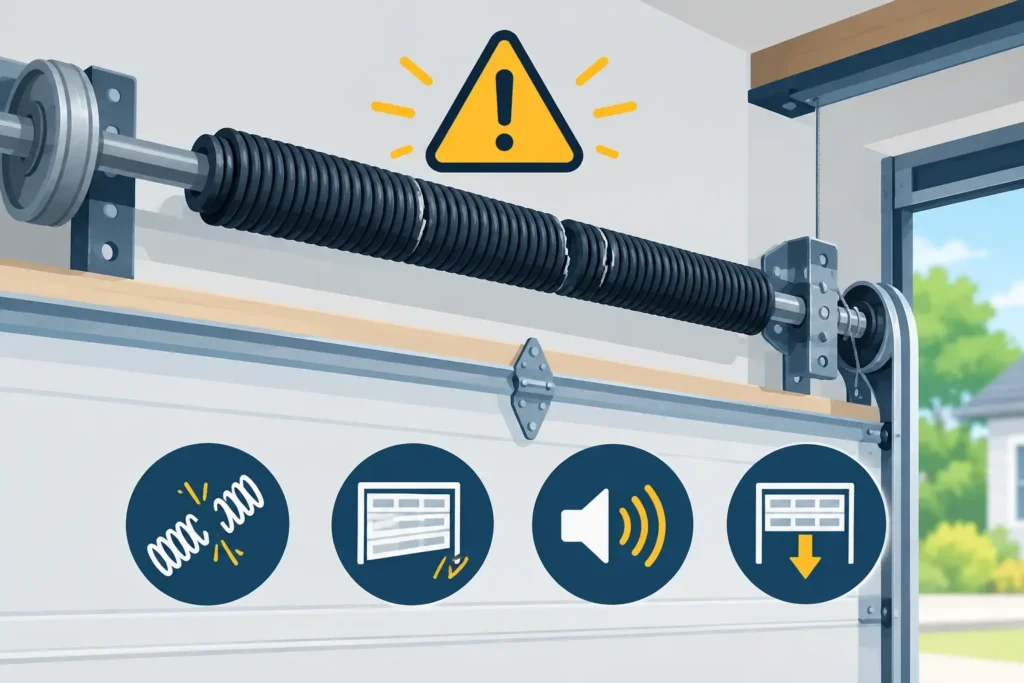
The clearest sign is a visible gap in the spring coil. A broken torsion spring typically separates into two pieces, leaving a gap of about two inches along the coil. Since the spring is mounted above the door, though, that break is not always easy to see from the floor.
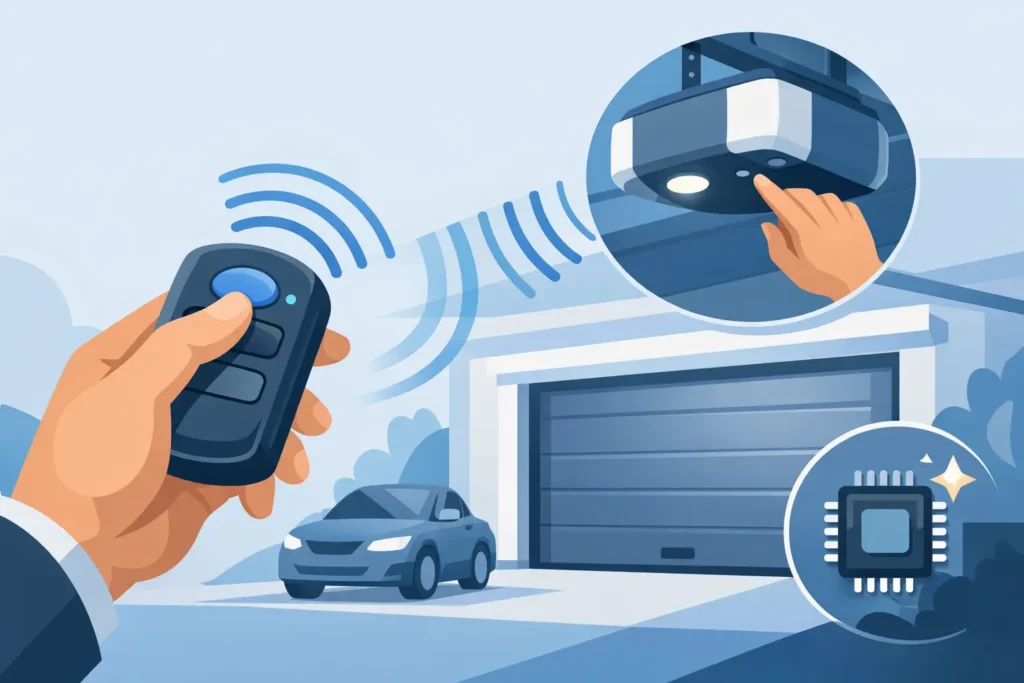
Other warning signs are usually more noticeable in day-to-day use. The garage door may refuse to open with the remote or wall button. It may rise a few inches and reverse, or the opener may make noise while the door barely moves. If you have released the opener using the emergency cord, the door may feel unusually heavy and difficult to lift.
A sharp bang from the garage is another common clue. Torsion springs are under significant tension, and the sound of one breaking can be startling. It may resemble a loud crack, a heavy object dropping, or something hitting the door. After that sound, avoid using the opener until the system has been inspected.
You may also notice a door that sits unevenly, cables that look slack or have come off their drums, or an opener rail that appears to strain during operation. These problems do not always mean the torsion spring is the only issue, but they do mean the door should be serviced before further use.
Why Torsion Springs Break
Most springs break because they have completed their expected number of opening and closing cycles. A standard spring may be rated for around 10,000 cycles. For a family that uses the garage as the main entrance, those cycles can add up much faster than expected.
Cold Massachusetts winters can also expose an aging spring. Steel becomes less flexible in low temperatures, and a spring that is already worn may fail when the temperature drops. Rust and corrosion can shorten spring life as well, especially in garages where moisture, road salt, or poor ventilation are ongoing concerns.
Incorrect spring sizing and poor adjustment can create trouble, too. A spring must match the door’s actual weight, height, track setup, and cable drum configuration. Installing a spring that is too weak, too strong, or improperly wound can make the door unbalanced. That affects more than convenience. It puts added stress on rollers, cables, bearings, hinges, and the opener.
Normal wear is not always visible. Springs can weaken gradually before they break, which is one reason annual garage door maintenance is worthwhile. A technician can check balance, spring condition, cable wear, track alignment, and opener safety features before a small issue becomes an urgent repair.
Why This Is Not a DIY Repair
Homeowners are often capable of handling many practical repairs around the house. Torsion spring replacement is different because the spring remains under extreme tension during installation and adjustment. A slipped winding bar, incorrect tool, loose set screw, or poor adjustment can cause serious injury and damage to the garage door system.
The risk is not limited to the spring itself. Cables can come off their drums, the door can move unexpectedly, and a heavy door can fall if it is not properly secured. Online videos can make the process look straightforward, but they cannot account for the condition of your specific door, the correct spring specifications, or hidden problems with the shaft, bearings, cables, and drums.
There is also a practical reason to call a professional. A qualified technician can identify whether the broken spring is the full problem or whether wear elsewhere contributed to the failure. That means you get a repair based on the condition of the entire system, not simply a new part installed without context.
What to Do When a Spring Breaks
Start by stopping use of the door. Do not keep cycling the opener in hopes that it will pull the door up, and do not try to lift a heavy door by yourself. If the door is open, keep people, pets, and vehicles clear of the opening. Do not walk or drive under it.
If possible, use another entrance to the home and schedule service promptly. A technician can safely secure the door, inspect the spring system, install correctly sized replacement springs, and test the door’s balance and operation. They should also check the cables, drums, rollers, bearings, tracks, and opener to make sure the repair is complete.
If your car is trapped in the garage, explain that when you call. The response may depend on whether the door is open, closed, or partially raised, as well as whether cables have come loose. Clear details help the service team arrive prepared and give you a more accurate explanation of what the repair may involve.
Repair or Replace Both Springs?
When one spring breaks on a two-spring system, replacing both is often the sensible recommendation. The springs were installed at the same time and have usually experienced the same number of cycles. Replacing only the broken spring can save money in the moment, but the older spring may fail soon after, creating another service call and another interruption.
That said, the right choice depends on the age and condition of the remaining spring, the door’s usage, and the type of spring system installed. An honest technician should explain the options clearly rather than treating a full replacement as the only answer in every situation.
For homes with frequent garage use, higher-cycle springs may be worth considering. They typically cost more upfront but can last longer than standard springs. This can be a practical investment for households that enter and exit through the garage several times a day.
Protecting Your Door After the Repair
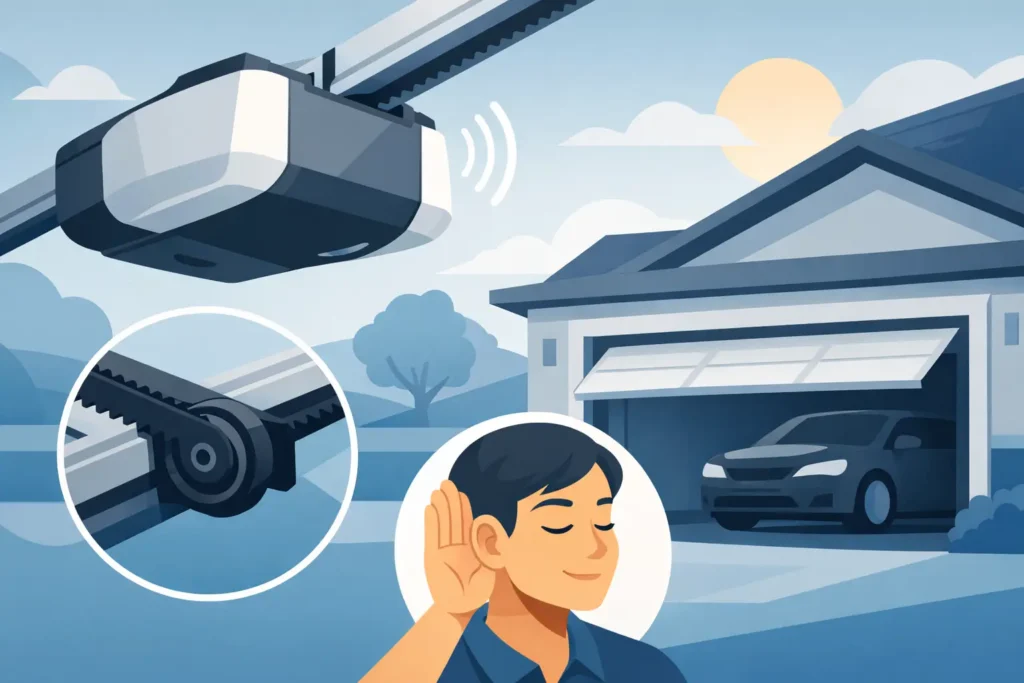
A quality spring repair should leave the door balanced, quiet, and reliable. Still, springs are only one part of a moving system. Simple maintenance helps protect the repair: keep the photo-eye sensors clear, listen for new scraping or grinding sounds, and avoid forcing a door that is operating unevenly.
A professional tune-up can catch loose hardware, worn rollers, frayed cables, and opener issues before they lead to a breakdown. Patriot Garage Door approaches these visits with straightforward recommendations, so homeowners understand what needs attention now and what can be monitored over time.
A broken spring is stressful, but the next step does not have to be complicated. Keep the door out of use, arrange qualified service, and choose a repair that restores safe, dependable access to your home.
Need Help With Your Garage Door?
From broken springs and opener issues to repairs and new installations, Patriot Garage Door provides dependable service when you need it.