
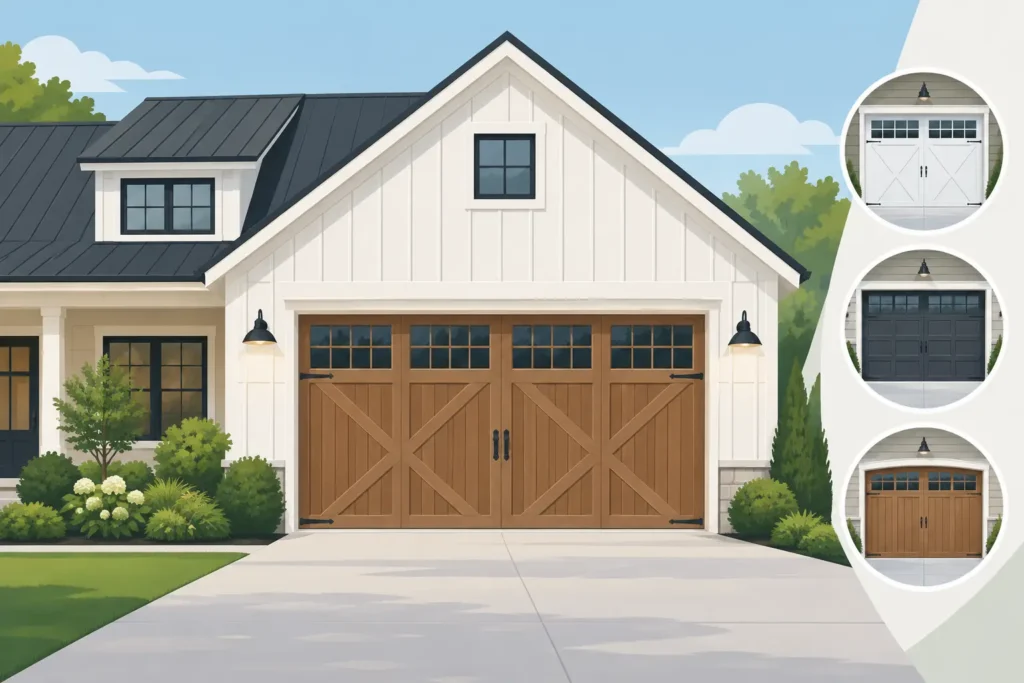
A garage door can take up a large share of your home’s front exterior. When it is dented, outdated, or simply out of step with the house, it is hard to ignore. Carriage house garage doors give homeowners a way to add traditional character without giving up the dependable operation expected from a modern overhead door.
The look is inspired by the swinging doors once used on carriage houses and barns. Modern versions still roll upward on tracks, use standard garage door openers, and can include the safety features and insulation your home needs. The result can feel warm and architectural rather than purely functional.
What Defines Carriage House Garage Doors?
The carriage house style is about visual details, not a different operating system. Most doors use sectional panels that travel vertically and then back along ceiling tracks. From the driveway, though, they are designed to resemble a pair of side-hinged doors.
Common design elements include recessed or raised panels, crossbucks, vertical planks, decorative hinges, strap hardware, and window rows near the top. The best design does not need every feature at once. A clean steel door with subtle overlays may fit a Colonial home better than a heavily detailed design with oversized hardware.
This flexibility is one reason the style works across Massachusetts neighborhoods. It can complement a historic-looking farmhouse, a Cape, a Colonial, or a newer home that needs more character at the street. The goal is not to make the garage look old. It is to select details that look intentional beside the siding, trim, roofline, and entry door.
Start With the Home, Not the Door Catalog
A beautiful garage door can still look misplaced if its color, windows, and panel pattern compete with the rest of the exterior. Before choosing a model, stand across the street and consider what the home already emphasizes. Is it formal and symmetrical? Rustic and textured? Clean-lined and contemporary with traditional touches?
For a Colonial or traditional home, a symmetrical panel layout and a restrained window pattern often work well. Black or dark bronze hardware can provide contrast against white, gray, or natural wood-tone doors. On a more rustic home, vertical plank styling and crossbuck overlays can add dimension without appearing overly formal.
Color deserves the same attention. White remains a reliable choice when the garage trim is white, but it is not the only option. Charcoal, black, deep brown, and wood-look finishes can create a stronger focal point. Dark colors may show dust, salt residue, and minor surface marks more readily, especially after a New England winter. A practical choice is one that looks good from the curb and is realistic for the maintenance you are willing to do.
Windows can make the door feel lighter and bring daylight into the garage. They also affect privacy and the appearance of the entire front elevation. Clear glass is not always the right answer for a garage facing a busy street. Frosted, tinted, seeded, or obscured glass can preserve the look while limiting visibility inside. Window placement should also complement the home’s existing windows rather than introduce a completely different grille pattern.
Choose a Material That Matches the Job
Carriage house styling is available in several materials, and the right option depends on budget, exposure, upkeep, and the level of authenticity you want.
Steel is the practical choice for many homeowners. It is durable, widely available, and can be finished in a range of colors and wood-look options. Insulated steel doors offer strength and energy efficiency without the regular refinishing required by real wood. For most attached garages, this balance of appearance, value, and day-to-day durability is hard to beat.
Wood delivers natural texture and depth that other materials can imitate but not fully duplicate. It can be an excellent fit for a high-end or historic-inspired exterior. The trade-off is maintenance. Paint or stain needs regular attention, and moisture, sun exposure, and seasonal temperature changes can affect the finish over time. A wood door is worth considering when the architectural match is especially important and the homeowner is prepared to maintain it.
Composite and faux-wood options can offer the warmth of wood grain with less upkeep. Quality varies by manufacturer and construction, so it is worth looking at samples in natural light. Fiberglass may also be a consideration in certain designs, particularly where moisture resistance matters. The material should be chosen for more than appearance. A garage door is a moving system, and its weight, rigidity, insulation, and hardware all affect long-term performance.
Insulation Is More Than a Comfort Upgrade
If the garage is attached to the home, sits below a bedroom, or is used as a workshop, insulation deserves serious consideration. An insulated door can help moderate temperature swings, reduce outside noise, and make the space more comfortable throughout the year.
In Massachusetts, that can matter in both January and July. Insulation will not turn an unconditioned garage into a heated living area, especially if the walls and ceiling are uninsulated. But it can reduce the harshness of cold and heat transfer through one of the largest openings in the house.
Look beyond a simple R-value when comparing doors. The overall construction matters, including panel thickness, weather seals, and how well the door fits the opening. A well-installed door with proper perimeter sealing often performs better than a higher-rated product installed without attention to the details.
Decorative Hardware Should Look Good and Stay Secure
Decorative handles and hinges are a defining feature of many carriage house designs. Because the door must still travel through tracks, the hardware is usually surface-mounted and nonfunctional. That is normal. It creates the swing-door appearance while allowing safe overhead operation.
Hardware should be proportionate to the door. Large handles on a narrow single-car door can look exaggerated, while small hardware can disappear on a wide double door. Placement also matters. Decorative hinges typically align with panel lines, and handles should sit where they suggest a natural opening point without interfering with the door’s operation.
Avoid adding aftermarket hardware without checking clearances first. Anything that catches on the jamb, track, or weatherstripping can damage the door or create an operating problem. A professional installer can confirm that the look you want is compatible with the door and opening.
Do Not Overlook the Opener and Safety System
A new carriage house door is often heavier than an older basic door, particularly if it has insulated construction, overlays, or glass. The springs must be correctly sized to balance that specific door, and the opener should be selected for the door’s weight and use pattern.
This is not a place to guess. Springs, cables, rollers, tracks, and the opener all work together. An opener is not meant to lift a poorly balanced door. If the door feels heavy by hand or will not stay halfway open when disconnected from the opener, it needs service rather than a stronger motor.
For homeowners who use the garage as their main entry, modern opener features can add real convenience. App control, battery backup, motion lighting, and delivery access options may be useful, but reliability comes first. A quality opener paired with proper installation and routine maintenance is a better investment than extra features on an unbalanced door.
Plan for Maintenance Before Problems Start
Carriage house garage doors are built for everyday use, but they are still large mechanical systems. A seasonal visual check can catch developing issues before they become an inconvenient breakdown. Watch for worn bottom seals, loose decorative hardware, noisy rollers, uneven movement, damaged panels, or gaps around the door when closed.
Do not attempt to adjust torsion springs or replace frayed cables yourself. These parts operate under significant tension and can cause serious injury when handled incorrectly. Keep the tracks clear, test the opener’s reversing safety feature, and schedule service if the door begins to shake, bind, or make a new grinding sound.
A well-chosen carriage house door should add curb appeal without becoming a constant project. If you are comparing styles, materials, or insulation levels, an honest on-site assessment can help separate what looks good in a brochure from what will work reliably on your home. Patriot Garage Door can help homeowners weigh those options, explain the installation details clearly, and make sure the finished door operates as well as it looks.
The right door should feel like part of the house from day one, then continue doing its quiet, dependable job every time you come home.
Need Help With Your Garage Door?
From broken springs and opener issues to repairs and new installations, Patriot Garage Door provides dependable service when you need it.