A garage door gap can turn a clean, protected garage into a place where cold air, rain, leaves, pests, and road dust get in. Learning how to fix garage door gaps starts with identifying where the opening is and why it formed. A gap at the bottom often has a different cause than one along the side, top, or between door sections.
The right repair may be as simple as replacing weatherstripping. But if the door is crooked, binding, or sitting unevenly on the floor, the seal is not the real problem. Addressing the underlying issue protects your garage, improves comfort in rooms beside or above it, and helps prevent a small repair from becoming a larger one.
Find Where the Garage Door Gap Is Coming From
Close the door during daylight and stand inside the garage with the lights off. Look for visible light around the bottom, sides, top, and between panels. Then inspect the door from the outside. Note whether the gap is consistent or limited to one corner.
A uniform gap along the bottom usually points to a worn or compressed bottom seal. A gap along one side may mean the vinyl stop molding on the door frame has deteriorated or shifted. If one bottom corner sits higher than the other, the door may be out of alignment, the floor may be uneven, or a cable, track, roller, or spring issue may be affecting how the door travels.
Do not assume every gap is a weatherstrip problem. A new seal cannot compensate for a door that is off track or a floor that slopes significantly. It may hide the symptom briefly while the mechanical issue gets worse.
How to Fix Garage Door Gaps at the Bottom
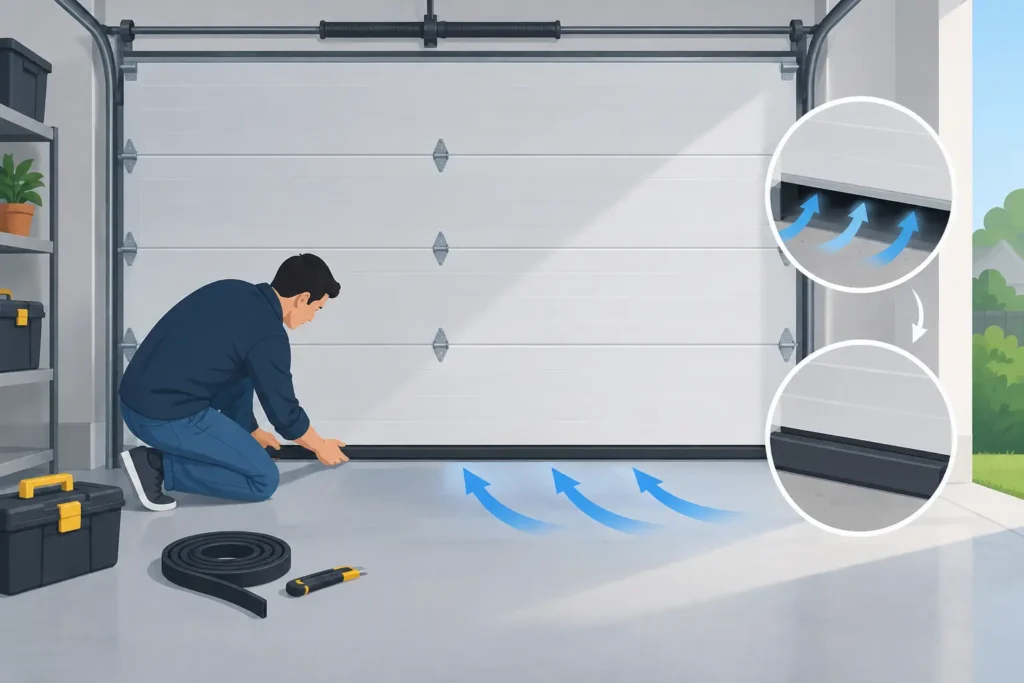
The bottom seal is a flexible strip attached to the bottom edge of the door. It is designed to compress against the concrete when the door closes. Over time, it can crack, flatten, tear, or become stiff in Massachusetts winters.
Start by checking whether the seal is visibly damaged. If it is, measure the width of the door and the track or channel that holds the seal. Garage door bottom seals are not one-size-fits-all, so matching the existing retainer style matters. With the door fully closed and the opener unplugged, you can remove the old seal and slide or feed the replacement into the retainer, depending on the door design.
A little soapy water can help a new seal slide through a tight channel. Trim the excess only after the seal is centered and extends slightly beyond both ends. The finished seal should make full contact with the floor without being pulled tight.
If the new seal still leaves a gap in one area, check the floor. Older garages often have uneven concrete, small low spots, or a slope at the opening. A thicker bottom seal or an adjustable threshold seal may improve the fit for minor irregularities. Thresholds adhere to the floor and give the door seal a raised, even surface to close against.
That said, a threshold is not the best answer if water flows toward the garage. Before installing one, consider drainage. You do not want to create a dam that directs melting snow or rainwater under the door.
Repair Gaps Along the Sides and Top
Side and top gaps are commonly caused by worn exterior stop molding, also called perimeter weatherstripping. This vinyl-backed trim attaches to the garage door frame and rests lightly against the door when it is closed.
Inspect it for brittle vinyl, torn sections, loose nails, or areas that have pulled away from the door. Replacing damaged stop molding is generally straightforward when the door is operating normally. The new material should touch the door without pressing so firmly that it causes rubbing or interferes with movement.
For a minor gap caused by shifted molding, loosening the fasteners, repositioning the strip, and securing it again may be enough. Make small adjustments and test the door after each one. If the weatherstripping is adjusted too tightly, the door can drag against it, making the opener work harder and shortening the life of the seal.
Top gaps can also result from an opener travel setting that stops the door slightly too high. If the door reverses, fails to close fully, or leaves a narrow gap across the entire top, review the opener’s close-limit adjustment instructions. Make only small changes. If the door closes too far, it can put unnecessary pressure on the door, track, and opener.
When a Garage Door Gap Is a Mechanical Problem
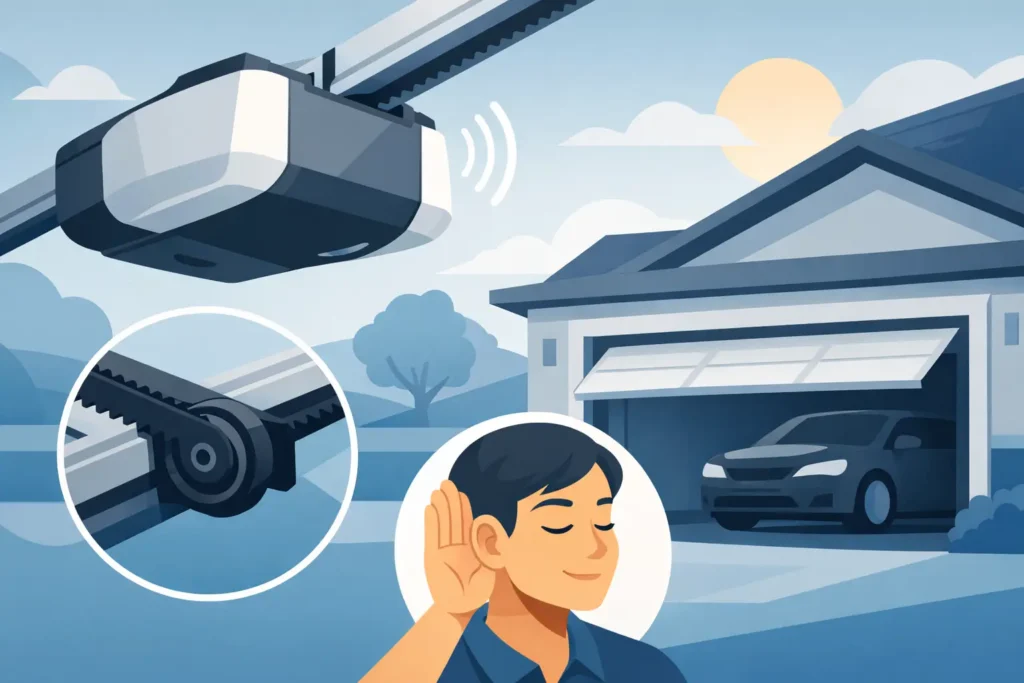
A garage door should close evenly and sit squarely in its opening. When it does not, weatherstripping adjustments are not enough. Watch the door as it moves. A door that shakes, rubs the track, hangs at an angle, or makes scraping sounds needs a closer inspection.
Common causes include worn rollers, bent tracks, loose track brackets, damaged cables, or an issue with the spring system. A broken or improperly tensioned spring can affect door balance, while a frayed cable can allow one side of the door to sit higher than the other. These are not safe DIY repairs.
Never loosen, remove, or adjust torsion springs, lift cables, bottom brackets, or cable drums. These parts are under heavy tension and can cause serious injury if handled incorrectly. If the door is crooked, off track, or has a loose cable, stop operating it and arrange professional service.
A technician can determine whether the gap is caused by the seal, the floor, the track setup, or a balance problem. That diagnosis matters because replacing only the visible worn part may not solve the issue for long.
Check the Door Balance Before Replacing More Parts
If your door has no visible cable or track damage, a basic balance check can reveal whether the door is placing too much strain on the opener. Disconnect the opener using the emergency release only when the door is fully closed. Then lift the door manually to about halfway.
A properly balanced door should stay near that position with little movement. If it drops quickly, flies upward, or feels extremely heavy, reconnect the opener and call for service. Do not try to correct spring tension yourself.
A balanced door closes more evenly, helps seals contact the floor properly, and reduces wear on the opener. It is one of the most overlooked factors when homeowners are trying to solve recurring gaps.
Prevent New Gaps From Returning
Weather seals wear gradually, so inspect them at least twice a year. Pay attention after a hard winter, a vehicle bump, or any time the door starts sounding different. Clear leaves, gravel, and packed snow from the threshold so the bottom seal can sit flat.
Keep an eye on the door’s movement as well. Rollers should move smoothly, tracks should remain secure, and the door should not lean or scrape. Lubricating appropriate moving parts with garage door lubricant can reduce noise and wear, but lubricant will not correct a bent track or failing spring.
Preventative maintenance is especially useful for doors that are used several times a day. A professional inspection can catch loose hardware, worn rollers, failing seals, and balance concerns before they leave your garage exposed to the weather or prevent the door from operating safely.
Know When to Call for Garage Door Repair
Replacing a worn bottom seal or frame weatherstripping can be a reasonable homeowner project when the door is straight, balanced, and working smoothly. Call a professional when the gap is paired with uneven closing, loud operation, a loose cable, a bent track, damaged panels, or a door that will not stay closed.
Patriot Garage Door provides straightforward garage door inspections and repairs throughout Massachusetts, with recommendations based on what your door actually needs. Sometimes that means a new seal. Other times, correcting alignment or replacing a worn component is the repair that keeps the gap from coming back.
A dry, secure garage starts with a door that closes squarely and seals properly. If something about the door’s movement does not look or sound right, treating it early is usually the safest and most cost-effective choice.
Need Help With Your Garage Door?
From broken springs and opener issues to repairs and new installations, Patriot Garage Door provides dependable service when you need it.