A garage door that suddenly will not lift is more than an inconvenience when you are trying to leave for work or get the car inside before a Massachusetts storm. In many cases, the problem is a broken spring. Garage door springs replacement restores the lifting force your door needs, but it is not a repair to treat as a weekend project. Springs carry extreme tension, and the right repair depends on the door’s weight, system type, and overall condition.
Why Garage Door Springs Matter
Your opener does not actually do the heavy lifting on its own. Garage door springs are designed to counterbalance most of the door’s weight, allowing the door to move smoothly by hand or with an opener. When a spring is properly sized and adjusted, the door should feel controlled rather than heavy and should not slam shut.
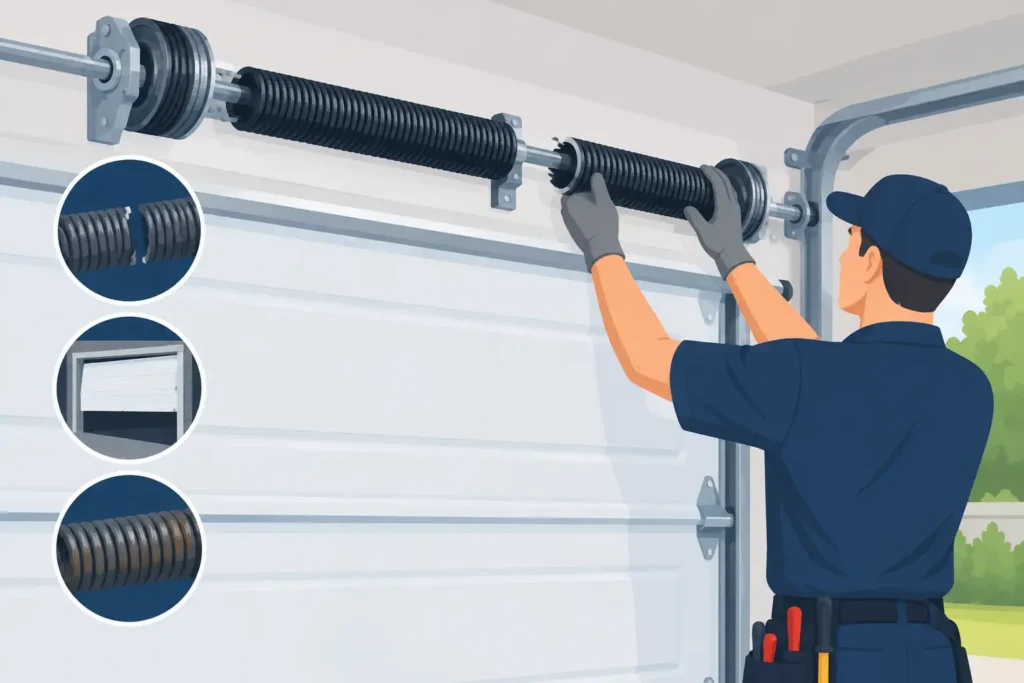
Most residential doors use one of two spring systems. Torsion springs sit on a metal shaft above the door opening. Extension springs run alongside the horizontal tracks. Both systems do the same essential job, but torsion springs are generally more durable and provide more controlled movement. The right option depends on the door, the available space, and the existing setup.
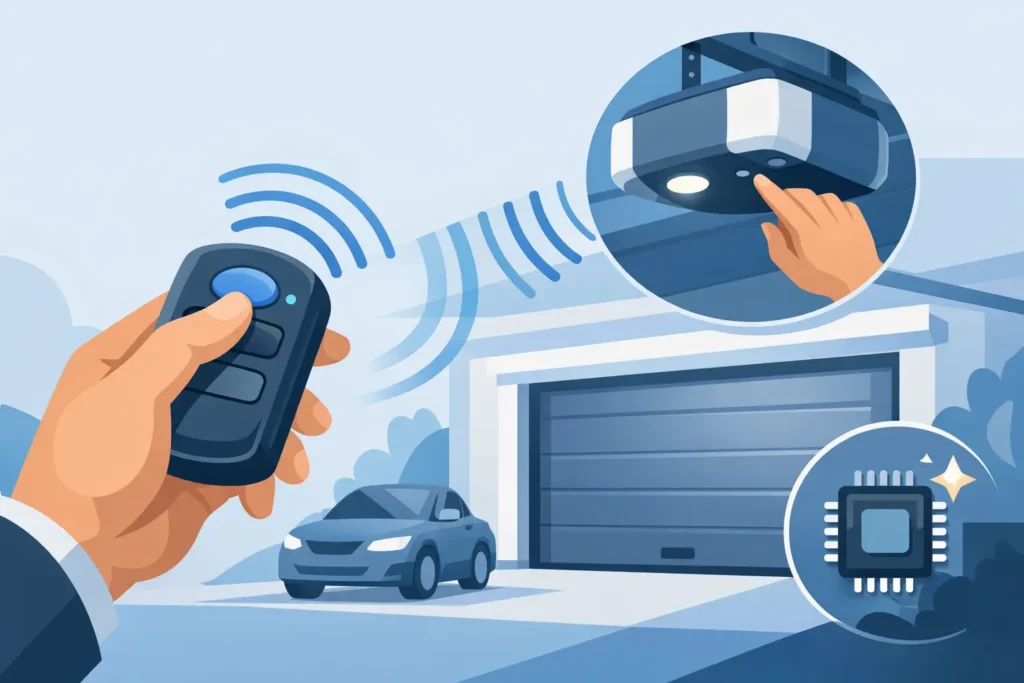
When a spring breaks, the opener may hum without moving the door, lift it only a few inches, or strain and reverse. Trying to force the door open can damage the opener, bend tracks, pull cables out of place, or create a safety hazard for anyone nearby.
Signs You May Need Garage Door Springs Replacement
A broken spring often makes a sharp bang, similar to a loud crack from inside the garage. That sound can be alarming, but it is commonly the spring releasing when the steel finally gives out. On a torsion spring, you may see a visible gap in the coil above the door.
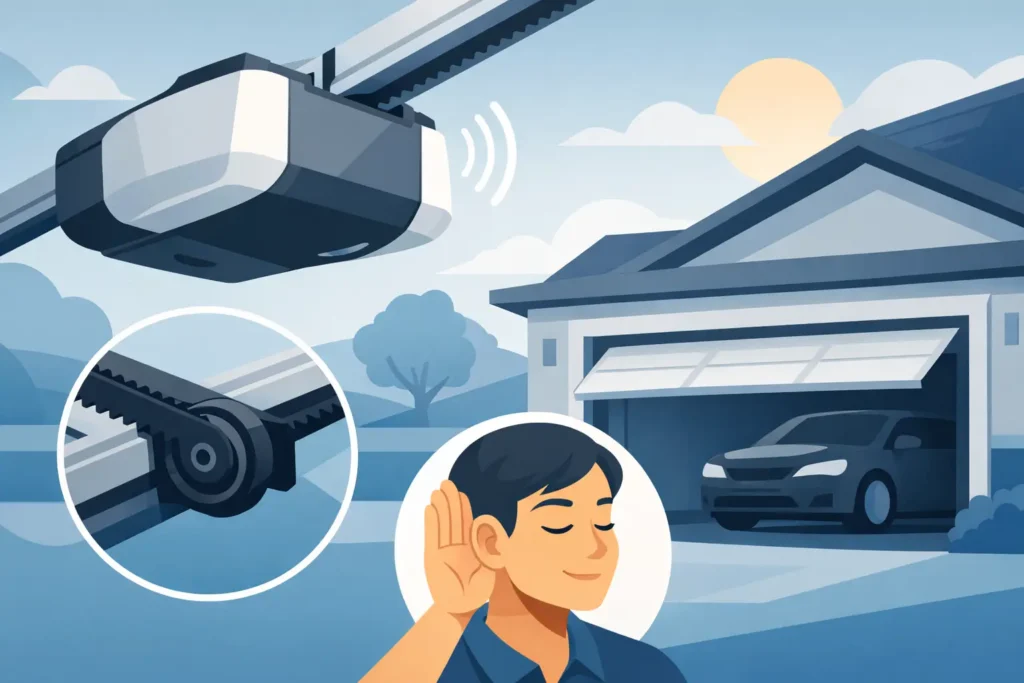
Other signs are less obvious. The door may become unusually heavy when disconnected from the opener. It may open crooked, stop partway, or close faster than normal. You might also notice a loose cable near a drum, a door that shakes during travel, or an opener that seems to be working harder than it used to.
Do not assume every opening problem means the spring has failed. A misaligned safety sensor, worn rollers, damaged tracks, a failing opener, or a cable issue can cause similar symptoms. A trained technician should inspect the full system before recommending a repair. That clear diagnosis helps avoid replacing parts that are not the source of the problem.
Spring Life Is Measured in Cycles
Garage door springs wear out through use, not just age. One cycle is a complete opening and closing of the door. Standard springs are often rated for about 10,000 cycles, though actual service life varies with use, weather, door weight, maintenance, and spring quality.
For a household that uses the garage as its main entrance, those cycles add up quickly. A door opened and closed several times each day may need spring service sooner than a door used only occasionally. High-cycle springs can be a sensible upgrade for frequently used doors because they are built for more cycles before replacement becomes necessary.
Why Spring Work Is Best Left to a Professional
A garage door spring is under a level of tension that can cause serious injury if it is released unexpectedly. The risks are not limited to the spring itself. Cables, brackets, drums, tracks, and the door can move suddenly when the system is handled incorrectly.
Professional spring service involves more than installing a new coil. The technician identifies the proper spring size based on the door’s weight and dimensions, checks whether the shaft and bearing components are in good condition, installs the spring correctly, and balances the door. The cables, rollers, tracks, hinges, and opener should also be checked for wear or damage that could shorten the life of the new spring.
This is where honest recommendations matter. A broken spring does not automatically mean you need a new door or opener. Often, a properly matched spring replacement and a few related adjustments return the door to reliable operation. If other components are worn, you should receive a clear explanation of what needs attention now and what can be monitored over time.
Should Both Springs Be Replaced?
Many double garage doors use two torsion springs. If one has broken, the other has completed the same number of cycles and may not be far behind. Replacing both at the same time is often the practical choice because it restores balanced lifting force and reduces the chance of a second service call soon after.
That said, the answer depends on the system. A technician should assess the condition of both springs and explain the options. Replacing a matched pair is usually the better long-term value on a two-spring system, while a single-spring door naturally requires only one correctly sized replacement.
Extension-spring systems deserve the same careful evaluation. If an extension spring needs replacement, proper containment cables are especially important. These safety cables help limit the spring’s travel if it breaks.
What a Quality Spring Replacement Includes
Reliable work starts with confirming the cause of the failure and securing the door before any repair begins. The new spring must be selected for the specific door, not simply chosen because it looks similar to the old one. Door weight, height, track configuration, and hardware all affect the correct fit.
After installation, the door should be balanced and tested through its full travel. A balanced door is easier on the opener and less likely to bind or reverse unexpectedly. The technician should test the opener, safety reversal function, and photo-eye sensors as part of confirming that the entire system operates safely.
Quality service also means straightforward communication. You should know what failed, what was replaced, whether nearby components show meaningful wear, and what the repair costs before work begins. For homeowners, that is the difference between a quick fix and a repair they can trust.
Protecting Your New Springs
Springs cannot last forever, but regular care can help the whole garage door system work more smoothly. Keep the tracks free of stored items and debris, watch for changes in noise or movement, and avoid pulling on a door that is stuck or moving unevenly. If the door begins to feel heavy, jerks during operation, or makes new grinding or squealing sounds, schedule an inspection before a small issue becomes a broken spring or damaged opener.
Annual preventative maintenance is particularly useful for doors exposed to changing New England temperatures and frequent daily use. A service visit can identify worn rollers, loose hardware, frayed cables, and balance issues before they interrupt access to your home.
If your door is stuck, keep people and vehicles clear of the opening and avoid repeated attempts with the opener. A dependable local technician can assess the problem, explain the repair in plain language, and get your door moving safely again. That is the kind of repair that protects not only your garage door, but your daily routine.
Need Help With Your Garage Door?
From broken springs and opener issues to repairs and new installations, Patriot Garage Door provides dependable service when you need it.