A power outage can turn a working garage door into a barrier between your family and the road. That matters when you need to leave for work, pick up a child, get to an appointment, or pull a car inside before a Massachusetts storm gets worse. This garage door battery backup guide explains what backup power does, when it is worth having, and how to make sure it works when you need it.
What a garage door battery backup actually does
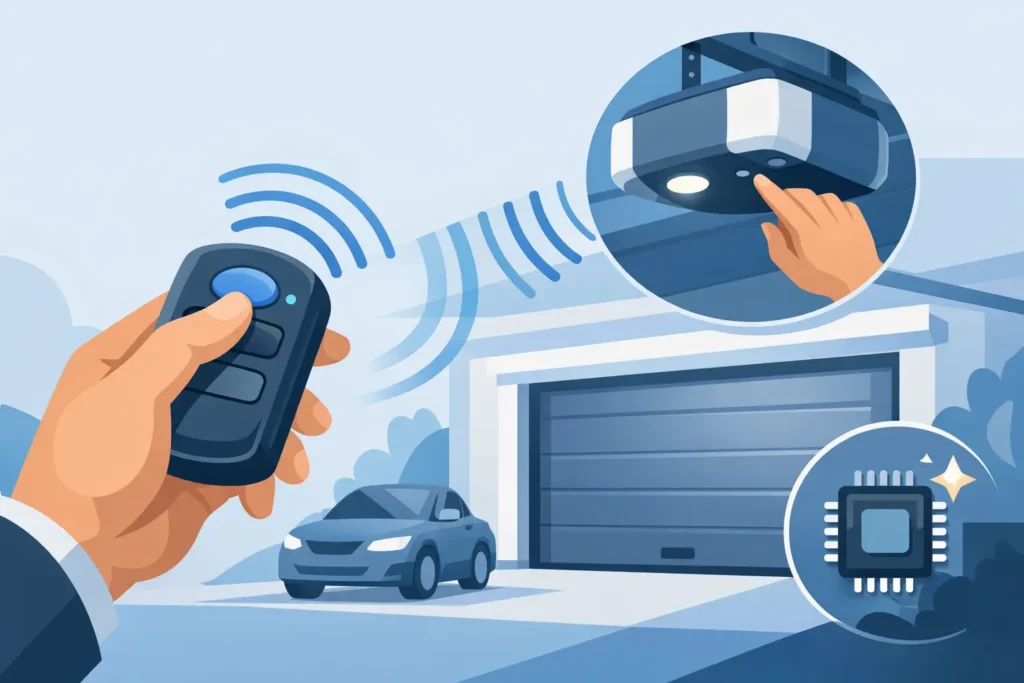
A battery backup is a small rechargeable battery connected to a compatible garage door opener. When household power goes out, the opener switches to battery power so you can still operate the door with the wall control, remote, keypad, or app, depending on the opener model.
It does not power your entire garage. The lights, outlets, and other equipment may remain off. Its purpose is simpler and more practical: keep the opener able to lift and lower the garage door for a limited number of cycles.
Most battery backup systems provide enough stored power for roughly 20 to 50 door cycles, though the actual number depends on the battery condition, opener model, door weight, temperature, and how smoothly the door moves. A well-balanced door with properly maintained springs and rollers places less strain on the opener and helps the battery last longer during an outage.
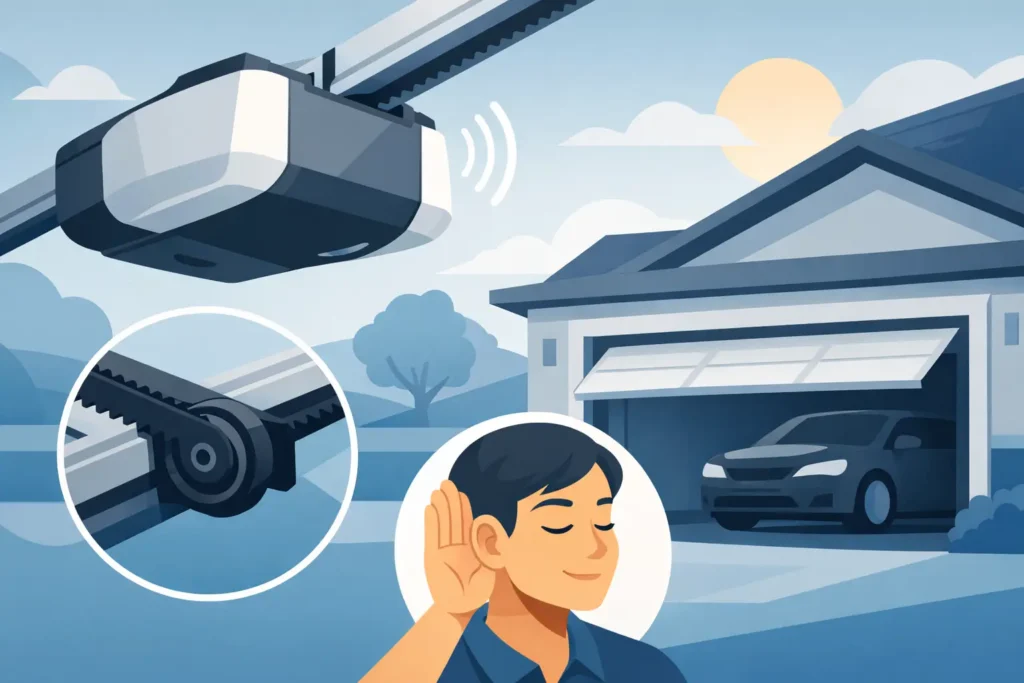
That last point is easy to overlook. Battery backup is not a fix for a heavy, binding, or poorly balanced garage door. If the door is difficult to move manually, noisy, or jerks during travel, the opener and its backup battery are being asked to do more work than they should.
Why backup power is worth considering
For many homes, the garage is more than a place to park. It may be the primary entrance, the location of a freezer, or the only practical way to get a vehicle out during bad weather. Losing access can be more than an inconvenience.
A battery backup is particularly useful if your garage has no separate pedestrian door, if someone in the household has mobility limitations, or if you regularly rely on your garage as your main entry point. It is also a smart convenience feature for homes in areas where wind, heavy snow, falling branches, or utility work can interrupt power.
There is a safety reason, too. Modern openers have an emergency release cord that disconnects the door from the opener so it can be lifted manually. That release is valuable, but a heavy door can be difficult or unsafe to operate by hand. A battery backup lets you use the door normally rather than relying on manual lifting in the dark or during a storm.
Integrated backup vs. an add-on battery
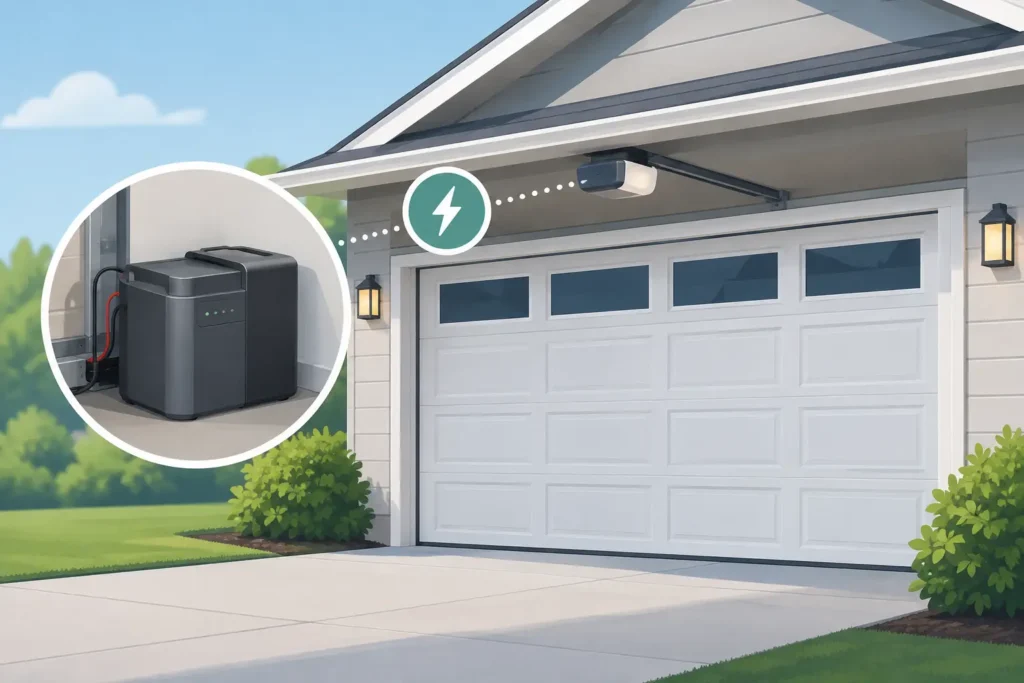
The cleanest option is usually an opener with battery backup built in. Many current opener models are designed to accept a manufacturer-approved battery, and some include one at installation. The battery is housed inside or near the opener unit, charges automatically, and activates without any action from the homeowner when power fails.
An add-on battery may be available for an existing opener, but compatibility matters. Not every opener can accept a backup battery, and using a battery that is not approved for the model can cause performance issues or void a warranty. Before buying anything, check the opener model number and confirm whether the manufacturer supports a battery backup accessory.
A portable power station or generator may seem like an alternative. It can be useful in a longer outage, but it is not the same as an integrated backup system. It requires setup, safe placement, and enough attention to connect the opener when the power is already out. A properly installed battery backup is automatic and ready in the moment you need it.
Choosing the right battery backup opener
Start with compatibility and reliability, not just the advertised number of cycles. A quality opener from a trusted manufacturer, paired with the correct battery, is generally the best long-term choice. If your current opener is older, unreliable, or lacks modern safety features, replacing the full opener may be more practical than trying to add backup capability to aging equipment.
Look for an opener that gives clear low-battery alerts. Many models beep, flash a light, display a message, or send an app notification when the battery needs attention. These alerts are useful only if they are not ignored. A periodic chirp from the garage is often the first warning that the backup system is reaching the end of its service life.
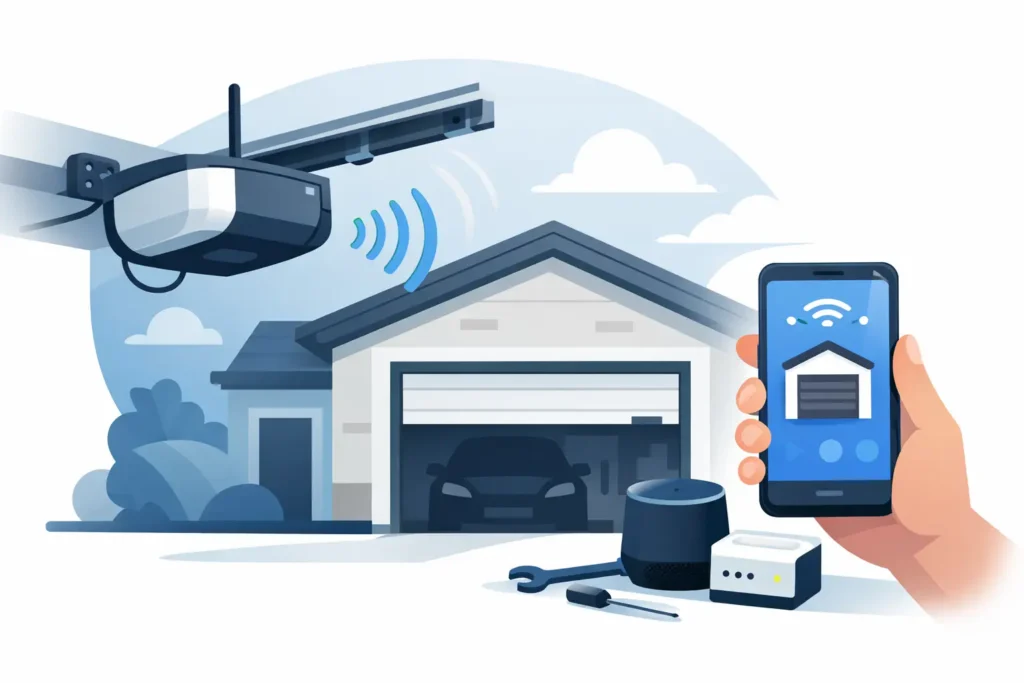
Consider how you use the garage, too. If app control matters to your household, choose an opener that supports it and has dependable Wi-Fi connectivity. If you frequently use an exterior keypad, make sure it remains programmed and functional during backup operation. The battery keeps the opener running, but the rest of the system still needs to be installed and maintained correctly.
How long do garage door batteries last?
Most garage door opener backup batteries last about two to five years. Heat, cold, frequent outages, and a garage that is not climate-controlled can shorten that range. In New England, winter temperatures can be especially hard on older batteries, which is one reason a system that worked last summer may struggle during a winter outage.
The battery charges while normal household power is available. It should not require regular manual charging, but it does require replacement eventually. Waiting until the power is out to find out the battery has failed defeats the purpose of having one.
Use the manufacturer’s recommended replacement battery whenever possible. The size, voltage, connection type, and charging requirements must match the opener. A less expensive substitute may not fit correctly, hold the expected charge, or communicate properly with the unit.
Signs your backup battery needs attention
A warning beep or flashing indicator is the most obvious sign. You may also notice that the opener reports a battery fault, the door operates fewer times during an outage, or the battery is past its recommended replacement date.
Do not assume a backup battery is good simply because the opener works when the power is on. The motor may be receiving normal electrical power while the battery has little or no usable charge. If you are unsure, a technician can inspect the system, confirm battery condition, and make sure the opener is operating within its intended settings.
Test the system before a storm does it for you
Testing once or twice a year is usually enough for most households. Choose a clear day when you do not need the garage immediately. First, make sure the door is fully closed and the area around it is clear. Then unplug the opener from its ceiling outlet or turn off power to the opener circuit if you know which circuit serves it.
Use the wall button or remote to open and close the door once. Listen for the backup alert tone and watch for any indicator light that shows battery operation. Then restore power and confirm that the opener returns to normal charging mode.
If the door will not move on battery power, do not force it or repeatedly press the control. The issue could be a depleted battery, a compatibility problem, a worn opener, or a door that is placing excessive load on the motor. Reconnect power and arrange an inspection if the problem continues.
Keep the door itself ready for an outage
Even the best battery backup cannot overcome a door with broken springs, worn rollers, bent tracks, or loose cables. The opener is designed to guide a balanced door, not lift the full weight of a damaged one. When the mechanical side of the system is neglected, backup power may run down quickly or the opener may stop to protect itself.
Homeowners can watch for basic warning signs: grinding sounds, uneven movement, a door that reverses unexpectedly, or a door that does not stay halfway open when disconnected from the opener. Do not attempt spring, cable, or track repairs yourself. Those components are under significant tension and should be handled by a trained professional.
A preventative service visit is a good time to ask about battery backup. A technician can check the door balance, test safety sensors, inspect the opener, and explain whether a new battery, a compatible add-on, or a full opener replacement makes the most sense. Patriot Garage Door can help homeowners weigh those options without pushing a replacement that the system does not need.
A small feature that protects daily access
Battery backup is not necessary for every garage, and it will not replace a generator during an extended outage. But for a household that depends on the garage for daily access, it is a practical layer of reliability. Keep the battery current, test it before storm season, and make sure the door itself is in safe working condition. That preparation can make a dark, inconvenient outage feel far more manageable.
Need Help With Your Garage Door?
From broken springs and opener issues to repairs and new installations, Patriot Garage Door provides dependable service when you need it.