
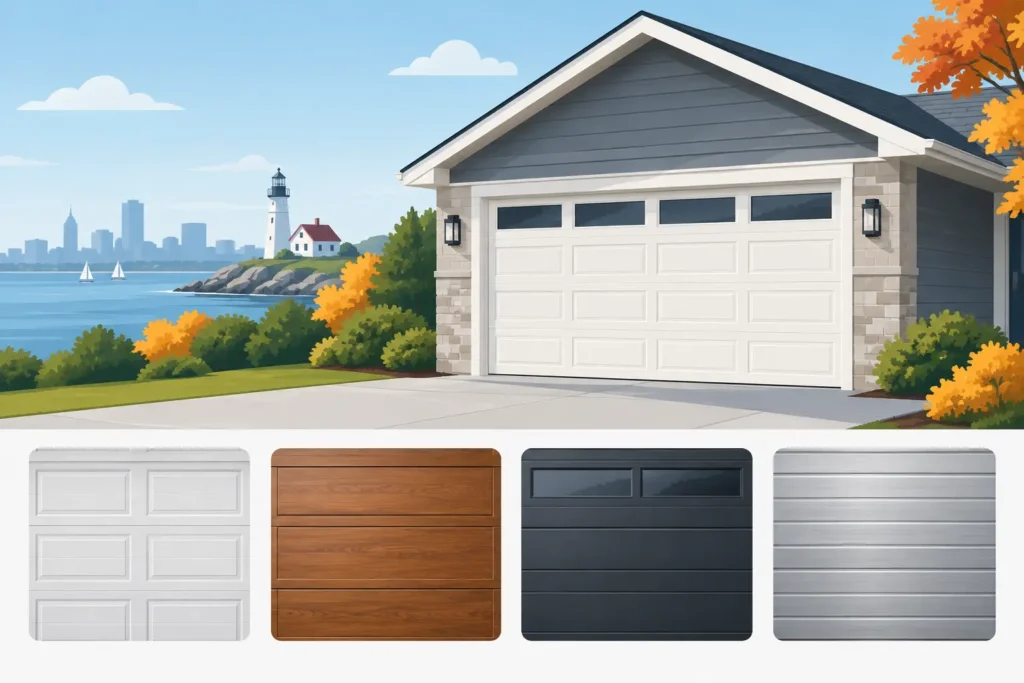
A garage door has to do more than look good from the street. In Massachusetts, it may face wet springs, humid summers, road salt, snow, wind, and daily use by a busy household. Choosing the best garage door materials means balancing curb appeal with insulation, maintenance, durability, and a budget that makes sense for your home.
A door that looks great but needs constant refinishing can become a frustrating expense. A bargain door with little insulation may make an attached garage uncomfortably cold and put extra strain on the rooms above it. The right choice depends on how your garage is used, where the home is located, and how much upkeep you are willing to take on.
What Matters When Choosing a Garage Door Material
Before comparing materials, think about the job your garage door needs to do. An attached garage that sits below a bedroom has different needs than a detached garage used mainly for storage. A coastal home may need stronger protection against corrosion, while a historic property may call for a more traditional appearance.
The key factors are durability, insulation, maintenance, appearance, cost, and weight. Weight matters because heavier doors place more demand on springs, cables, tracks, and the opener. A properly sized and balanced system can handle the door safely, but worn components or an undersized opener can lead to avoidable repair issues.
Also consider how long you expect to stay in the home. A durable, insulated door may cost more upfront but can offer better long-term value, especially when it improves comfort, security, and curb appeal.
Steel Is the Most Practical Choice for Most Homes
For many homeowners, steel is the clear front-runner. It is durable, widely available, reasonably priced, and offered in an extensive range of colors, panel designs, window options, and wood-look finishes. A steel door can fit a simple ranch, a colonial, or a newer contemporary home without looking out of place.
Basic single-layer steel doors are economical and work well for detached garages or homes where insulation is not a major concern. For attached garages, an insulated steel door is usually the smarter investment. These doors often have a steel exterior and interior with insulation between the layers, helping moderate garage temperatures and reduce outside noise.
Steel does require some attention. Scratches should be touched up promptly, particularly in areas exposed to moisture or road salt. Over time, a neglected scratch can allow rust to develop. Still, with occasional cleaning, paint touch-ups, and regular hardware maintenance, a quality steel door can provide years of dependable service.
When Steel Makes the Most Sense
Steel is a strong choice if you want reliable performance without high maintenance. It is especially practical for active households, attached garages, and homeowners who want insulation options without the cost of custom wood. If your garage door is a major part of your home’s front exterior, wood-grain steel can provide a warmer look with far less upkeep than natural wood.
Wood Delivers Character but Requires Commitment
A real wood garage door offers a look that other materials cannot fully duplicate. It has depth, texture, and natural variation that can elevate a traditional, historic, or high-end home. Custom wood doors can also be built in distinctive shapes and designs, making them appealing when appearance is the top priority.
The trade-off is maintenance. Wood needs to be painted, stained, sealed, and inspected regularly to help prevent moisture damage, warping, cracking, and peeling. Massachusetts weather can be tough on exposed wood, particularly when snow and rain repeatedly reach the lower sections of the door.
Wood is also heavier than many alternatives. That means the springs must be correctly matched to the door’s weight, and the opener needs to be suitable for the application. When a wood door begins moving unevenly, making loud noises, or reversing unexpectedly, it is best to have the full system checked rather than continuing to operate it.
Wood is worth considering when architectural character matters enough to justify the higher purchase price and ongoing care. For a lower-maintenance alternative, composite or wood-look steel may deliver a similar visual effect.
Faux Wood and Composite Offer a Useful Middle Ground
Composite garage doors are designed to imitate wood while reducing many of its maintenance demands. Depending on the product, they may use recycled wood fibers, engineered overlays, steel construction, or durable synthetic components. The appearance can be convincing, especially from the street, and the material generally resists moisture better than natural wood.
This category is not identical across brands, so it pays to look beyond the finish. Ask about the door’s insulation, backing material, warranty, maintenance requirements, and how it performs in changing temperatures. Some faux wood doors provide excellent durability and insulation, while others are primarily chosen for appearance.
For homeowners who want carriage-house styling or a rich wood tone without planning to stain and seal a door every few years, composite and wood-look steel deserve serious consideration.
Aluminum and Glass Suit Modern Homes
Aluminum garage doors are lightweight, corrosion-resistant, and well suited to contemporary designs. They are commonly paired with glass panels to create a clean, modern appearance that brings natural light into the garage. Aluminum can be especially appealing in damp environments because it does not rust like untreated steel.
The drawbacks are cost, insulation, and dent resistance. Aluminum is softer than steel, so it can dent more easily if a vehicle, bicycle, or sports equipment makes contact with it. Full-view glass doors may also have lower insulating value unless they are built with insulated frames and glass.
This material is a good fit for homes where modern design and daylight are priorities. It is less often the best choice for a busy garage that doubles as a workshop, gym, or buffer space beneath a living area, unless insulation is carefully specified.
Fiberglass Can Work, but It Is a More Specialized Option
Fiberglass garage doors are lightweight and can be molded to resemble wood grain. They resist rust and are not vulnerable to insects, which can make them appealing in certain applications. However, fiberglass can become brittle in cold conditions, and its insulation performance varies widely by construction.
Because product availability and style selections can be more limited than steel, fiberglass is usually a niche choice rather than the default recommendation. It may work well when a homeowner wants a lightweight, wood-like exterior and understands the limitations, but it is important to compare the specific door construction rather than choosing based on appearance alone.
Choosing the Best Garage Door Materials for Your Situation
There is no single material that is right for every house. A practical way to narrow the decision is to match the door to the garage’s role.
For an attached garage, insulated steel is often the best overall value. It is durable, available in many styles, and helps reduce temperature swings. For a detached garage where budget is the main concern, a basic steel door may be all that is needed. For a home with historic or luxury architecture, real wood can be a worthwhile investment if regular maintenance is part of the plan. For a modern exterior, aluminum and glass can make a strong visual statement.
Pay attention to insulation ratings, but do not treat R-value as the only measure of performance. Good weather seals around the perimeter, a properly adjusted bottom seal, and correct installation all affect how well the garage is protected from drafts and moisture. The door also needs to be balanced correctly so it operates safely and does not overwork the opener.
Do Not Overlook Installation and Ongoing Care
Even the best material cannot make up for poor installation. Garage doors are heavy moving systems, and safe performance depends on properly installed tracks, rollers, cables, springs, safety sensors, and opener settings. An insulated door that is not sealed or aligned correctly will not perform as expected.
Once installed, a little preventative care goes a long way. Keep the tracks clear, visually inspect cables and rollers, test the safety reversal system, and watch for changes in sound or movement. Do not attempt to adjust high-tension springs or cables yourself. Those components can cause serious injury when handled incorrectly.
Patriot Garage Door can help homeowners compare practical door options, explain what the existing system can support, and install a door built for reliable daily use. The right material should feel like a sound decision every time you pull into the driveway, not another item on the repair list.
Need Help With Your Garage Door?
From broken springs and opener issues to repairs and new installations, Patriot Garage Door provides dependable service when you need it.