A garage door that reverses before it closes, strains to open, or presses hard against the floor may need attention. Learning how to adjust garage door force can help with minor opener calibration issues, but force settings are not a cure for a heavy, damaged, or poorly balanced door. Turning up the force to make a problem disappear can put more stress on the opener and create a real safety risk.
For most homeowners, the right approach is simple: check the door and safety system first, make only small opener adjustments when appropriate, and stop when the issue points to springs, cables, tracks, or other moving hardware. A reliable repair starts with finding the cause, not forcing the door to move.
What Garage Door Force Settings Actually Do
Your garage door opener uses force settings to determine how much resistance it should tolerate while opening and closing. If it encounters more resistance than the setting allows, it may stop or reverse. This is meant to protect the opener, the door, and anything in the doorway.
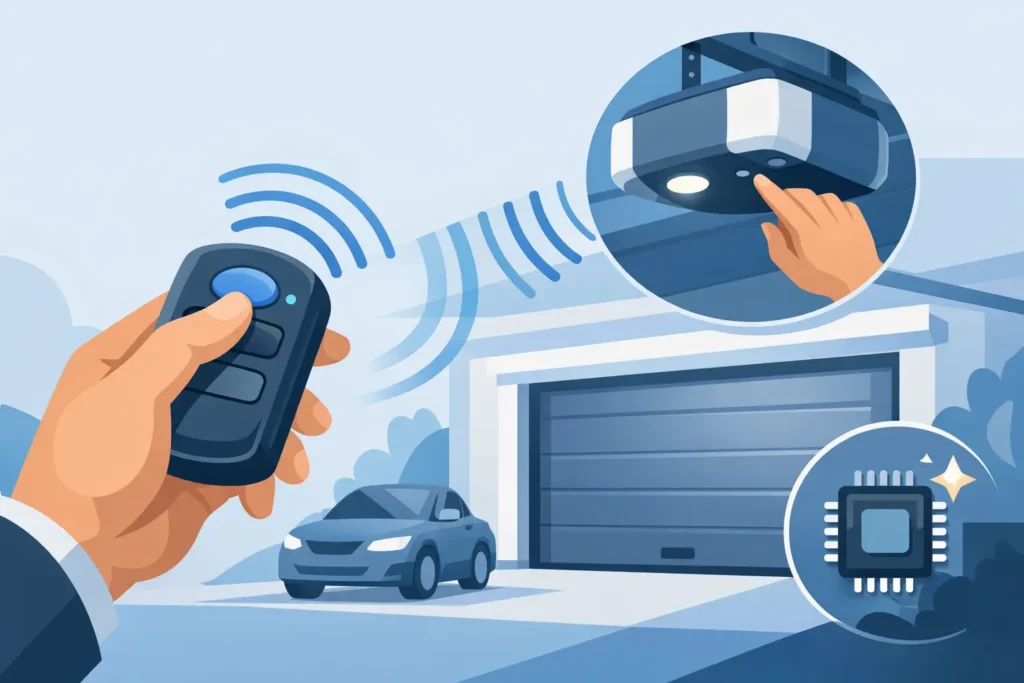
Most openers have separate settings for opening force and closing force. On older units, these may be adjustment screws or dials on the opener housing. Newer openers often use programming buttons and indicator lights. The location and adjustment process vary by brand and model, so the instructions printed on the opener or in its manual should always control.
Force is different from travel limits. Travel limits tell the opener where to stop at the fully open and fully closed positions. Force tells it how hard it should work to get there. A door that stops several inches above the floor may have a limit issue, while a door that reverses after contacting the floor may have a force or safety reversal issue. Sometimes, both need attention.
When to Adjust Garage Door Force
A modest force adjustment may be reasonable when the door is otherwise in good condition, moves smoothly by hand, and has recently begun reversing or stopping without a clear obstruction. Seasonal temperature changes can affect rollers, weatherstripping, and lubrication. A properly balanced door may need a small calibration correction after those conditions change.
Before touching the opener settings, look for obvious causes. Clear leaves, ice, tools, and debris from the tracks and threshold. Wipe the photo-eye lenses near the bottom of each track, then confirm both sensors are aligned and their indicator lights are steady. A misaligned photo eye can prevent the door from closing, but increasing force will not correct it.
Do not adjust force as a first response if the door is jerky, unusually noisy, crooked, visibly sagging, or difficult to lift. The same is true if you see a loose cable, bent track, damaged roller, broken spring, or gap in a torsion spring above the door. Those are mechanical problems, and an opener adjustment can make them worse.
Check Door Balance Before Changing the Opener
A garage door opener is designed to guide a balanced door, not lift its full weight. Springs carry most of that weight. When a spring weakens or breaks, homeowners sometimes increase the opener force because the door will no longer open reliably. That can damage the opener’s gears, rail, or internal motor components.
To check balance safely, close the door fully and disconnect the opener using the emergency release cord. Only do this when the door is closed and you can safely reach the release. Lift the door by hand to about halfway open, then carefully let go while staying clear of its path.
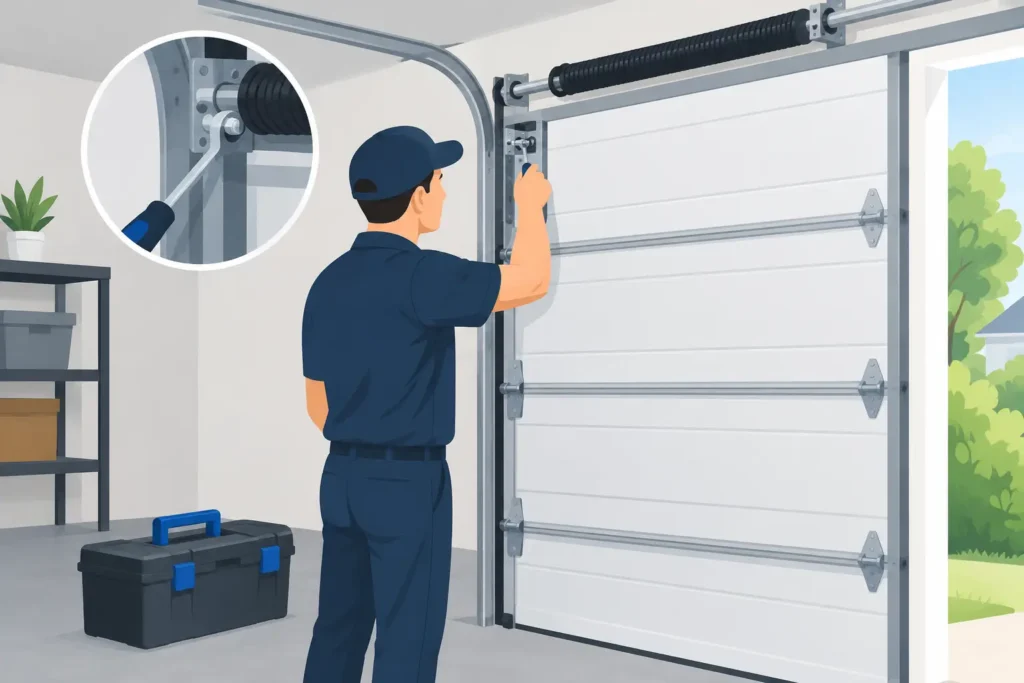
A balanced door should stay near that position or move only slightly. If it slams down, shoots upward, feels extremely heavy, or cannot be raised smoothly, reconnect the opener and arrange professional service. Do not attempt to adjust or replace garage door springs yourself. They are under extreme tension and require the right tools and training.
How to Adjust Garage Door Force Safely
If the door passes the balance check and the tracks appear clear and undamaged, you can make a careful adjustment. Keep the change small. More force is not better. The goal is to give the opener only enough force to operate a smooth, properly maintained door.
- Identify the correct control. Locate the opening and closing force controls using the labels on your opener or its manufacturer instructions. Do not confuse force controls with travel limit controls.
- Make the smallest possible change. For a dial or screw, turn it only a small increment in the direction specified by the manufacturer. For a button-programmed opener, follow the model-specific sequence. Change one setting at a time.
- Run a full open-and-close cycle. Stand clear while the door operates. Listen for straining, grinding, popping, or repeated clicking. Stop using the opener if the door binds, shakes, or moves unevenly.
- Test the safety reversal system. Place a 2-by-4 board flat on the floor under the center of the open door. Close the door using the wall button or remote. When the door contacts the board, it should reverse promptly. If it does not reverse, discontinue use and schedule service.
The 2-by-4 test matters even if the door appears to close normally. A closing force that is set too high can prevent the opener from recognizing an obstruction quickly enough. Never test safety reversal with your hand, foot, pet, or any person in the doorway.
Common Problems Force Adjustment Will Not Fix
Force settings often get blamed for issues that originate elsewhere in the garage door system. A door that opens only a few inches and stops may have a broken spring. A door that rubs or catches at one point may have worn rollers, bent tracks, or loose hardware. A door that closes and immediately reverses can have dirty photo eyes, sensor alignment trouble, or a travel limit set too low.
Cold Massachusetts winters can also expose existing problems. Ice at the threshold can hold the bottom seal in place. Thickened lubricant, worn rollers, and aging springs may make a door work harder than usual. Clearing ice and using garage-door-safe lubricant on moving metal parts can help, but lubrication will not repair a failing spring, frayed cable, or damaged track.
If the opener hums but the door does not move, the issue may be a stripped gear, disconnected trolley, broken spring, or failed opener component. Repeatedly pressing the remote or raising the force setting can cause further damage. This is a good time for a technician to inspect the complete system and explain the repair options clearly.
Signs It Is Time to Call a Professional
Garage doors are heavy, and several of their components are under tension. Calling for help is the safer choice when you notice a broken or stretched spring, loose or frayed cable, door off its tracks, bent hardware, or an opener that continues pushing after the door stops moving.
Professional service is also worthwhile when you have adjusted the force slightly, completed the reversal test, and the door still will not operate consistently. The underlying cause may be subtle, such as a failing roller, a track alignment issue, worn bearings, or an opener that is nearing the end of its service life. An honest inspection can separate a practical repair from a replacement that truly makes sense.
Patriot Garage Door helps homeowners throughout Massachusetts diagnose these issues without guesswork. A technician can check balance, spring condition, track alignment, safety sensors, opener operation, and force settings as one system rather than treating a symptom in isolation.
A garage door should open smoothly, close securely, and reverse when it meets an obstruction. If yours needs more and more force to do that job, trust what the door is telling you: it likely needs a repair, not a stronger push.
Need Help With Your Garage Door?
From broken springs and opener issues to repairs and new installations, Patriot Garage Door provides dependable service when you need it.