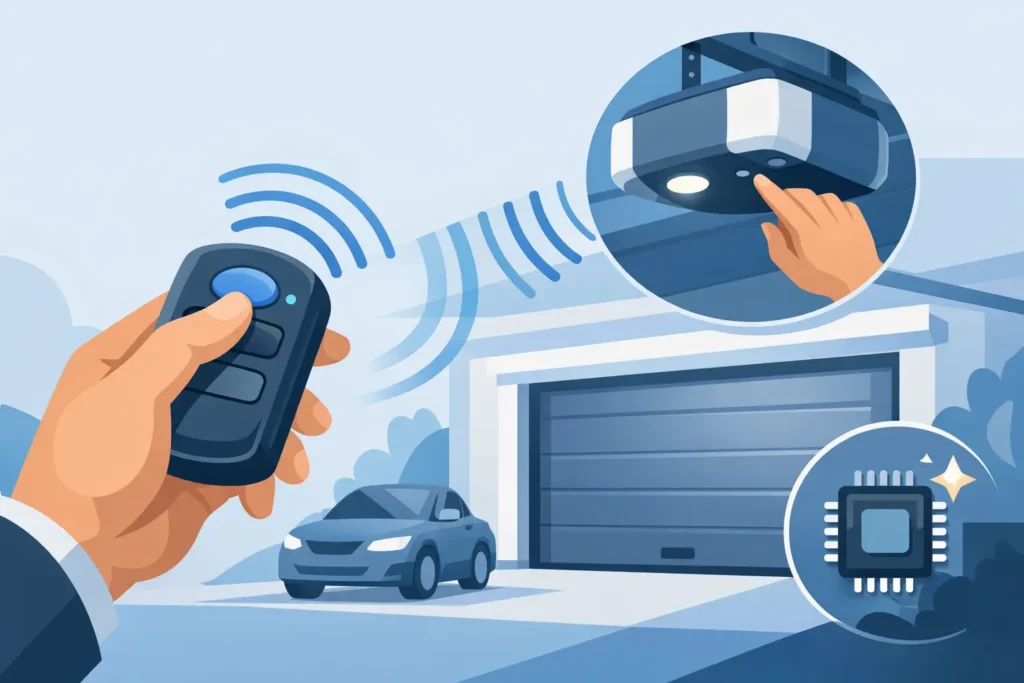
A garage door that will not open can stop a normal morning fast – especially when your car is inside and the power is out. Knowing how to manually open a garage door can help you regain access, but only when the door is in safe working condition. A garage door is heavy, spring-loaded equipment. If it is damaged, crooked, or unusually hard to lift, the safest decision is to leave it alone and call for service.
When It Is Safe to Open a Garage Door Manually
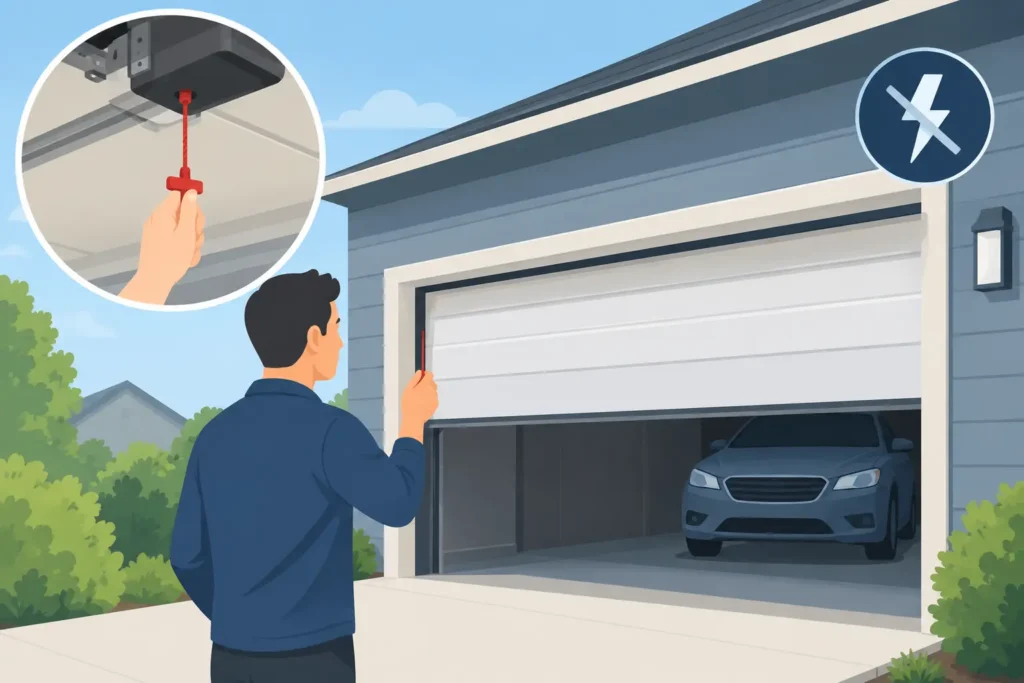
Manual operation is usually appropriate during a power outage when the door was working normally before the outage. In that situation, the door’s springs should still be carrying most of its weight, and the emergency release can disconnect the opener so you can lift the door by hand.
Before touching the release cord, make sure the garage door is fully closed. This matters more than many homeowners realize. Releasing an open or partially open door can allow it to come down suddenly, particularly if a spring is weak, broken, or out of adjustment.
Take a moment to inspect the door from a safe distance. Look for a door that is hanging unevenly, a cable that has come off its drum, bent tracks, rollers outside the track, or a visible gap in the torsion spring above the door. Extension springs along the horizontal tracks should also be intact and secured with safety cables. If you see any of these conditions, do not try to lift the door manually.
How to Manually Open Garage Door Safely
Start by making sure the opener cannot turn on unexpectedly. If the power is still on but the opener is malfunctioning, unplug the opener from the ceiling outlet. If the outage is the issue, the unit will already be without power, but it is still wise to keep wall controls and remotes out of reach while you work.
Next, unlock the door. Some garage doors have a manual slide lock or keyed lock near the center of the door. Trying to lift a locked door can damage the lock, panels, or tracks. If your door has an exterior emergency-release lock, use the key only as intended to access the release system.
Locate the red emergency-release cord hanging from the opener rail. It is typically attached to the trolley, the part that connects the opener to the garage door. Pull the cord straight down firmly. On many opener models, you may need to pull it down and back toward the motor unit to fully disengage the trolley. You should feel or hear the connection release.
With the opener disconnected, stand inside the garage and grip the door at the bottom handle or a sturdy lower section. Keep your fingers away from the gaps between door panels. Lift using both hands and your legs, not your back. A properly balanced residential garage door should feel manageable because the springs carry most of the load.
If the door feels extremely heavy, binds partway up, moves unevenly, or starts to drop when you let go, stop immediately. Do not force it. That is often a sign of a broken spring, a cable problem, or a track issue. Pulling harder can turn a repair into a more serious safety hazard.
Raise the door slowly until it is fully open. Keep children, pets, and anyone not helping well clear of the opening. Never walk or drive under a door that is only partly raised, and do not try to hold it open with a broom, lumber, or other makeshift support. If the door will not stay fully open on its own, lower it carefully and arrange professional service.
Closing the Door by Hand
Once you have moved your vehicle or accessed the garage, close the door as soon as practical. An open garage creates an easy entry point and exposes the door to wind, rain, and accidental damage.
Stand inside the garage and pull the door down evenly using the handle. Keep your hands on the lower section and clear of the panel joints, hinges, cables, and rollers. A door can gain speed as it comes down, so stay in control from start to finish. Never allow children to help with this task.
When the door reaches the floor, make sure it is fully closed and lock it if your door has a manual lock. During an extended outage, that simple step protects your garage and the access it provides to your home.
How to Reconnect the Opener After Power Returns
Reconnect the opener only after the garage door is completely closed. Depending on the opener model, you may pull the emergency-release cord toward the door to reset the trolley, then operate the opener. Many newer systems reconnect automatically the next time you run the opener from the wall button or remote.
Watch the first opening and closing cycle closely. The door should travel smoothly, reverse properly when tested, and seal evenly against the floor. If it hesitates, makes new grinding noises, or will not reconnect, do not keep cycling the opener. Repeated attempts can strain the motor and may worsen an existing mechanical problem.
When You Should Not Open the Door Yourself
A manual release is helpful for a simple power outage. It is not a fix for a damaged garage door system. Call a trained garage door technician rather than attempting to operate the door yourself when you notice any of the following:
- A broken torsion or extension spring, including a visible gap in the spring.
- A loose, frayed, snapped, or off-track cable.
- A door that is crooked, jammed, off its tracks, or struck by a vehicle.
- A door that feels much heavier than usual or will not remain open.
- Bent tracks, damaged rollers, or a loud bang followed by a door that will not lift.
Springs and cables are under significant tension. They are not homeowner repair parts, even for experienced DIYers. A technician can identify whether the problem is limited to one component or whether the door needs broader adjustment, helping you avoid replacing parts that are still in good condition.
A Few Extra Safety Considerations
If your garage is your primary entry during a storm or outage, consider keeping a flashlight near the interior door and making sure adults in the household know where the emergency-release cord is located. It also helps to test your garage door balance and safety systems as part of regular maintenance, rather than discovering a problem when you are trying to leave for work.
Homeowners with a battery backup opener may not need to manually release the door during most outages. These systems can keep the opener running for a limited number of cycles, which is particularly useful if the garage is the main way into the home. Still, the door itself must be maintained properly for any opener feature to work safely.
For Massachusetts homeowners, winter conditions can add another complication. Ice, packed snow, or a frozen bottom seal can make a door feel stuck even when the opener and springs are fine. Do not use excessive force to break it free. Clear visible snow and ice carefully, but if the door remains stuck, schedule service rather than risking damage to the bottom seal, opener, or panels.
A garage door should make daily life easier, not leave you guessing about what is safe to handle. If manual operation does not feel smooth and controlled, trust that warning sign. Patriot Garage Door can assess the issue, explain the repair options clearly, and help get your door operating reliably again.
Need Help With Your Garage Door?
From broken springs and opener issues to repairs and new installations, Patriot Garage Door provides dependable service when you need it.