A garage door cable can look like a small part of a large system, but it carries a serious load every time the door moves. If you are asking when should garage door cables be replaced, the safest answer is not to wait for a complete break. Fraying, slack, rust, or an uneven-moving door are reasons to schedule a professional inspection before a manageable repair becomes a stuck or off-track garage door.
Garage door cables work with the springs to lift and lower the door in a controlled way. When a cable weakens or comes off its drum, the door can bind, tilt, or fall unexpectedly. That is why cable concerns deserve prompt attention, especially when the garage is a main entry point to your home.
When Should Garage Door Cables Be Replaced?
Garage door cables should be replaced whenever they show visible wear, lose their proper tension, become damaged, or come off the cable drum. Unlike cosmetic damage on a door panel, cable wear affects the safe operation of the entire door system.
Cables do not always fail on a convenient schedule. Their lifespan depends on how often the door operates, the weight of the door, the condition of the springs and tracks, local moisture, and whether the system has been maintained. A door used several times a day will naturally put more cycles on its cables than a lightly used detached garage.
Replacement is usually the right call when a technician finds broken strands, kinks, corrosion, or stretching. A cable that has already slipped off may sometimes be reset, but the cause matters. If worn drums, a broken spring, bent track, or an out-of-level door caused the problem, simply putting the cable back in place will not provide a lasting repair.
Warning Signs Your Cables May Be Failing
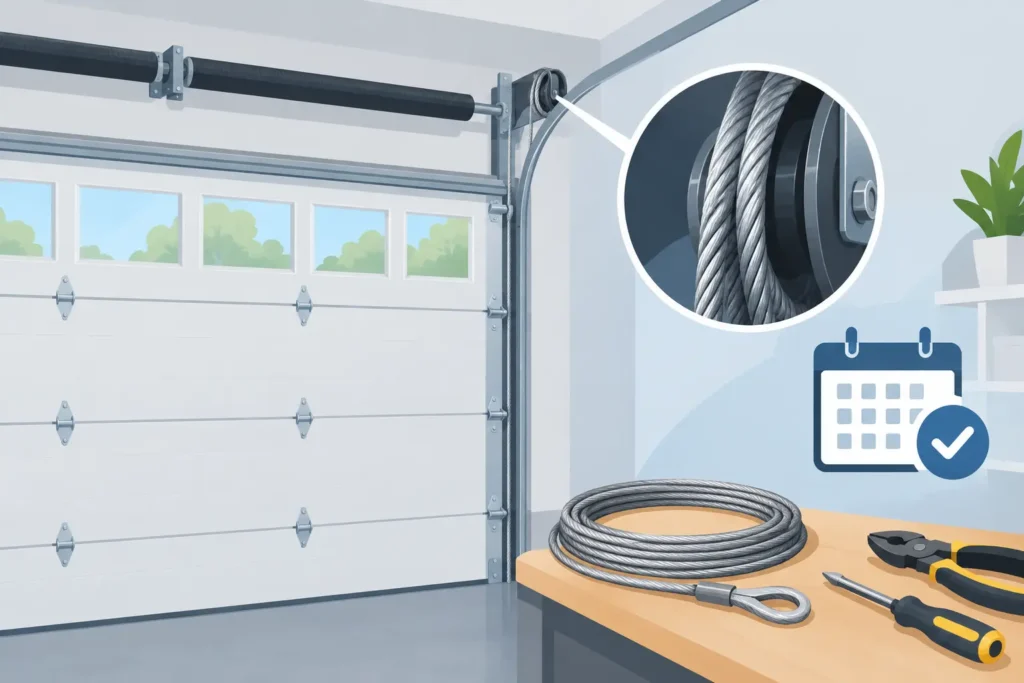
The most obvious warning sign is fraying. If you can see thin wire strands separating from the cable, treat the door as unsafe to operate. Those strands mean the cable has lost strength, and it can snap under tension without much warning.
A door that lifts unevenly is another common sign. One side may rise faster than the other, leaving the door crooked in the opening. You may also notice a gap beneath one side when the door is closed. This can happen when one cable stretches, slips, or begins to unravel.
Listen, too. Scraping, popping, grinding, or sudden banging during operation can point to a cable or related hardware issue. Noise alone does not always mean the cables need replacement – rollers, hinges, tracks, and openers can make noise as well – but a new sound is worth checking before it gets worse.
Watch for these conditions during a visual check from a safe distance:
- Frayed, flattened, rusted, kinked, or loose cable strands
- A cable that is wrapped unevenly around the drum or has come off entirely
- A garage door that hangs crooked, jerks, or stops partway through travel
- A door that feels unusually heavy or will not stay in position when disconnected from the opener
- A broken spring, bent track, damaged bottom bracket, or loose hardware near the cable
If the cable is visibly loose or off the drum, stop using the opener. Continuing to run the door can pull it farther out of alignment, damage panels and tracks, or leave the door stuck in an unsafe position.
Why Cables Wear Out or Come Off
Normal use is part of the story. Every opening and closing cycle puts tension on the cable, springs, drums, rollers, and other moving parts. Over years of use, metal fatigue can develop even when the door seems to be operating normally.
Moisture and road salt can accelerate corrosion in Massachusetts garages, particularly in unheated spaces. Rust weakens individual strands and can make a cable less flexible as it winds around the drum. A cable may look only slightly discolored at first, yet be much weaker than it appears.
Cable problems are also often symptoms of another issue. A broken torsion or extension spring can release tension suddenly and allow cables to loosen or jump off the drums. Worn rollers, damaged tracks, an impact to the door, or a door that is no longer balanced can create uneven forces that shorten cable life.
That is why a reliable repair starts with diagnosis rather than replacing one part in isolation. The goal is to find out what caused the cable to fail and correct it before the same problem returns.
Do Not Try to Repair Garage Door Cables Yourself
Garage door cables are under heavy tension because they work alongside the spring system. The bottom brackets where many cables attach are especially hazardous. Loosening the wrong fastener can release stored energy quickly and cause severe injury or property damage.
It may be tempting to pull a loose cable back into place or use the opener to force the door level. Neither is a safe fix. The opener is designed to move a properly balanced door, not compensate for a failed cable, broken spring, or crooked door. Forcing it can burn out the opener or cause the door to bind harder.
If the door is closed and secure, leave it closed until help arrives. If it is open, crooked, or blocking a vehicle, keep people and pets away from the area and avoid standing beneath the door. A trained technician can secure the door, release tension correctly, inspect the supporting components, and make the needed repair.
What a Professional Cable Replacement Should Include
A quality cable service is more than installing a new length of wire. The technician should inspect both cables, since they experience similar wear and one failing cable can place extra stress on the other.
The springs should also be checked for proper condition and balance. If a spring is broken or near the end of its service life, replacing only the cable may not solve the underlying problem. Drums, shafts, bottom brackets, tracks, rollers, and bearings may need inspection as well, depending on the door’s design and the reason for the failure.
Once the repair is complete, the door should move smoothly and sit level when closed. The opener’s travel limits and safety reversal should be checked if the system was significantly out of alignment. This approach helps protect the new cables and gives you confidence that the whole door is working as intended.
Can You Prevent Early Cable Replacement?
You cannot prevent every garage door repair, but regular maintenance can reduce avoidable strain. Keep the track area clear, avoid hitting the door with vehicles or equipment, and pay attention when the door starts sounding or moving differently. A door should not need to be forced, and it should not shake, drag, or rise unevenly.
A professional maintenance visit can catch early corrosion, worn rollers, loose hardware, and balance issues before they lead to cable damage. This is particularly useful for older doors and doors that see frequent use. It is a practical way to avoid being surprised by a door that will not open on a busy morning.
Do not apply random lubricants to the cables in an attempt to extend their life. The right lubricant in the wrong place can attract dirt or interfere with proper operation. A technician can recommend maintenance based on your door’s spring system, age, and condition.
Repair or Replace the Entire Garage Door?
A damaged cable alone rarely means you need a new garage door. In many cases, replacing the cables and addressing the cause of the failure restores safe operation at a reasonable cost. This is often the best option when the door panels, tracks, springs, and opener are otherwise in good condition.
Full door replacement may make more sense when cable damage is part of a larger problem, such as severely damaged panels, extensive rust, repeated track failures, or an aging system with several worn components. The right choice depends on the condition of the complete system, not just one failed part.
An honest assessment should give you clear options: what must be repaired for safety, what can reasonably wait, and whether replacement would offer better long-term value. Patriot Garage Door approaches cable issues that way, with straightforward recommendations built around safe, reliable operation.
A garage door that is fraying, hanging unevenly, or refusing to move is asking for attention. Stop using it, keep the area clear, and arrange a professional inspection before a worn cable turns a routine day into a safety problem.
Need Help With Your Garage Door?
From broken springs and opener issues to repairs and new installations, Patriot Garage Door provides dependable service when you need it.