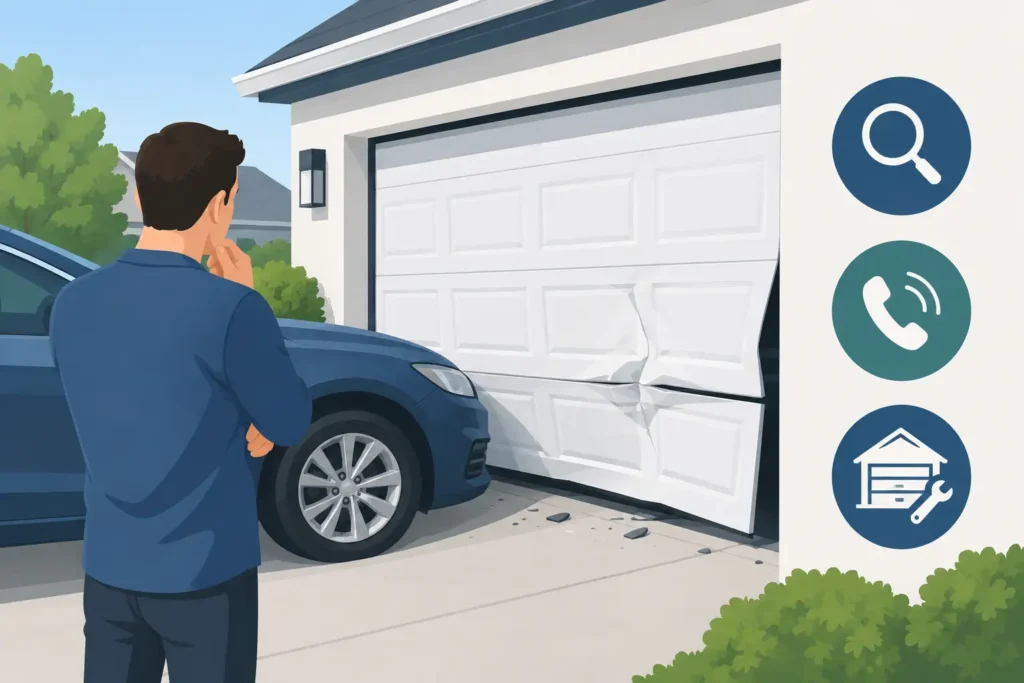
A garage door collision is easy to underestimate. You may see one dented panel, brush off the noise, and assume the door will keep working until you have time to deal with it. But a garage door is a balanced moving system. Even a low-speed impact can affect tracks, rollers, cables, hinges, sensors, and the opener. The safest next step is to stop using the door until you know what was damaged.
Whether a vehicle backed into the door, a delivery truck caught the edge, or a basketball hoop or piece of equipment struck it, prompt attention protects your home, your family, and the rest of the garage door system.
First Steps After a Garage Door Collision
Start by moving people, vehicles, and pets away from the door’s path. Do not try to force a damaged door open or closed, and do not stand beneath it to inspect the damage. A door that looks mostly closed may be hanging unevenly, partly off its track, or supported by components that are under significant tension.
If the door is stuck open or will not secure the garage, avoid leaving the opening unattended. The garage is often a direct access point to the home, and an unsecured opening creates a safety and security concern. If it is safe to do so, use another entrance and keep the garage area clear while you arrange service.
You can take a few photos from a safe distance for insurance documentation or to help explain the issue when scheduling repair. Look for visible gaps between sections, bent tracks, loose cables, scraped rollers, broken windows, or an opener rail that appears pulled out of alignment. Photos are useful, but they are not a substitute for a full inspection.
Why Collision Damage Can Be More Than Cosmetic
Garage door panels are designed to work together as the door travels through curved tracks. When one panel is pushed inward, bowed outward, or knocked out of square, the damage can change how the entire door moves. The door may bind at the curve, drag against a track, or place added strain on the opener.
Tracks are another common concern. A track can bend only slightly and still cause rollers to catch, slip, or jump out. Once a door is off track, continuing to operate it can turn a manageable repair into a larger job involving additional panels, rollers, cables, or hardware.
The opener may also be affected, even if it still responds to the remote. Openers are built to move a properly balanced door, not pull a damaged, heavy, or binding one through the opening. Repeated operation after an impact can strain the motor, gear assembly, trolley, or rail. If the opener hums, reverses unexpectedly, or stops partway, leave it off until the door has been inspected.
A collision can also reveal a problem that was already developing. Older rollers, loose hinges, worn cables, or tired springs may have been close to failure before the impact. A professional assessment should separate collision-related damage from normal wear and explain which repairs are needed now and which items can be monitored.
When Is It Safe to Use the Door?
The honest answer is that it depends on where the impact occurred and how the door responds. A shallow dent in an upper panel may not affect operation. A dent along the bottom section, edge, track area, or reinforcement strut is more likely to interfere with movement or structural support.
Do not use the door if it is crooked, sagging, rubbing, unusually noisy, moving in jerks, or sitting out of the tracks. The same applies if you see a loose or frayed cable, a bent track, cracked hinges, broken sections, or a gap that prevents the door from sealing against the floor. These are not DIY adjustments. Springs and cables carry stored energy and can cause serious injury when handled incorrectly.
If the door appears undamaged but you are unsure, do not run repeated test cycles to see whether it will “work itself out.” One careful visual check is enough. A technician can test balance, travel, safety features, and alignment without placing unnecessary stress on the system.
Never Try to Straighten a Track by Force
It is tempting to grab a bent track with pliers or hit it back into shape with a hammer. That approach often creates a worse alignment problem. Tracks must be positioned precisely for rollers to move smoothly, and damage near brackets or the curved portion of the track can be especially difficult to judge.
The same caution applies to panels. Pushing a dent outward may crease the steel, weaken an insulated section, crack paint, or hide damage to the hinges and supports behind it. A repair professional can determine whether a panel can be reinforced or repaired, or whether replacement is the safer and better-looking option.
Repairing a Damaged Panel vs. Replacing the Door
A garage door collision does not automatically mean you need a new garage door. In many cases, replacing one damaged section, realigning tracks, changing rollers, or repairing hardware restores safe operation. This is often the practical choice when the door is relatively new, the matching panel is available, and the rest of the system is in good condition.
Panel replacement is not always the best long-term answer, though. Sun exposure and weather can fade an older door, so a new panel may not match perfectly. Some discontinued door models no longer have compatible replacement sections. If multiple panels are damaged, the door has rust or structural wear, or the opener and hardware are also nearing the end of their service life, full replacement can be the more cost-effective option.
A trustworthy recommendation should make the trade-off clear. You should know what can be safely repaired, what replacement would improve, what each option costs, and why. The goal is not to sell more door than you need. It is to restore dependable operation and a secure, finished appearance.
What a Professional Collision Inspection Should Include
A proper inspection looks beyond the dent. The technician should examine panel integrity, hinges, rollers, vertical and horizontal tracks, cables, drums, brackets, springs, and the opener connection. They should also check whether the door is balanced and whether it opens, closes, and reverses correctly.
For doors with automatic openers, photo-eye sensors and force settings matter as well. An impact can shift hardware or alter door travel enough to affect these safety features. A door should not be returned to regular use until it closes evenly, seals properly, and responds correctly to its safety system.
For Massachusetts homeowners, seasonal temperature swings can make a marginal door problem show up quickly. Metal contracts in cold weather, lubricants thicken, and worn parts work harder. Addressing alignment or hardware damage soon after a collision helps prevent a minor problem from becoming a no-access situation on a busy morning.
Preventing the Next Impact
Some collisions are simply accidents, but a few practical changes can reduce the odds of a repeat. Keep enough clearance in front of the door for longer vehicles, bicycles, and stored equipment. Mark tight garage edges with reflective tape or parking guides, especially if a new driver uses the space. If the garage is crowded, create a clear path for vehicles before winter storage gradually takes over the floor.
It also helps to keep the door in good working order. A door that opens fully, stays aligned, and has a dependable opener gives drivers a clear opening and reduces the urge to squeeze around a partially raised door. Regular maintenance will not prevent every accident, but it can make the system more reliable when it matters.
If your door has been hit, a clear explanation and a safe repair plan make a stressful moment easier to handle. Patriot Garage Door approaches collision repairs with straightforward options, quality workmanship, and the respect your home deserves. Getting the door checked now lets you get back to using your garage with confidence, rather than wondering what might fail the next time you press the remote.
Need Help With Your Garage Door?
From broken springs and opener issues to repairs and new installations, Patriot Garage Door provides dependable service when you need it.