A garage door can weigh several hundred pounds, move under high tension, and still look like a simple weekend repair. That is why the question, are garage door repairs safe, deserves a more honest answer than yes or no. Some small maintenance tasks are reasonable for a homeowner. Repairs involving springs, cables, tracks, or a door that has come off its path can become dangerous quickly.
The safest approach is to separate routine care from work that affects the door’s stored energy, weight, or balance. Knowing where that line falls can protect your family, prevent property damage, and keep a manageable repair from turning into a replacement.
Are Garage Door Repairs Safe to Do Yourself?
Garage door repairs are safe only when the task is low-risk, the door is stable, and you understand what the repair does not affect. Tightening a loose handle, replacing remote batteries, cleaning photo-eye lenses, or lubricating approved moving parts are typically within the scope of basic home maintenance.
The risk changes when a component is supporting the door, controlling its movement, or holding tension. Torsion springs above the door opening and extension springs along the tracks store significant force. Cables can snap or unwind. A bent track can cause the door to bind or fall out of alignment. Even a motorized opener can create a hazard when it continues pushing against an obstruction.
A repair may also appear safe at first because the door still moves. That does not mean it is stable. A door with a broken spring may be extremely heavy when disconnected from the opener. A door with a loose cable may work once, then jam halfway open. When there is any doubt about the door’s balance or support, stopping early is the right call.
The Repairs Homeowners Can Usually Handle
Homeowners can safely take care of a few simple items as long as the door is fully closed, the opener is not operating, and the work does not require removing hardware or adjusting tension.
Start with the basics. Wipe the photo-eye sensors near the bottom of the tracks and make sure they face each other. Dirt, cobwebs, or a bumped sensor can cause a door to reverse or refuse to close. Check that nothing is blocking the sensor path.
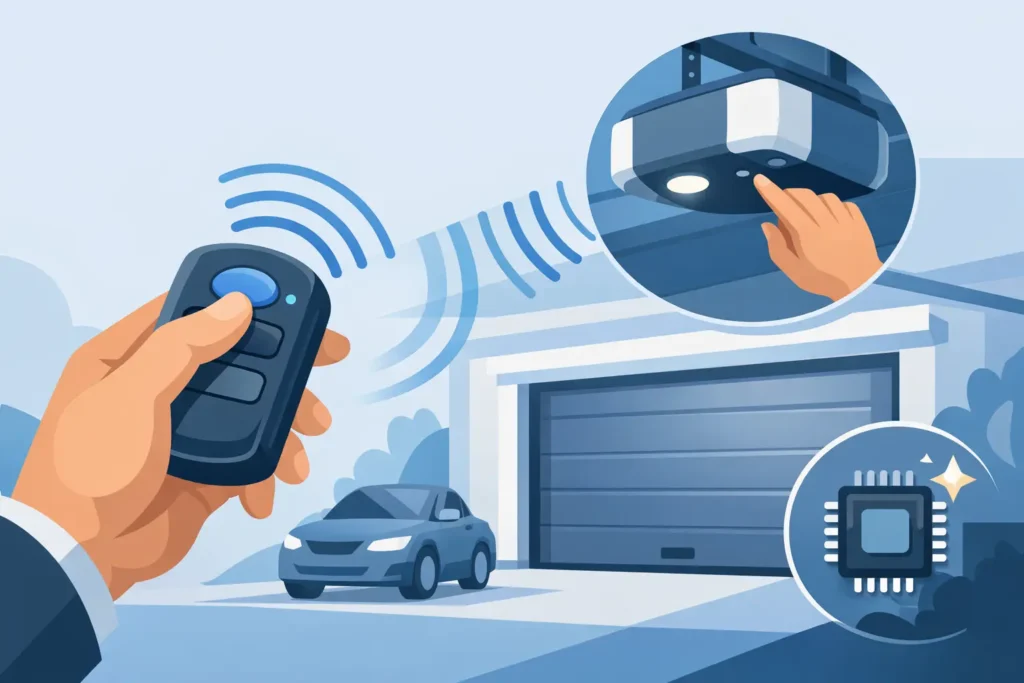
You can also replace batteries in wall controls and remotes, inspect weatherstripping for visible wear, and lubricate hinges, rollers, and springs with a garage-door-specific lubricant. Use a light touch. Excess lubricant collects dust and can make a clean system messy.
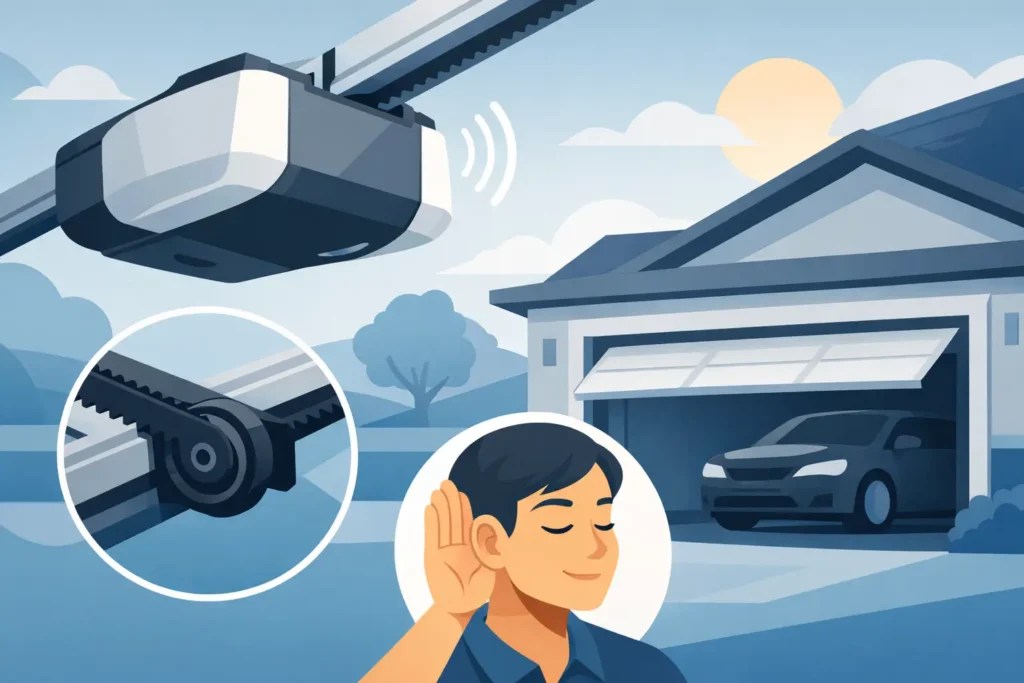
If the door is noisy, look for loose bolts on the track brackets or hinge hardware. A homeowner may carefully tighten clearly accessible fasteners, but should not adjust the bottom brackets, cable drums, spring anchors, or any bolts that hold a tensioned component in place. Those parts are not ordinary hardware.
Testing the auto-reverse feature is another worthwhile safety check. Place a small piece of wood flat on the floor under the open door. When the closing door touches it, it should reverse. If it does not, stop using the opener until it has been inspected and adjusted by a qualified technician.
Repairs That Should Be Left to a Professional
Certain garage door problems call for professional service because the potential consequences are too serious for trial and error. This is especially true if the door is stuck, crooked, unusually heavy, or making loud popping, grinding, or snapping sounds.
Broken or worn springs
A loud bang from the garage is often a broken spring. The door may not open more than a few inches, or the opener may strain without lifting it. Do not try to force the door open with the opener, and do not attempt to replace or rewind a spring yourself.
Spring replacement requires the right tools, a correct match for the door’s weight and size, and careful tensioning. An improperly installed spring can fail prematurely or cause the door to operate unpredictably.
Frayed cables or a door off track
A cable that has come loose, slipped off a drum, or started fraying is a stop-work issue. Cables help carry and guide the door’s weight. Pulling the emergency release or running the opener when a cable is compromised can make the door tilt, bind, or drop.
The same is true for a door that has come off track. Do not try to push a heavy door back into place while it is unsupported. Secure the area, keep people and vehicles clear, and arrange for a technician to stabilize and repair the system.
Damaged tracks, rollers, and panels
Minor cosmetic panel damage may not require an immediate emergency repair, but bent tracks and broken rollers can affect safe operation. A door that shakes, rubs, or stops unevenly may be putting extra stress on the opener and other components.
Panel damage is more complicated than it looks. Replacing one section can be practical when a matching panel is available and the rest of the door is in good condition. In other cases, a replacement door may offer better long-term value, especially if the existing system is older or has repeated structural issues.
Opener and electrical problems
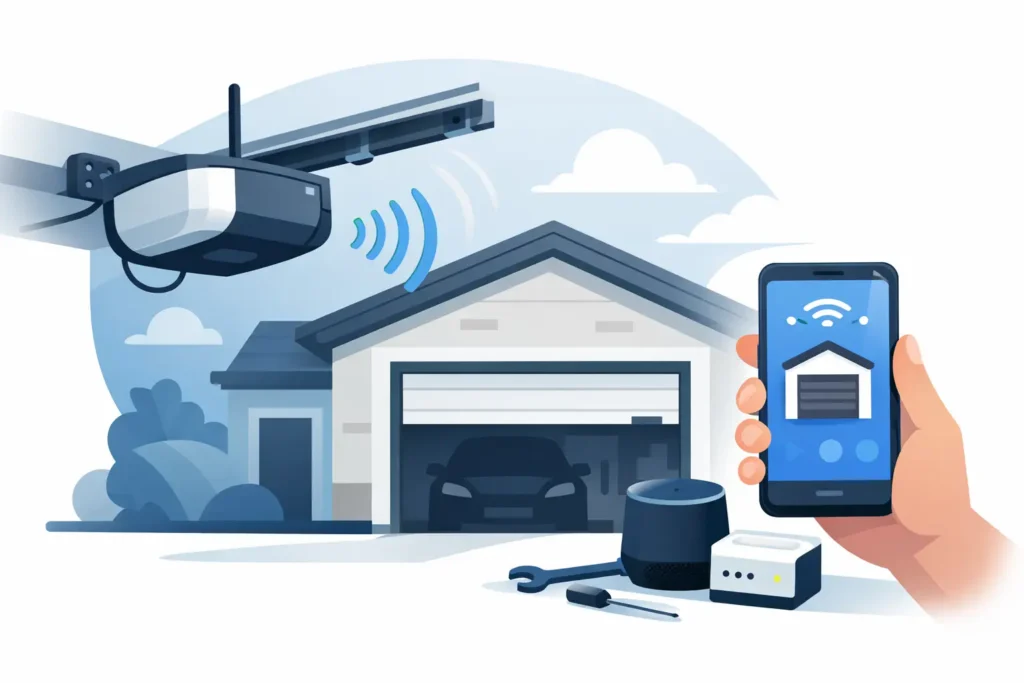
Some opener concerns are simple, such as dead remote batteries or misaligned safety sensors. But intermittent operation, burning smells, repeated breaker trips, or an opener that runs without moving the door need professional attention. The opener may be failing, but the real issue could also be a heavy or unbalanced door that is overworking the motor.
Warning Signs That Mean Stop Using the Door
A garage door does not need to be completely broken to be unsafe. Pay attention when it starts behaving differently. A door that moves slower than usual, pauses unexpectedly, makes new scraping noises, or reverses without explanation is asking for an inspection.
Stop operating the door if you notice any of the following:
- A visible gap in a torsion spring or a loose, frayed, or hanging cable
- A door that opens crookedly, shakes hard, or has rollers outside the track
- A door that will not stay open or feels unusually heavy when manually lifted
- Bent track sections, damaged bottom brackets, or loose hardware near springs and cables
- An opener that strains, hums, smells hot, or fails its safety reversal test
If your garage is your main way into the house, a malfunctioning door is more than an inconvenience. It can affect home security, vehicle access, and your ability to leave safely during an urgent situation. A prompt repair is often less costly than waiting for a small alignment issue to damage the opener, panels, or tracks.
How to Stay Safe While You Wait for Service
If the door is partially open and unstable, do not stand or park beneath it. Keep children and pets away from the garage until the issue is resolved. Do not disconnect the opener if the door is open, crooked, or visibly off track, since the opener may be the only thing preventing further movement.
When the door is closed and secure, unplugging the opener can prevent accidental operation. Avoid repeatedly pressing the remote to see whether the door will work again. Repeated attempts can strain the motor or worsen a cable and track problem.
If you need to use the garage urgently, explain that when scheduling service. A reliable technician can assess whether the door can be safely secured, repaired, or temporarily stabilized. For Massachusetts homeowners dealing with changing weather, a door that will not close also deserves quick attention to protect the garage from moisture, cold air, and unwanted access.
Why Professional Repairs Are Often the Safer Value
Professional garage door service is not only about having specialized tools. It is about diagnosing the entire system. A failed spring, for example, may also reveal worn rollers, an unbalanced door, incorrect spring sizing, or an opener that has been carrying too much load.
An experienced technician can explain what needs immediate repair, what can be monitored, and whether replacement is genuinely the better option. That straightforward advice matters. Not every damaged panel requires a new door, and not every noisy opener needs to be replaced. The right repair should restore safe operation without pushing unnecessary work.
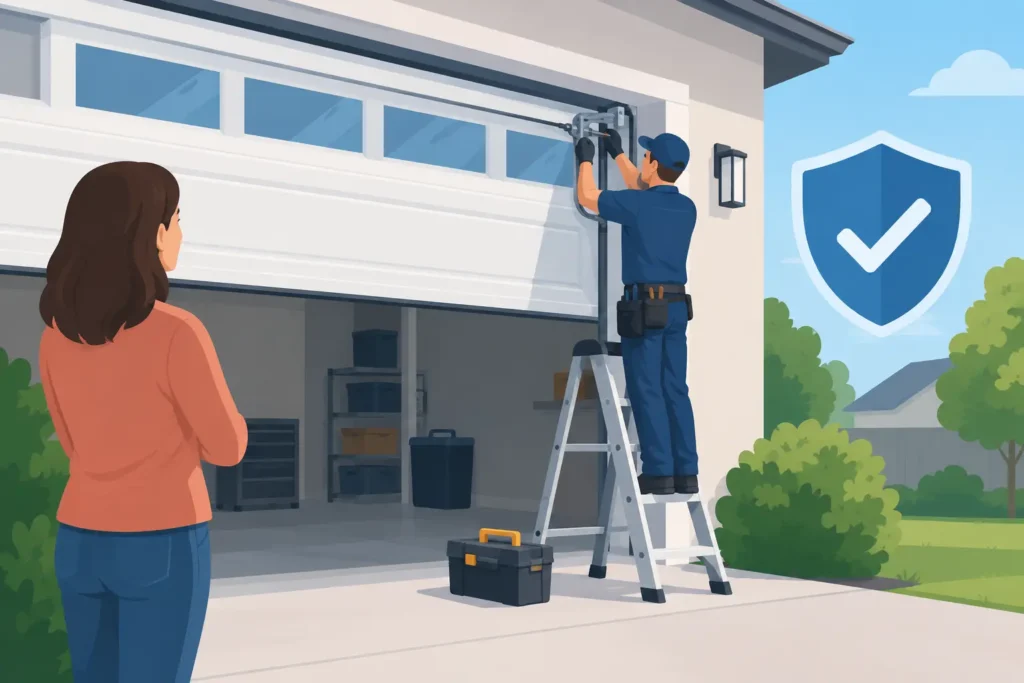
Licensed and insured service also provides accountability when work involves a heavy moving door, tensioned parts, and electrical equipment. Quality parts and proper adjustment help the door open smoothly, close securely, and protect the people who use it every day.
A garage door should feel dependable, not like something you have to watch nervously every time it moves. Handle the simple maintenance with care, but when the repair involves tension, weight, alignment, or electrical trouble, choosing trained help is the safest way to get your home back to normal.
Need Help With Your Garage Door?
From broken springs and opener issues to repairs and new installations, Patriot Garage Door provides dependable service when you need it.