A garage door should move with a steady, controlled sound – not shake the ceiling, rattle the walls, or make the opener strain. If you are wondering what causes garage door vibration, the answer is usually wear or misalignment somewhere in the door’s moving system. The door, tracks, rollers, springs, cables, and opener all need to work together. When one part begins to fail, vibration is often an early warning sign.
A vibrating garage door may still open and close today, but it should not be ignored. Continued operation can wear out the opener faster, damage tracks or panels, and create a safety concern if the door becomes unstable. A clear diagnosis helps you address the actual problem without replacing parts that are still in good shape.
What Causes Garage Door Vibration During Operation?
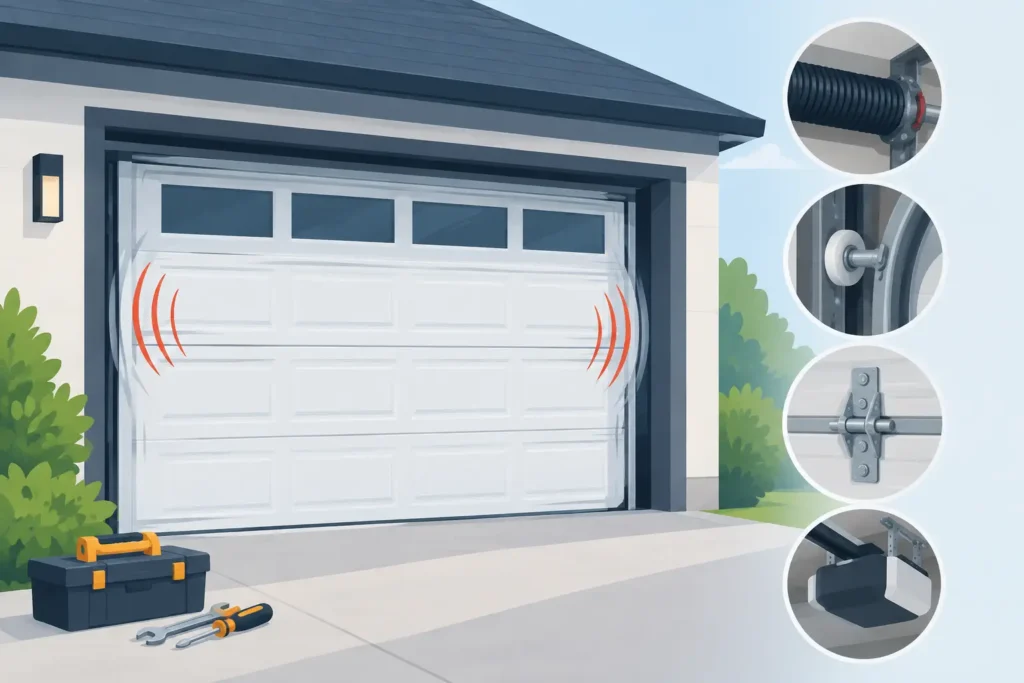
Garage door vibration can happen while the door is opening, closing, or changing direction. The timing and sound matter. A light rattle may point to loose hardware, while hard shaking or banging can indicate a track, roller, spring, or opener problem that needs professional attention.
Worn or damaged rollers
Rollers guide the garage door through the tracks. When they are worn, cracked, dirty, or missing bearings, they may not roll smoothly. Instead, they drag, wobble, or jump slightly in the track. That movement can send vibration through the door sections and into the framing above the garage.
Older metal rollers can be especially noisy as they wear. Quality nylon rollers often provide quieter operation, but they still need inspection and occasional replacement. If the vibration is strongest near the sides of the door and comes with scraping or grinding sounds, rollers are a likely cause.
Loose track hardware or misaligned tracks
The vertical and horizontal tracks must remain securely fastened and properly aligned. Loose brackets, lag screws, or track bolts allow the track to move as the door travels. Even a small amount of movement can produce a noticeable shake, particularly on a heavy double garage door.
Tracks can also shift after an impact, settlement, repeated vibration, or an accidental bump from a vehicle or lawn equipment. A bent or misaligned track may cause rollers to bind. The door can then jerk, vibrate, or appear to move unevenly from one side to the other.
Track adjustments are not simply a matter of tightening a few bolts. Incorrect positioning can make the door bind worse or come off track. A technician can measure alignment and secure the system without placing extra stress on the door.
Loose hinges, brackets, and door hardware
Garage doors have many connection points. Hinges join the sections, brackets hold rollers in place, and reinforcement hardware supports the top section where the opener arm attaches. Over time, normal movement can loosen fasteners.
Loose hardware often creates a rattling vibration rather than a deep shake. You may hear it most clearly when the door starts moving or when it reaches the curved portion of the track. If a hinge is worn or cracked, the door sections may also flex more than they should.
A homeowner can visually look for loose-looking hardware, missing fasteners, or damaged hinges. However, avoid adjusting any bracket connected to a cable or spring system. Those components are under significant tension and should be handled by a trained garage door professional.
An unbalanced garage door
A properly balanced garage door should feel relatively manageable when disconnected from the opener. Springs counterbalance much of the door’s weight, allowing the opener to guide the door instead of carrying the full load.
When a spring weakens, breaks, or is incorrectly matched to the door, the opener has to work much harder. The result can be shuddering, vibration, slow travel, or a door that drops quickly when closing. You may also notice that the opener rail shakes, the motor sounds strained, or the door hesitates before moving.
Broken springs are not a do-it-yourself repair. Torsion and extension springs store powerful energy. Attempting to adjust, remove, or replace them without the proper tools and training can lead to serious injury or property damage.
Opener problems and a vibrating rail
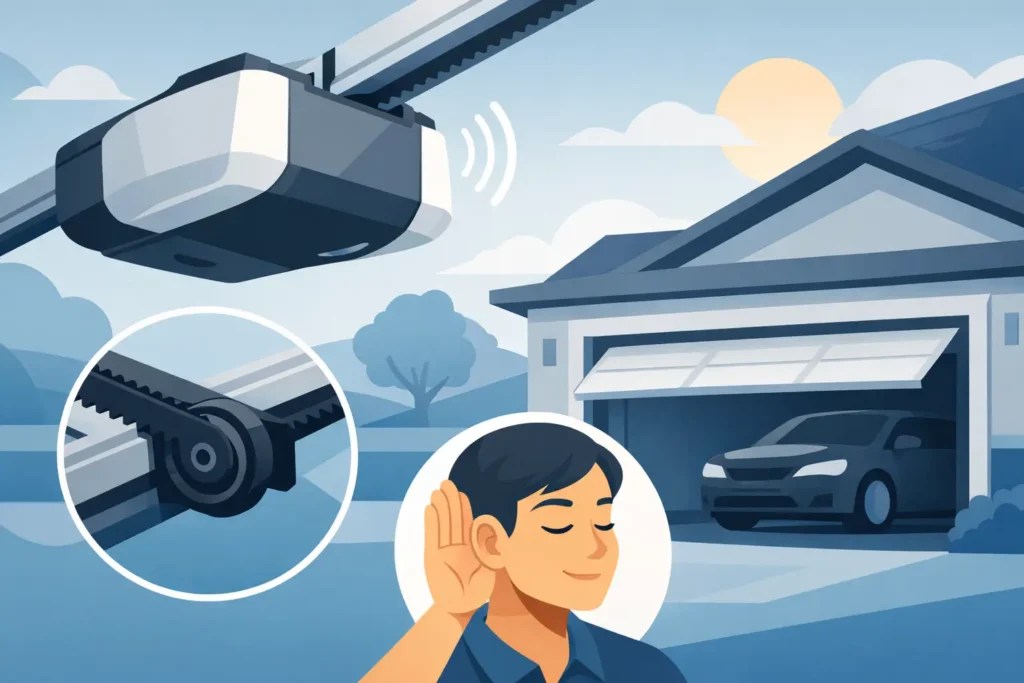
Sometimes the door itself is in acceptable condition, but the opener is creating the vibration. A loose motor mount, worn gear, damaged sprocket, or loose rail can make the entire system shake. Chain-drive openers are naturally louder than belt-drive models, but excessive shaking is not normal for either style.
The opener mounting points also matter. If the unit is attached to weak, loose, or improperly installed support framing, vibration can transfer into the ceiling and make the problem sound worse than it is. An opener that has been forced to lift an unbalanced door may develop premature internal wear.
If the garage door vibrates only when the opener is running, but moves smoothly by hand when properly disconnected, the opener or its installation may be the primary issue. A service inspection can separate an opener problem from a door-balance problem before repairs are recommended.
Damaged panels or an out-of-square door
A dented panel, bent reinforcement strut, or damaged bottom section can change how the door moves through the tracks. This is common after a vehicle impact, severe weather, or years of use. Even if the damage seems cosmetic, a bent section can prevent the door from traveling evenly.
Doors can also become out of square when hardware wears, cables stretch unevenly, or one side of the system is not lifting correctly. In these cases, vibration may be accompanied by visible gaps, uneven movement, or one side rising ahead of the other. Continuing to run the door can place added stress on the cables, rollers, and opener.
How to Tell Whether Garage Door Vibration Is Serious
Not every vibration requires an emergency repair, but certain signs call for prompt service. Stop using the opener and arrange an inspection if the door shakes violently, moves crookedly, slips out of the track, or makes loud banging or grinding noises. The same is true if you see a broken spring, frayed cable, loose cable drum, bent track, or a gap in the torsion spring.
A door that reverses unexpectedly, fails to close completely, or feels unusually heavy should also be checked soon. These problems can affect home security and make it easier for a small repair to become a larger one.
If the vibration is mild and the door is operating normally, schedule service before the noise becomes more severe. Preventative maintenance is often less costly than waiting until a roller breaks, a cable comes loose, or an opener fails under strain.
Safe Checks You Can Make Before Calling
Homeowners can gather useful information without taking risks. With the door closed, look along both tracks for debris, obvious bends, or loose-looking mounting brackets. Check whether rollers appear cracked or unusually worn. Listen for where the sound begins: near the opener, along one track, or at a particular door section.
You can also check that the photo-eye sensors near the bottom of the tracks are clean and aligned. They do not usually cause physical vibration, but sensor issues can make a door stop and reverse, which may be mistaken for a mechanical problem.
Do not spray heavy grease on tracks. Tracks are meant to guide rollers, not hold thick lubricant that collects dirt. Avoid touching springs, cables, bottom brackets, or any red-painted hardware, which commonly marks components that should only be serviced by a professional.
The Right Repair Depends on the Cause
A good garage door repair starts with identifying the source of the vibration. The fix may be as straightforward as replacing worn rollers and securing hardware. In other cases, the door may need track realignment, spring service, cable correction, panel repair, or opener adjustment.
There is a trade-off between a quick quieting fix and a repair that addresses the underlying strain. For example, replacing a noisy roller may reduce sound, but it will not solve vibration caused by an unbalanced door or a loose opener rail. An honest inspection should explain what is worn, what is safe to monitor, and what needs attention now.
For Massachusetts homeowners, Patriot Garage Door can inspect the complete system and provide straightforward repair options based on the condition of the door, not a one-size-fits-all recommendation. A stable, properly balanced garage door protects your opener, keeps daily access dependable, and helps prevent a small shake from turning into a costly breakdown.
Need Help With Your Garage Door?
From broken springs and opener issues to repairs and new installations, Patriot Garage Door provides dependable service when you need it.