A loading door that stops halfway open at 7:30 a.m. is not a small inconvenience. It can delay deliveries, leave inventory exposed, interrupt employee access, and create a safety issue before the workday has properly started. Commercial garage door repair is about restoring dependable access quickly, but it is also about making sure the door is safe to operate once it is moving again.
A commercial door works harder than most residential doors. It may open dozens of times a day, handle heavier loads, and operate in conditions that expose it to road salt, moisture, dust, and temperature changes. When a component begins to fail, the best response is rarely to keep using the door until it quits completely. Early attention can often prevent a larger repair, a damaged door section, or an avoidable interruption to your business.
The Problems That Should Not Be Put Off
Some door issues are obvious. Others start as a sound, a slower-than-usual opening cycle, or a door that needs a second try before it closes. Either way, a commercial door should operate smoothly, stay aligned, and respond consistently to its controls.
A door that will not close fully deserves immediate attention. It can compromise building security, expose equipment or stock to weather, and leave a facility vulnerable after hours. If the door reverses unexpectedly, stops before reaching the floor, or must be forced shut, stop using it until the cause is identified.
Loud banging, grinding, popping, or scraping also calls for service. These sounds may point to worn rollers, loose hardware, damaged tracks, failing bearings, or a spring system under strain. Noise alone does not always mean the entire door needs replacement, but it is a warning that the system is no longer operating as it should.
A visibly crooked door, loose cable, bent track, or door that has come off its tracks is a safety concern. Commercial doors are heavy. Trying to pull one back into place or reset a cable without the right training and tools can lead to serious injury or more extensive damage. Keep people clear of the opening and arrange for a qualified technician to inspect it.
Commercial Garage Door Repair Starts With a Full Diagnosis
The part that appears broken is not always the only issue. For example, a cable may slip because a drum is worn, a track is out of alignment, or the door was placed under uneven tension. Replacing the cable without checking the rest of the system can bring the same problem back sooner than expected.
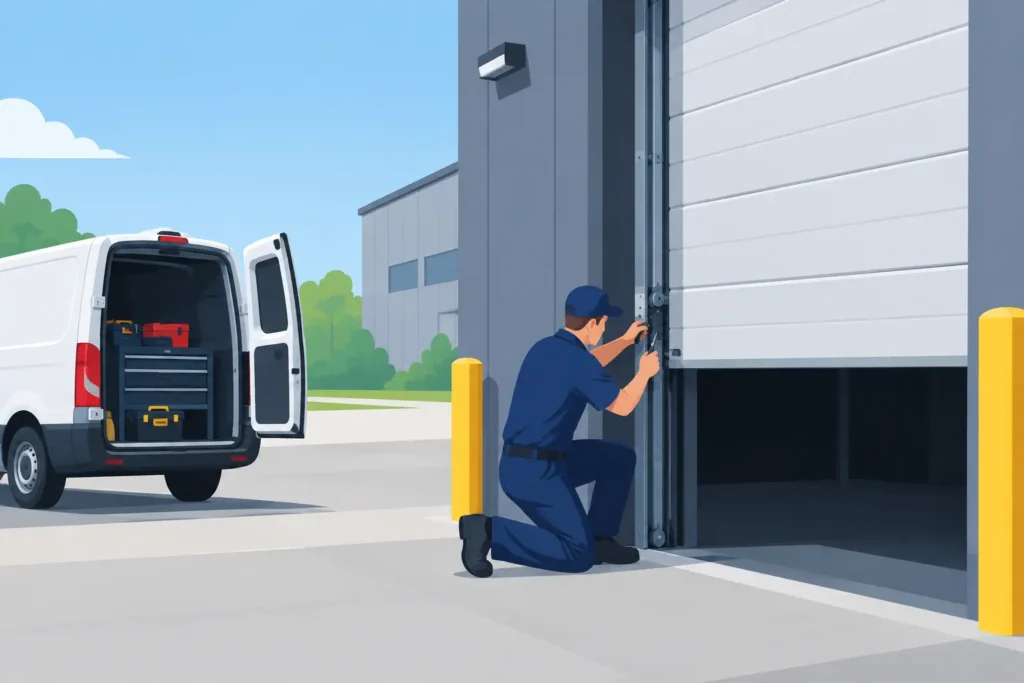
A proper commercial garage door repair visit should look beyond the immediate symptom. The technician should inspect the door sections, rollers, hinges, tracks, cables, springs, bearings, bottom seal, safety devices, and operator. This approach helps distinguish a straightforward component repair from a situation where aging parts are creating repeat service calls.
Clear recommendations matter here. A good repair professional should explain what failed, why it likely failed, what can be repaired now, and whether any additional work is recommended for safety or reliability. Not every worn part requires replacement on the same day. But if a component directly affects the door’s ability to stay balanced, close securely, or operate safely, delaying it may cost more than addressing it promptly.
Common Repairs for Commercial Doors
Commercial doors come in several configurations, including sectional overhead doors, rolling steel doors, high-lift systems, and doors paired with commercial operators. The right repair depends on the door’s design, size, usage, and condition.
Springs, Cables, and Door Balance
Springs counterbalance the weight of the door. When a spring breaks or loses tension, the operator may struggle, the door may feel unusually heavy, or it may not open at all. Cables work with that spring system and can fray, loosen, or come off the drum when the door is out of balance.
These are not do-it-yourself repairs. Spring systems store significant force, and improper adjustment can cause injury or damage to the door. Professional service helps restore proper balance so the operator is not carrying more of the door’s weight than it was designed to handle.
Tracks, Rollers, and Hardware
A forklift bump, delivery vehicle contact, repeated vibration, or normal wear can affect tracks and hardware. Bent tracks may prevent smooth travel. Worn rollers can make the door noisy and unstable. Loose hinges and brackets can allow sections to shift over time.
In some cases, a track can be realigned or a section can be repaired. In others, replacement is the safer choice. The decision depends on whether the structure of the door is still sound and whether repairs will provide reliable operation rather than a short-term patch.
Operators, Controls, and Safety Features
When the door itself moves freely but the operator will not run, the issue may involve the motor, drive system, wiring, control station, remote access device, or safety sensors. A commercial operator can also fail because it has been forced to lift an unbalanced door for too long.
Safety features deserve special attention. Photo eyes, reversing systems, and properly functioning controls help protect employees, customers, vehicles, and equipment around the opening. If a door closes when something is in its path, reverses without cause, or does not respond consistently, take it out of service until it is checked.
Repair or Replace? The Practical Decision
Replacement is not automatically the answer when a commercial door has a problem. A damaged roller, broken spring, worn cable, or failing operator component can often be repaired without replacing the full system. That is usually the sensible route when the door sections are in good condition and the repair supports safe, dependable operation.
Replacement may make more sense when the door has widespread rust, repeated panel damage, major structural problems, obsolete parts, or ongoing breakdowns that disrupt operations. A new door can also be a worthwhile investment when insulation, security, appearance, or better daily performance matters to the building.
The right choice comes down to the condition of the system, not just the cost of the immediate repair. An honest recommendation should account for how often the door is used, the consequences of downtime, and whether a repair will truly solve the problem.
Preventive Service Protects Your Schedule
For a commercial property, waiting for a failure is rarely the most economical maintenance plan. Preventive service gives a technician the chance to identify loose hardware, worn rollers, weakened cables, poor door balance, and operator strain before the door stops working during a busy shift.
The ideal schedule depends on use. A door used a few times each week will have different needs than one operating throughout the day at a warehouse, auto shop, condominium garage, or municipal facility. High-cycle doors generally benefit from more frequent inspection and adjustment.
Between service visits, staff can help by reporting unusual sounds, hesitation, visible cable wear, water entering under the door, or controls that do not respond correctly. They should not lubricate every part at random or adjust springs, cables, tracks, or operator settings. The wrong product or adjustment can create a bigger issue.
What to Do When a Door Fails
If the door is stuck open, secure the area and protect any exposed inventory or equipment if it is safe to do so. If it is stuck closed, do not force the operator or attempt to lift the door manually unless trained personnel and the correct procedure are in place. For doors that are crooked, off track, or have a loose cable, keep people away from the opening.
When calling for service, share what the door is doing, whether it is open or closed, any visible damage, and whether the issue affects security or access. That information helps a technician prepare for the job and helps you get a clearer idea of urgency.
For Massachusetts businesses and property managers, Patriot Garage Door provides straightforward service built around clear explanations, quality parts, and repairs that support safe daily operation. A door should not become the weak point in your building’s routine. Address the warning signs early, and you give your business a better chance of staying secure, accessible, and on schedule.
Need Help With Your Garage Door?
From broken springs and opener issues to repairs and new installations, Patriot Garage Door provides dependable service when you need it.