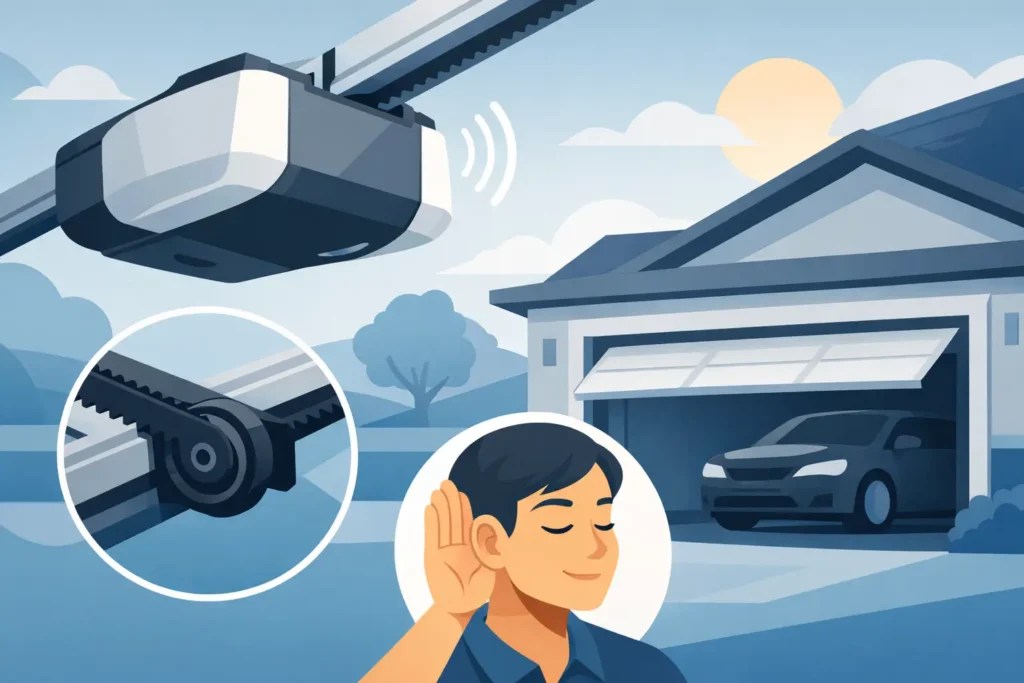
A garage door that sounds like it is grinding through every opening is not just an annoyance. That noise can be an early warning that the rollers are worn, binding in the track, or forcing the opener to work harder than it should. Garage door roller replacement is a focused repair that can restore smoother movement, reduce strain on connected parts, and help protect the safe operation of one of the heaviest moving systems in your home.
For Massachusetts homeowners, the issue often shows up after years of temperature swings, moisture, road salt, and regular use. A door may still open today, but rough roller movement can gradually wear tracks, hinges, cables, and opener components. Addressing the problem early is usually simpler and more affordable than waiting for a door to come off track or stop moving altogether.
What Garage Door Rollers Do
Rollers are the small wheels mounted along the sides of the garage door. They sit inside the vertical and horizontal tracks, guiding each door section as it travels up and down. Most residential doors have multiple rollers, with the exact number depending on the door’s height and design.
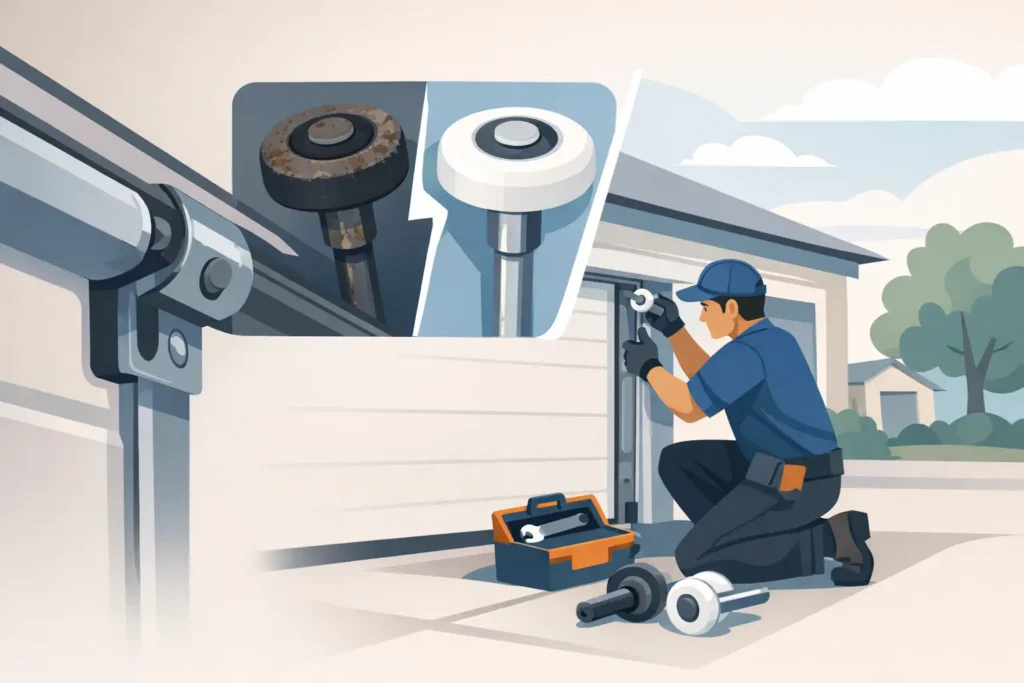
Because rollers carry the door through a repeated path every day, they take more abuse than many homeowners realize. Steel rollers can become noisy as bearings wear or lubrication breaks down. Plastic rollers may crack, chip, or flatten over time. Even quality nylon rollers eventually wear, particularly on a heavy insulated door or a door that sees frequent daily cycles.
A roller problem is not always limited to one wheel. If several rollers are nearing the end of their service life, replacing only the visibly damaged one may offer short-term relief without solving the larger wear pattern. A technician can inspect the full system and explain whether one roller, several rollers, or a complete set is the honest recommendation.
Signs You May Need Garage Door Roller Replacement
The clearest signal is a loud, uneven door. Still, sound alone does not tell the whole story. Rollers, tracks, hinges, springs, and openers all affect how a door moves, which is why a proper inspection matters.
Watch for these four common signs:
- A rattling, squealing, scraping, or popping sound during operation
- Rollers that wobble, crack, chip, seize, or appear misshapen in the track
- A door that jerks, shudders, or hesitates as it opens or closes
- An opener that seems louder, slower, or more strained than usual
You may also notice black residue near the tracks, metal shavings, or a roller that has slipped partly out of its normal path. Do not try to force the door through that condition. Continuing to operate a binding door can bend the track or create an off-track situation that needs more extensive repair.
Why Worn Rollers Put Other Parts at Risk
Garage door components work as a system. When rollers do not move freely, the door no longer follows the track as designed. That extra resistance transfers to the hinges, brackets, track, springs, cables, and opener.
The opener is especially vulnerable to this added drag. It is designed to guide a balanced door, not pull a heavy, sticking door through damaged rollers. If the opener begins reversing unexpectedly, making new noises, or failing to close the door consistently, the cause may be more than an opener setting. A roller or track issue could be part of the problem.
There is also a safety concern. A door that binds on one side can move unevenly. In severe cases, rollers can come out of the track and leave the door unstable. Since garage doors can weigh hundreds of pounds, an unstable door is not a project to manage by trial and error.
Choosing the Right Replacement Rollers
Not every roller is the same, and the least expensive option is not always the best value. The right choice depends on the door’s weight, use, track condition, and the homeowner’s goals for noise reduction and long-term performance.
Plastic rollers are common on older or builder-grade doors. They are economical, but they generally wear faster and can become noisy. Steel rollers are durable but may require more maintenance and can be louder, especially if they have fewer bearings.
Nylon rollers are often a strong option for homeowners who want quieter operation. Quality nylon rollers with sealed bearings can reduce rolling noise and hold up well under normal residential use. They cost more upfront than basic rollers, but the improved performance can make sense for an attached garage, a bedroom located above the garage, or a door used several times each day.
A dependable technician will also confirm the roller stem length and fit. Installing a roller that does not match the door’s hinges and track geometry can cause poor alignment rather than improve it.
Is Roller Replacement a DIY Job?
Some rollers can be replaced without disturbing the spring system, but the job still requires caution, the correct tools, and a clear understanding of which parts are under tension. The rollers at the bottom of the door deserve special attention. Bottom brackets are connected to lift cables, and those cables are under significant tension when the door is closed. Removing or loosening a bottom bracket can lead to serious injury or a falling door.
For that reason, homeowners should not remove bottom brackets, tamper with cables, or adjust springs as part of a roller repair. Springs and cables are not the place to learn through a video or a quick weekend project.
There is also value in having the whole door evaluated while the rollers are being replaced. A trained technician can check track alignment, hinge wear, cable condition, spring balance, opener force settings, and safety sensors. That helps ensure a new roller is not being installed into a system with an underlying problem.
What a Professional Roller Service Should Include
A proper service is more than swapping out noisy wheels. The door should be operated and inspected before repairs begin so the technician can identify whether roller wear is the main issue or one part of a larger concern.
After selecting compatible rollers, the technician should replace them safely, check the condition of hinges and track sections, and verify that the door moves smoothly by hand. The door should then be tested with the opener, including its reversing and photo-eye safety features. Appropriate garage door lubricant may be applied to moving metal components, but tracks should not be heavily greased. Excess lubricant inside the track can collect dirt and make movement worse.
Homeowners should receive a clear explanation of what was found, what was repaired, and whether any future maintenance is worth planning for. That is the difference between a quick patch and workmanship meant to last.
How to Help New Rollers Last Longer
New rollers need very little attention from homeowners, but regular observation goes a long way. Listen for new sounds and look at the tracks occasionally for debris, loose hardware, or visible damage. Keep leaves, gravel, and stored items away from the door’s travel path.
An annual professional maintenance visit is useful for doors that receive regular use. During a maintenance appointment, a technician can tighten hardware, lubricate appropriate parts, inspect rollers and hinges, test balance, and make sure safety systems are working as intended. This is particularly helpful before winter, when cold temperatures can expose existing wear and make lubricants less effective.
Never use the opener to compensate for a door that feels unusually heavy or hard to move. If the door is disconnected from the opener and does not stay near the halfway point, spring balance may be an issue. Stop using the door and schedule service rather than repeatedly running the opener against that resistance.
A Quieter Door Starts With an Honest Inspection
Roller wear is common, repairable, and easy to overlook until the door becomes disruptive. The right repair can make daily operation noticeably quieter while reducing unnecessary stress on the rest of the system. At Patriot Garage Door, homeowners can expect straightforward recommendations based on the condition of the door, not pressure to replace parts that still have useful life.
If your garage door is rattling, shuddering, or moving unevenly, treat it as a reason to have the system checked. A timely inspection can keep a small roller issue from becoming a larger interruption to your home’s safety, security, and daily routine.
Need Help With Your Garage Door?
From broken springs and opener issues to repairs and new installations, Patriot Garage Door provides dependable service when you need it.