A garage door that stops halfway when you are leaving for work, reverses onto the driveway, or makes a new grinding noise is more than an inconvenience. It can affect home security, daily access, and safety. This garage door troubleshooting guide helps Massachusetts homeowners identify what may be wrong, handle a few safe checks, and recognize when a trained technician should take over.
Your garage door is a heavy moving system. The door, springs, cables, tracks, rollers, and opener all have to work together. A small issue, such as a blocked safety sensor, may have a simple fix. A broken spring or loose cable is different. Knowing the difference can prevent a minor repair from becoming a damaged door, damaged opener, or injury.
Start With a Safe Garage Door Troubleshooting Check
Before touching the door or opener, look for signs that the system is under tension or out of alignment. Keep children and pets away from the garage door while you inspect it. Do not stand beneath a door that is partially open or trying to move.
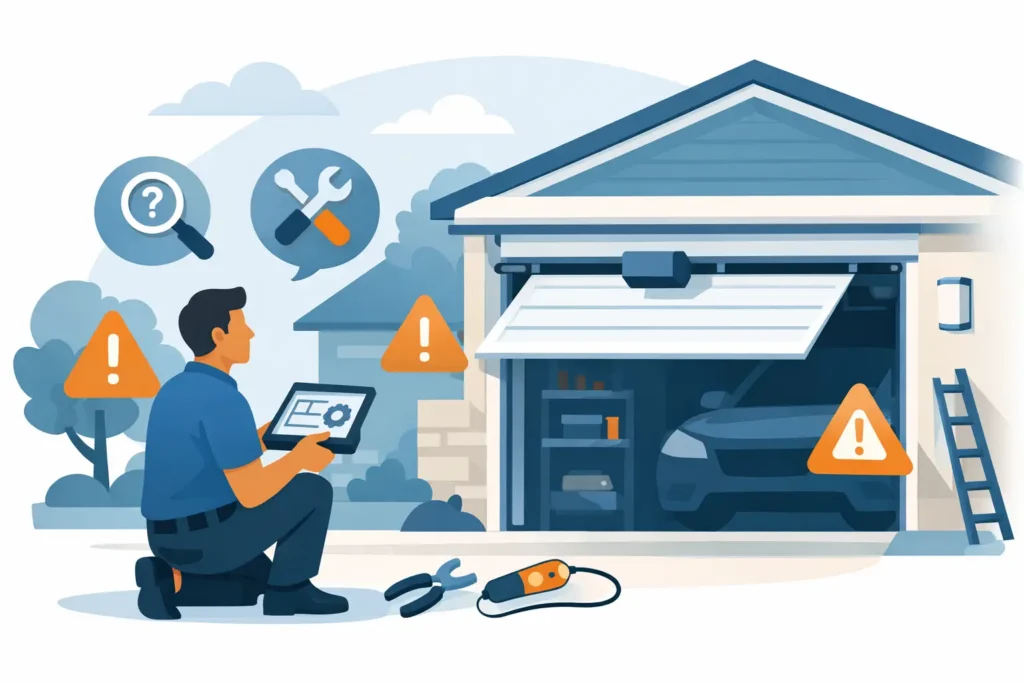
Stop using the door and arrange professional service if you see any of the following:
- A cable is loose, frayed, or has come off its drum.
- A spring is broken, stretched apart, or hanging incorrectly.
- The door is off its tracks, tilted, or has a roller outside the track.
- The door has dropped suddenly, feels unusually heavy, or will not stay open manually.
Springs and cables store significant force. They are not homeowner repair items. Avoid loosening brackets, winding cones, cable drums, or any hardware connected to the springs. A reliable repair starts with keeping the problem from getting worse.
The Door Will Not Open or Close
If the opener runs but the door does not move, first check whether the emergency release cord has been pulled. The red release handle disconnects the door from the opener trolley. This often happens after a power outage, accidental pull, or manual operation. With the door fully closed, you can usually reconnect it by pulling the release handle toward the opener and running the opener until the trolley engages.
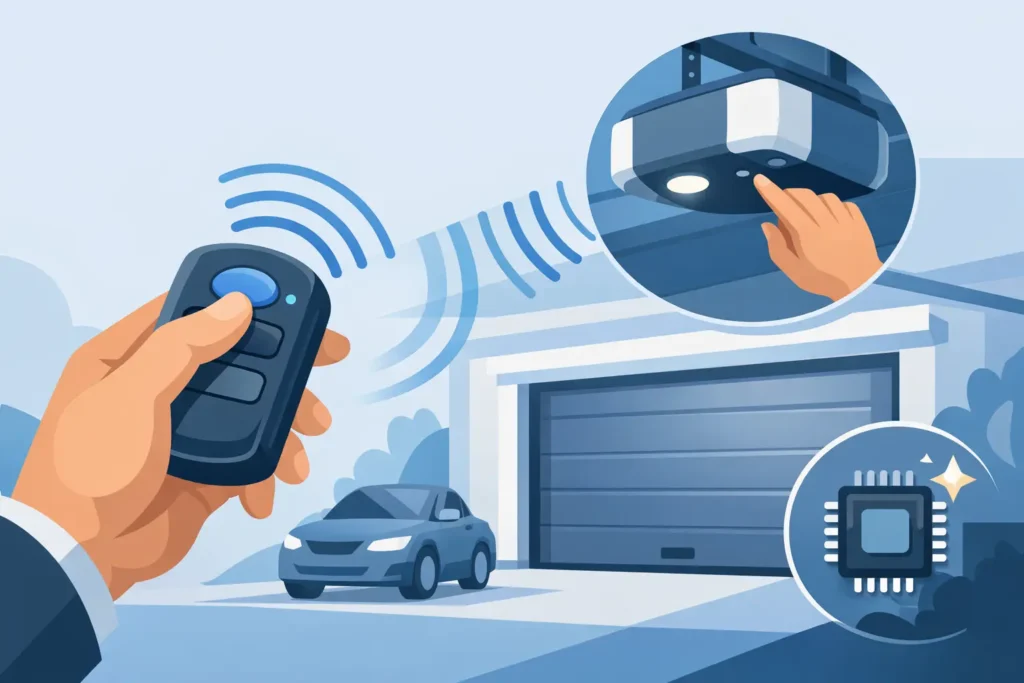
If the door will not move at all, check the simple causes next. Make sure the opener is plugged in, confirm the circuit breaker has not tripped, and replace the remote battery if needed. Test the wall button. If the wall button works but the remote does not, the issue may be the remote battery, programming, or signal interference rather than the door itself.
A door that opens only a few inches and stops often points to a broken spring. You may hear the opener hum, but the motor cannot safely lift the door without spring support. Do not keep pressing the opener button. Repeated attempts can strain or burn out the opener, turning one repair into two.
When the Opener Makes Noise but the Door Stays Put
A humming, clicking, or running opener with no door movement can also indicate a stripped drive gear, disconnected trolley, or door that is binding in the tracks. Homeowners can visually check for obvious obstructions, but internal opener repairs and door-balance issues need a professional diagnosis.
The right repair depends on the condition of the complete system. Replacing an opener without correcting a heavy or binding door may leave the new opener working harder than it should.
The Door Reverses Before It Closes
Modern garage door openers use photo-eye safety sensors near the bottom of the tracks. If the door begins to close and immediately reverses, start there. Look for leaves, tools, snow buildup, or other objects blocking the sensor path. In Massachusetts, road salt residue, moisture, and winter debris can also collect around the sensor area.
Wipe each sensor lens gently with a clean, soft cloth. Then check that both sensors are facing one another and that their indicator lights are on. A bumped sensor bracket can shift just enough to break the invisible beam. If the lights flicker or one will not illuminate, carefully align the sensors according to the opener manufacturer’s instructions.
If the sensors appear clear and aligned but the door still reverses, the closing force setting, track condition, rollers, or door balance may be involved. Do not increase the opener force setting as a shortcut. That adjustment is designed for fine-tuning, not for overcoming a damaged or heavy door. Excess closing force creates a real safety risk.
The Garage Door Is Loud, Jerky, or Shaking
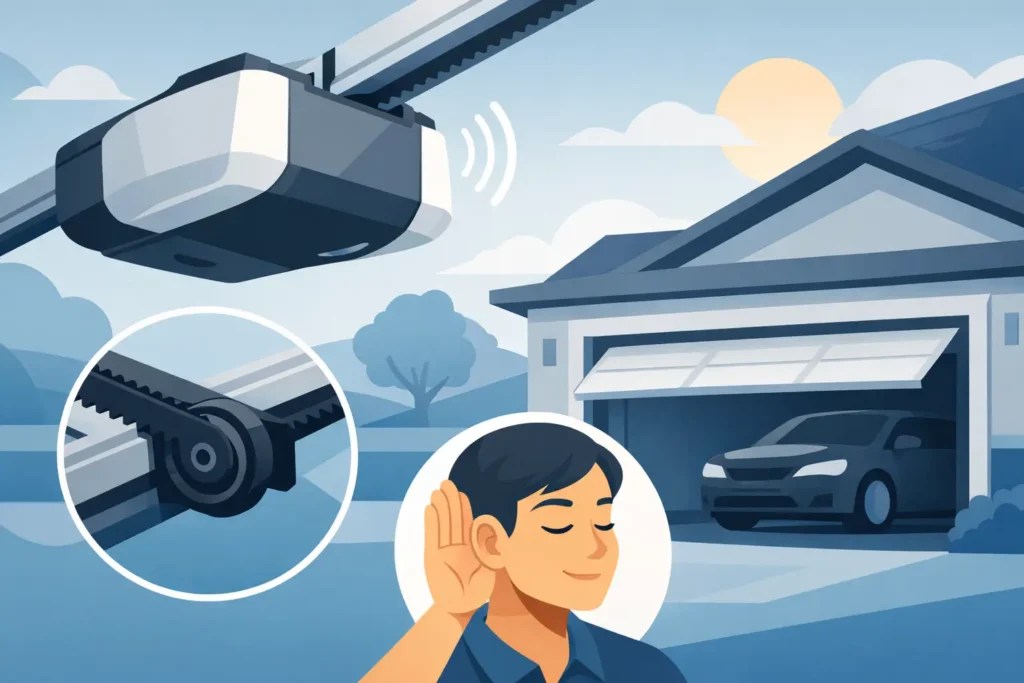
Some garage door noise is normal. Metal parts move, rollers travel through tracks, and an opener motor engages. But a door that suddenly squeals, bangs, scrapes, or shakes deserves attention.
Begin with a visual inspection while the door is closed. Look for loose track brackets, bent track sections, worn rollers, and hardware that appears to be backing out. Do not attempt to straighten a track or tighten spring-related hardware. Tracks must be properly positioned, and an incorrect adjustment can pull the door farther out of alignment.
Dry rollers, hinges, and bearings can create squeaking or grinding. If the door is otherwise operating normally, a garage-door-specific lubricant applied sparingly to hinges, rollers with bearings, and springs may reduce routine noise. Do not use heavy grease on the tracks. Grease attracts dirt and can interfere with smooth roller movement. Also avoid lubricating nylon roller wheels unless the manufacturer calls for it.
Noise can be a maintenance issue, but it can also be an early warning. A popping sound may indicate a roller problem. A loud bang followed by a door that will not lift is commonly associated with a broken spring. A scraping sound may mean the door is rubbing against a track or panel. The sooner the cause is addressed, the better the chance of avoiding additional damage.
The Door Is Uneven or Off Track
A garage door should travel evenly and sit level when closed. If one side is lower, a cable may be loose, a roller may be damaged, or the track may be bent. If the door is visibly crooked, stop operating it immediately.
Do not try to force an off-track door back into place with the opener. The opener is not designed to pull a misaligned door straight. Continued use can bend tracks, damage panels, pull cables loose, or cause the door to come down unexpectedly.
Wind, a vehicle bump, worn hardware, and years of regular use can all contribute to alignment problems. The repair may be as focused as replacing rollers or resetting a cable, or it may involve track adjustment and inspection of the door’s overall balance. A technician should assess the full system before recommending replacement parts.
Test the Door’s Balance Carefully
A balanced garage door protects the opener and reduces wear on major components. You can perform a basic balance check only when the door is fully closed, the area is clear, and there are no visible cable, spring, or track problems.
Pull the emergency release to disconnect the opener, then lift the door manually to about waist height. A properly balanced door should stay near that position with little help. If it races upward, falls quickly, or feels extremely heavy, stop and reconnect the opener only after the door is safely closed. The springs likely need professional adjustment or replacement.
Never attempt to adjust torsion or extension springs yourself. These components are under high tension, and the correct repair requires proper tools, training, and safety procedures.
When a Service Call Is the Smart Choice
Homeowners can often clear sensor obstructions, check power, replace a remote battery, and keep moving parts appropriately lubricated. Beyond those basic checks, garage door work becomes less about guessing and more about protecting your home and family.
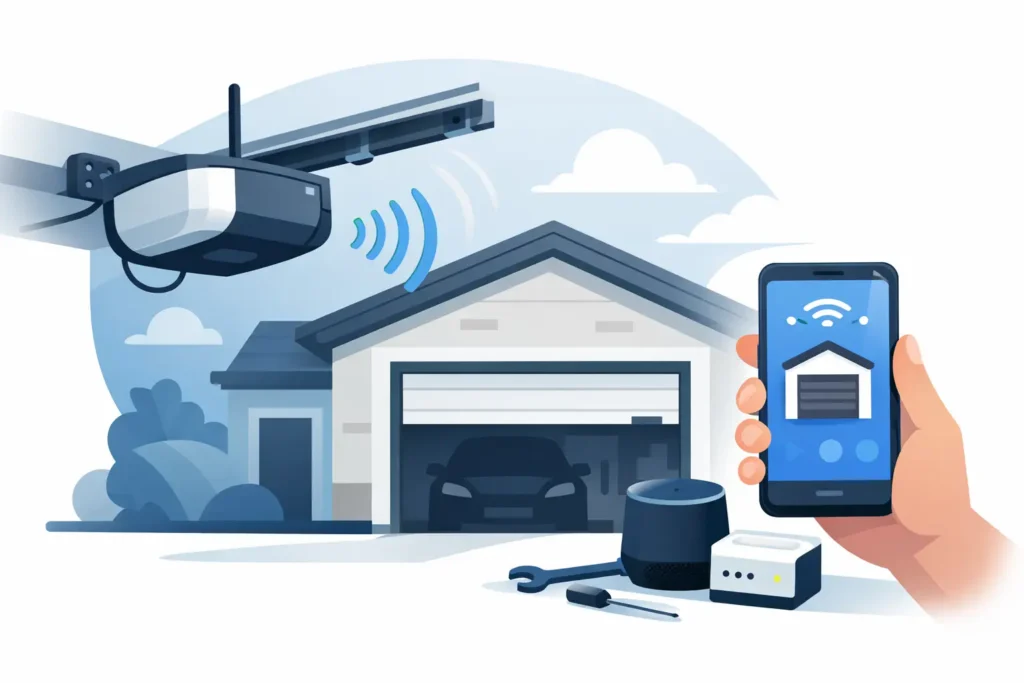
Call for service when the door is heavy, crooked, stuck, repeatedly reversing, making harsh new noises, or showing damage to springs, cables, tracks, or panels. It also makes sense to schedule an inspection when an older opener becomes unreliable. Sometimes a targeted repair is the honest answer. Other times, a new opener with battery backup, quiet operation, or app-enabled access offers better long-term value.
At Patriot Garage Door, the goal is to explain what is causing the problem, outline practical options, and perform the repair with workmanship you can rely on. A garage door should open safely, close securely, and stay out of the way of your day. If yours is telling you otherwise, it is worth having it checked before the next trip in or out of the garage becomes a bigger problem.
Need Help With Your Garage Door?
From broken springs and opener issues to repairs and new installations, Patriot Garage Door provides dependable service when you need it.