A garage door that suddenly groans through the morning can wake the whole house, but the noise is not just an annoyance. If you are asking, “why is my garage door noisy,” the sound may be an early warning that a moving part needs attention. Catching the cause now can help protect your opener, keep the door operating safely, and prevent a smaller repair from turning into a stuck door at the worst possible time.
Garage doors are heavy systems with springs, cables, rollers, hinges, tracks, and an opener all working together. A little operating sound is normal. Sharp squeaks, grinding, banging, scraping, or repeated rattling are not something to ignore.
Why Is My Garage Door Noisy All of a Sudden?
The kind of noise you hear offers useful clues. A squeak usually points to friction. A grinding sound can mean a roller, track, or opener issue. A loud bang may be related to springs, loose hardware, or a door that is no longer moving evenly.
Sometimes the cause is simple, such as dry hinges after a Massachusetts winter. Other times, the noise signals wear in a component that carries significant tension or weight. The right repair depends on when the sound happens, where it seems to come from, and whether the door still opens and closes smoothly.
Dry or Worn Rollers and Hinges
Rollers travel through the tracks every time the door moves, while hinges allow the door sections to bend as they follow the curve overhead. When these parts are dry, dirty, or worn, the result is often squeaking, squealing, or a rough rattling sound.
Steel rollers can become especially noisy as they age. Nylon rollers generally operate more quietly, but they can still wear out over time. If a roller wobbles, has a cracked wheel, or does not turn freely, it can strain the track and make the door sound much louder than it should.
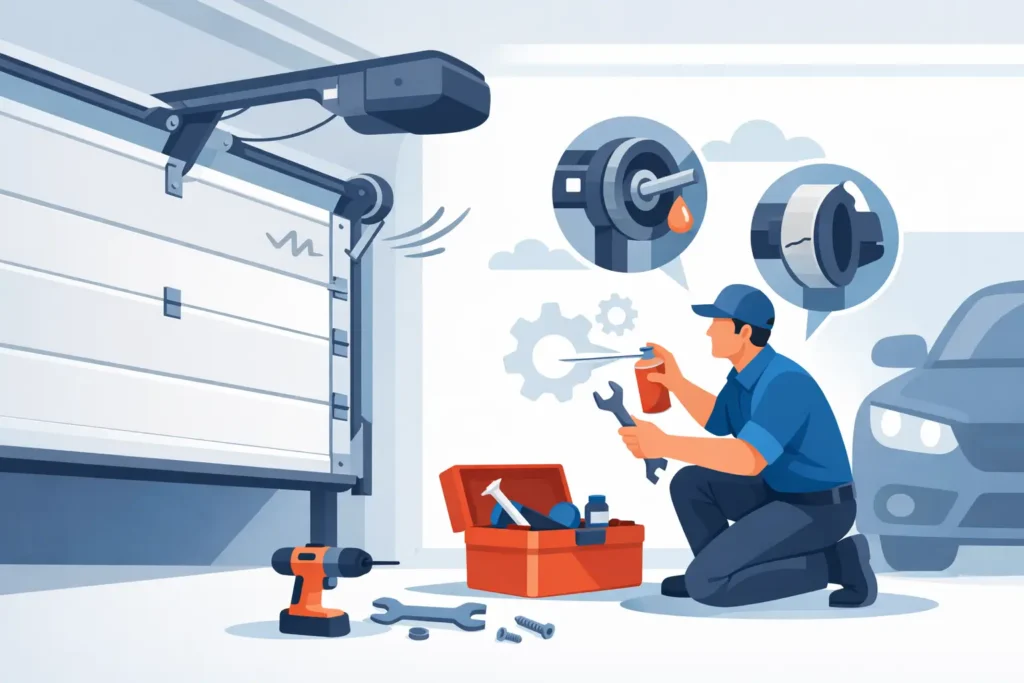
Homeowners can apply a garage-door-specific lubricant to accessible hinges, rollers, and springs according to product directions. Do not use heavy grease, and do not spray lubricant on the track itself. The roller needs to move through a clean track, not slide through a greasy one. If lubrication does not reduce the noise, the parts may be worn rather than simply dry.
Loose Hardware and Vibrating Parts
A garage door moves hundreds of pounds of material. Normal vibration can gradually loosen bolts, brackets, hinges, and track supports. That can create a rattling or shaking noise, particularly when the door starts moving or changes direction.
Loose hardware should be inspected carefully. Track brackets and other components are under load, so this is not a place for aggressive DIY adjustments. A qualified technician can tighten appropriate fasteners, identify damaged brackets, and make sure the tracks remain aligned without creating a larger safety issue.
Dirty, Bent, or Misaligned Tracks
Scraping, rubbing, or metallic grinding often points toward the tracks. Dirt, old buildup, or a small obstruction can interfere with roller movement. A bent track, loose mounting bracket, or door that has shifted out of alignment can make the problem more serious.
Never force a noisy door through a rough cycle. Continuing to run it can damage rollers, pull the door off track, or overwork the opener. If the door appears crooked, has a gap on one side, or shakes heavily as it moves, stop using it and arrange service. A door that is coming off track can become unstable quickly.
Springs, Cables, and Balance Problems
Garage door springs do the heavy lifting. They counterbalance the door’s weight so the opener can guide it rather than lift it alone. When a spring weakens, breaks, or loses proper adjustment, the door may groan, slam, jerk, or make a loud bang.
Cables can also make noise if they are frayed, loose, or winding unevenly on the drum. These parts are under extreme tension. Do not attempt to adjust springs, cables, or bottom brackets yourself. A professional repair is the safest choice and can prevent serious injury or additional damage to the door.
One warning sign is a door that feels unusually heavy when operated manually with the opener disconnected. Another is an opener that strains, hums, or reverses because the door is no longer balanced. In either case, the opener may be reacting to a spring problem rather than causing it.
A Noisy Garage Door Opener
Not every sound comes from the door itself. Chain-drive openers are dependable and powerful, but they naturally make more operating noise than belt-drive models. A loose chain, worn gear, failing motor, or vibrating mounting hardware can make even a familiar opener noticeably louder.
A humming opener with no door movement may indicate a problem with the motor, gear assembly, or a door that is too heavy for the opener to lift. Repeated clicking can be related to safety sensors, wiring, or an opener control issue. If the opener is shaking overhead, its support system may also need attention.
For homeowners who want a quieter garage, especially when there is a bedroom above it, a belt-drive opener can be a worthwhile upgrade. It is not always necessary to replace an existing unit, though. If the door is balanced and the opener is otherwise in good condition, an honest inspection may show that a repair or adjustment is all that is needed.
What Different Garage Door Noises Can Mean
The sound alone does not provide a complete diagnosis, but it helps narrow down the likely issue.
- Squeaking or squealing: Often dry hinges, rollers, or springs, though worn rollers may need replacement.
- Grinding or scraping: Can indicate track trouble, damaged rollers, an opener gear issue, or a door moving out of alignment.
- Banging or popping: May come from loose hardware, binding sections, worn springs, or a door that is not balanced correctly.
- Rattling or vibrating: Often caused by loose fasteners, track supports, opener mounts, or a chain that needs adjustment.
- Loud humming: May mean the opener is trying to operate but cannot move the door because of a mechanical problem.
Pay attention to the timing. Noise only while opening can point to a different issue than noise at the floor, near the ceiling, or during both directions of travel. A technician can use those details to diagnose the system efficiently.
Safe Checks You Can Make Before Scheduling Service
Start by looking, not disassembling. With the door closed, check for visible debris in the tracks, obvious loose bolts, cracked rollers, frayed cables, damaged hinges, or gaps around the springs. Listen to whether the sound appears to come from the door, tracks, or opener.
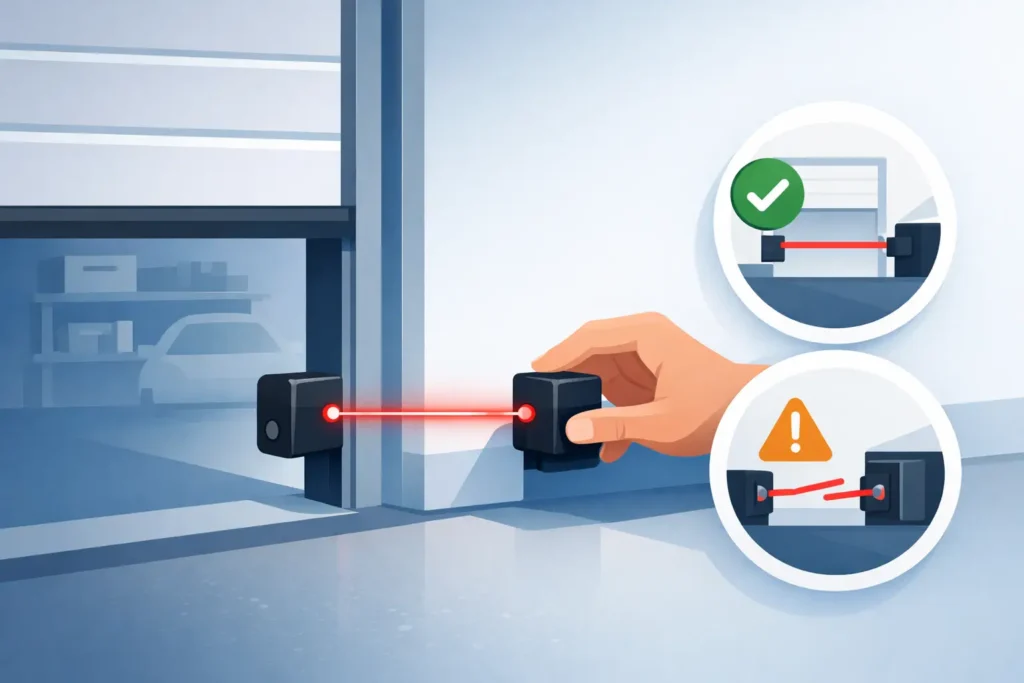
You can also test the photo-eye sensors by making sure they are clean, facing each other, and free from stored items or cobwebs. If the door reverses unexpectedly, though, avoid repeated tests until the system has been inspected.
Do not remove covers from the opener, loosen cable hardware, or touch torsion springs. Garage door repairs are not all equal: lubricating a hinge is a manageable maintenance task, while correcting spring tension or track alignment requires specialized tools and training.
When a Noisy Door Needs Prompt Professional Repair
Schedule service promptly if the door will not open, closes unevenly, shakes hard, hangs crooked, or makes a sudden loud bang. The same applies if you see a broken spring, loose cable, bent track, or damaged roller. Stop using the automatic opener when the door is clearly binding or unusually heavy.
A reliable garage door technician should explain what is causing the noise, show you the affected components when possible, and offer repair options without pushing replacement when it is not needed. At Patriot Garage Door, that means looking at the full system, not treating the loudest sound as the only problem.
Preventative maintenance is also valuable for doors that are still working but getting louder. Routine inspection, proper lubrication, hardware checks, and balance testing can extend the life of rollers, springs, and openers. It is a practical way to protect a major moving part of your home before a cold morning, busy workday, or family schedule exposes the problem.
A quieter garage door is usually a sign that its parts are moving as they should. Give unusual noises attention early, and you will have a better chance of keeping your door safe, dependable, and ready when you need it.
Need Help With Your Garage Door?
From broken springs and opener issues to repairs and new installations, Patriot Garage Door provides dependable service when you need it.