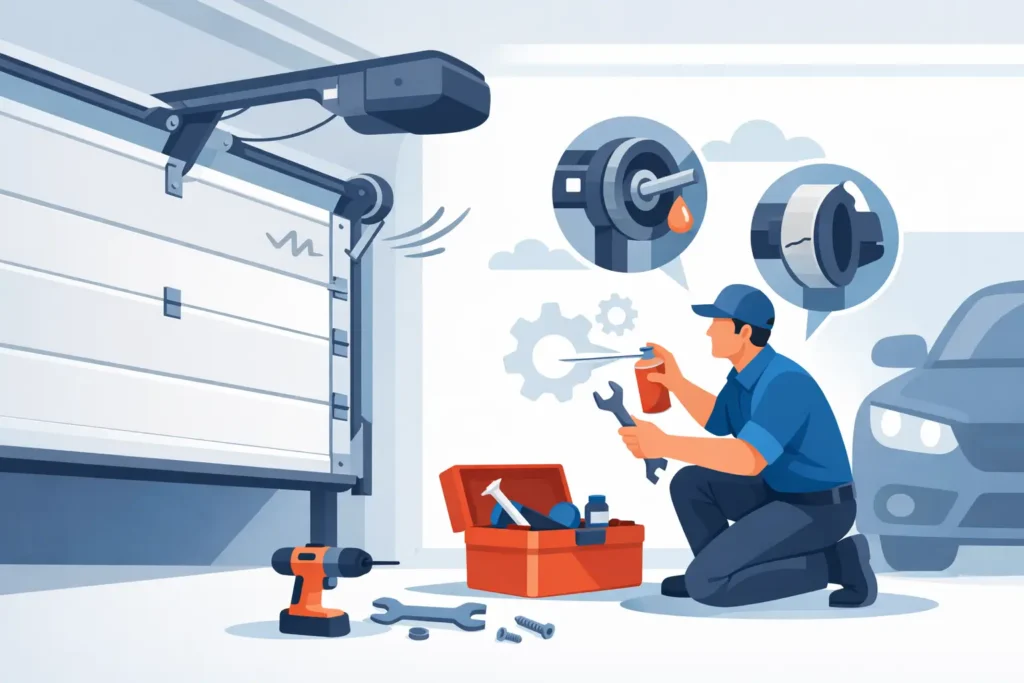
A garage door that starts down, then reverses before it reaches the floor, is not being stubborn. It is responding to a safety signal. In many cases, garage door safety sensor alignment is the issue. Those small sensors near the bottom of the tracks are designed to stop the door from closing on a person, pet, vehicle, or object. When they cannot see each other clearly, the opener treats the situation as a possible obstruction.
The good news is that a basic alignment issue can sometimes be resolved with a careful visual check. The more important news is that safety sensors are only one part of a heavy, moving garage door system. If the problem is not obvious, or the door is behaving unpredictably, it is wise to stop troubleshooting and have a qualified technician inspect it.
What Garage Door Safety Sensors Do
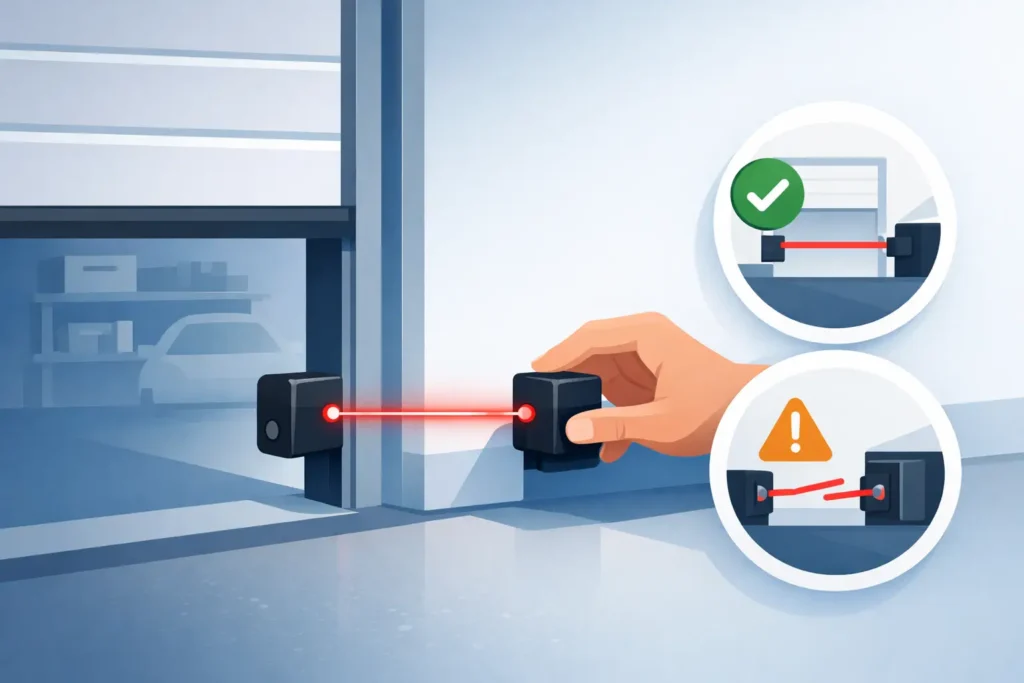
Most modern garage door openers use two photo-eye sensors mounted near the floor, usually one on each side of the door opening. One sensor sends an invisible beam to the other. When that beam is uninterrupted, the opener knows it is safe to close the door.
If a box, bike tire, leaf pile, or person breaks the beam, the door should not close. If the door is already closing, it should reverse. This is one of the most important safety features on an automatic garage door.
A sensor issue often looks like a door that will open normally but refuses to close with the wall button or remote. Some openers allow the door to close only while you hold the wall button down. Others flash the opener lights or show blinking sensor lights. The exact warning depends on the opener brand, but the pattern is similar: the door is being told that its path is not clear.
Signs Your Sensors Are Out of Alignment
The sensor lenses do not need to look dramatically crooked to cause trouble. A small bump from a trash can, snow shovel, child’s toy, or car tire can move a bracket just enough to interrupt the beam. Vibrations from regular door operation can also loosen hardware over time.
Common signs include a garage door that reverses immediately after starting to close, an opener that clicks but does not move the door downward, or indicator lights that blink instead of staying solid. You may also notice that one sensor light is off, dim, or flickering while the other appears normal.
Do not assume alignment is the only explanation. A damaged sensor wire, corroded connection, failing opener logic board, dirty lens, or an obstruction in the door’s travel path can create nearly identical symptoms. That is why a quick check is useful, but repeated adjustments without a clear cause are not.
How to Check Garage Door Safety Sensor Alignment
Before touching anything, make sure the door is fully open or fully closed and stable. Keep children, pets, and vehicles out of the doorway while you inspect the system. Never work around a moving garage door.
Clear the Doorway and Clean the Lenses
Start with the simple stuff. Remove any objects near the bottom of the opening, including tools, storage bins, hoses, and debris. In Massachusetts, winter salt, slush, and sand can collect around the sensor area, while spring pollen and spider webs can coat the lenses.
Use a clean, soft cloth to gently wipe each sensor lens. Avoid harsh cleaners and do not scrape the lens with metal tools. A dirty lens can weaken the beam enough to mimic an alignment problem.
Check the Indicator Lights
Most sensors have small LED lights. In many systems, a steady light on both sides means the sensors are powered and aligned. A blinking or unlit light can point to a blocked beam, poor alignment, loose wire, or failed sensor.
Because colors and light patterns vary by manufacturer, the opener manual is the best source for the specific meaning of your lights. If you no longer have it, look for the opener model number on the motor unit before calling for service.
Look at the Sensor Position
The sensors should face one another across the opening and sit at roughly the same height. Inspect the brackets for obvious bending, looseness, or movement. If one sensor is aimed toward the floor, wall, or track instead of directly at the other sensor, it may need adjustment.
If the bracket hardware is accessible and you are comfortable doing so, gently reposition the sensor until its indicator light becomes steady. Tighten the bracket only enough to hold it in place. Over-tightening can crack a plastic sensor housing or bend the bracket again.
Then test the door from a safe position. Stand clear of the opening and use the wall control or remote. If the door closes normally, test the reversal feature by placing a suitable object in the beam path before starting another close cycle. The door should not close while the beam is blocked.
When Alignment Is Not the Real Problem
A sensor adjustment is not a cure-all. If the lights will not stabilize after cleaning and repositioning the sensors, the wiring may be loose, pinched, or damaged. Low-voltage sensor wires commonly run along the wall and ceiling, where staples, moisture, rodents, and accidental impacts can cause problems.
The issue may also be mechanical. A door that binds in the tracks, has a damaged roller, or is affected by a broken spring can reverse because the opener senses excessive resistance. That is different from a photo-eye problem, but homeowners often see the same result: a door that will not stay closed.
This distinction matters. Adjusting sensors will not fix a door that is off track, a worn cable, or a failing spring. Continuing to run a door with a mechanical problem can place extra strain on the opener and create a more costly repair.
Safety Steps Homeowners Should Not Skip
Garage doors are large, heavy systems, and their springs and cables are under significant tension. Sensor maintenance is generally low risk when the door is stationary, but deeper garage door repairs are not a DIY project.
Do not bypass the sensors, tape the lenses, cut wires, or force the door closed by holding the wall button unless it is absolutely necessary to secure the home temporarily. Even then, keep the opening clear and arrange professional service promptly. Bypassing a safety feature can put people, pets, and property at risk.
You should also avoid adjusting opener force settings to make a door close. Force settings are not a substitute for a properly balanced door, clear sensors, and sound tracks. If the door is reversing because something is wrong, increasing force can hide the warning rather than solve the problem.
When to Call a Garage Door Professional
Call for service if the sensor lights remain off or blink after basic cleaning and alignment, if wiring appears damaged, or if the door reverses even when the sensors show a clear connection. A professional can test the sensors, wiring, opener, and door movement as one system instead of replacing parts based on a guess.
You should also schedule service right away if the door is noisy, uneven, slow, off track, or has a visible damaged cable or spring. Those symptoms can indicate a larger issue that affects both reliable operation and household safety.
Patriot Garage Door provides straightforward diagnostics for homeowners who want a clear explanation before moving forward. The right repair may be a sensor adjustment, a wiring repair, an opener service, or a mechanical correction. It depends on what the system is actually telling us.
A properly aligned sensor is a small detail with a big job. Keep the area around it clean, pay attention when your door starts reversing unexpectedly, and treat repeated closing problems as a reason to get the whole system checked. A reliable garage door should protect your home without making you wonder whether it will close tonight.
Need Help With Your Garage Door?
From broken springs and opener issues to repairs and new installations, Patriot Garage Door provides dependable service when you need it.