A garage door that stops inches from the floor, reverses without warning, or refuses to move can turn an ordinary morning into a security problem. If your garage door will not close, do not force it down or keep pressing the remote in hopes that it will reset itself. Most closing problems involve a safety feature, an obstruction, or a worn mechanical part – and the right next step depends on what the door is doing.
Start With Safety, Not Force
A garage door is the largest moving object in most homes. Its springs, cables, rollers, tracks, and opener all work under tension and weight. When one part is out of place, forcing the door can bend tracks, strip opener gears, damage panels, or create a risk of injury.
Keep children, pets, and vehicles clear of the opening while you inspect the problem. If the door is partially open and you cannot close it, secure the garage as best you can from the house and avoid standing or working beneath the door. Never pull on loose cables, adjust springs, or try to reset a door that has come off its tracks.
The useful question is not simply, “Why won’t it close?” It is, “What happens when it tries?” That behavior gives a technician valuable clues and can help you rule out a few simple issues safely.
Why a Garage Door Will Not Close
The photo-eye sensors are blocked or misaligned
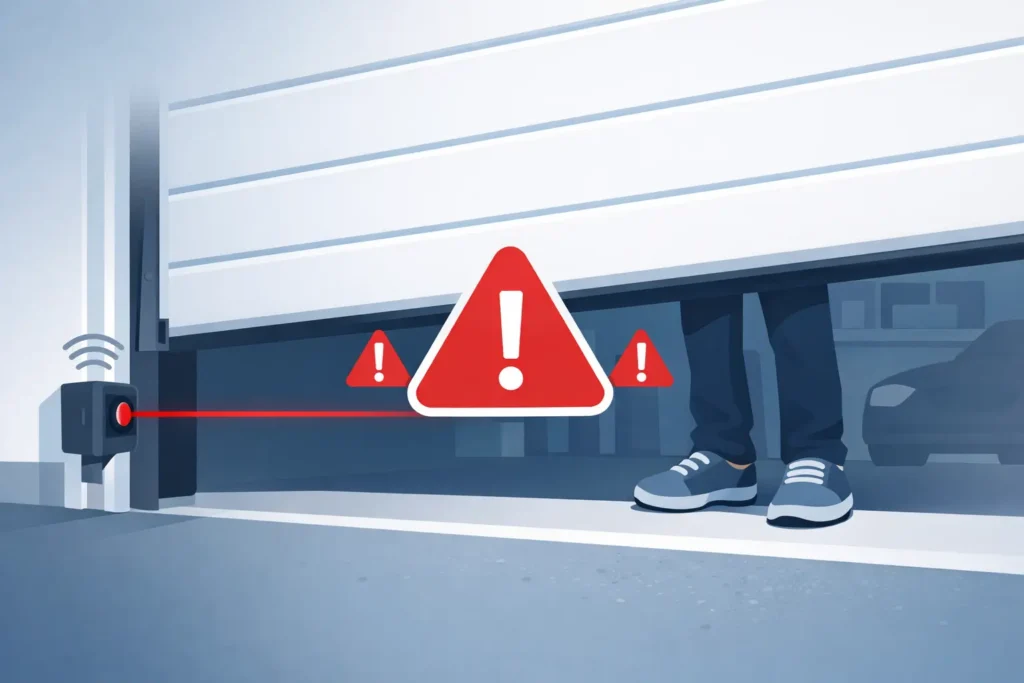
Most automatic openers use two small safety sensors near the bottom of the tracks. They send an invisible beam across the door opening. If that beam is interrupted, the opener assumes a person, pet, bicycle, or object may be in the way and prevents the door from closing.
Look for boxes, garden tools, leaves, snow, cobwebs, or anything else between the sensors. Wipe each lens gently with a soft cloth. Then check the indicator lights. In many systems, a steady light means the sensors are aligned, while a blinking or unlit sensor points to a blocked beam, alignment issue, or wiring problem.
Massachusetts weather can make this especially common. Road salt, mud, melting snow, and moisture can collect around the sensor area. A sensor that is just slightly bumped by a trash bin, shovel, or car tire may no longer line up correctly.
Something is in the door’s path
Before assuming the opener has failed, inspect the full width of the opening. A small object near the threshold can trigger the safety system. So can an uneven buildup of ice along the bottom seal during winter.
Do not chip ice away with a metal tool against the door or weather seal. If the door is frozen to the ground, repeated opener use can strain the motor or damage internal gears. Warm conditions, careful removal of loose ice, and a professional inspection may be the safer answer when the door remains stuck.
The close-limit setting is incorrect
If the door travels almost all the way down and then reverses, the opener may believe it has met an obstruction before it reaches the floor. This can happen when the close-limit setting needs adjustment. The opener uses this setting to determine where the door should stop.
A minor adjustment may solve the issue, but the setting should not be used to hide a mechanical problem. A door that binds in the tracks, has damaged rollers, or is becoming too heavy due to spring trouble can also reverse near the floor. Adjusting limits without addressing the real cause may put added stress on the opener.
The tracks, rollers, or hinges are damaged
Garage doors need a clear, properly aligned path to close smoothly. Bent tracks, worn rollers, loose brackets, or damaged hinges can cause the door to shake, drag, or stop partway down. You may hear grinding, scraping, popping, or a loud bang before the problem becomes obvious.
You can look for visible dents, gaps, or debris in the tracks, but do not loosen track bolts or attempt to bend a track back into place. Tracks are mounted under load, and small alignment errors can cause a door to bind or come off track completely. This is a repair that calls for the right tools and experience.
A spring or cable has failed
Broken springs are one of the most urgent causes of garage door trouble. Springs counterbalance the door’s weight so the opener can lift and lower it with controlled force. When a spring breaks, the door can become extremely heavy, uneven, or difficult for the opener to move.
A loud snap from the garage, a visible gap in a torsion spring above the door, or a door that moves only a few inches are common warning signs. Frayed or loose cables can create similar symptoms. Stop using the opener if you suspect a spring or cable issue. These parts are under high tension and should only be handled by a trained garage door technician.
The opener, remote, or wall control is the issue
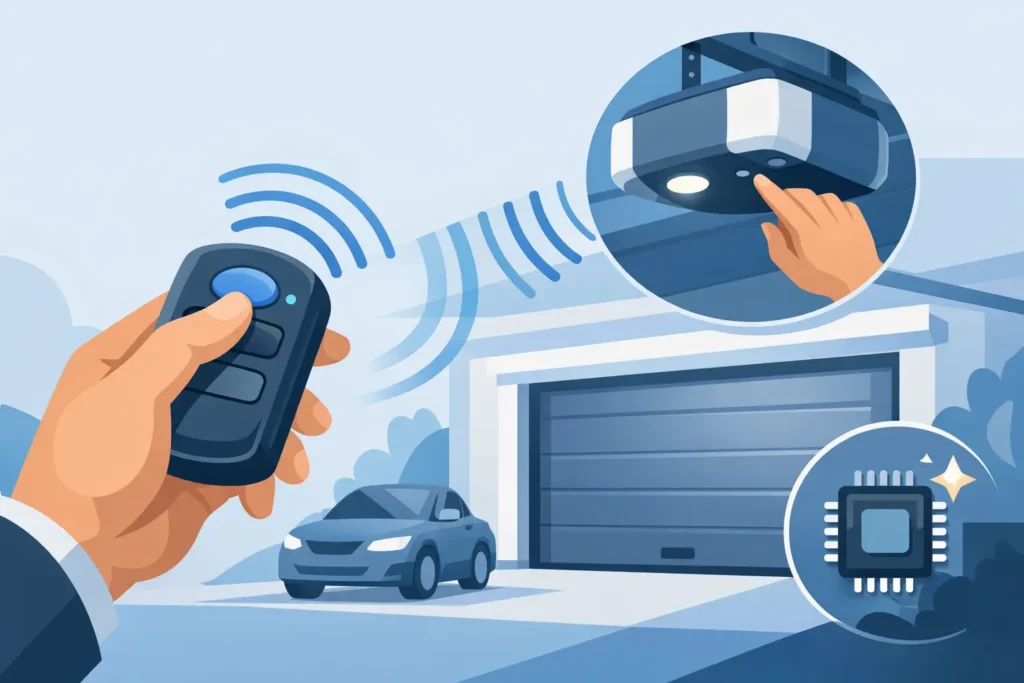
When the door does not respond at all, the problem may be electrical rather than mechanical. Confirm the opener is plugged in and that the outlet has power. Check whether a circuit breaker has tripped. If the wall button works but the remote does not, replace the remote battery before assuming the opener needs replacement.
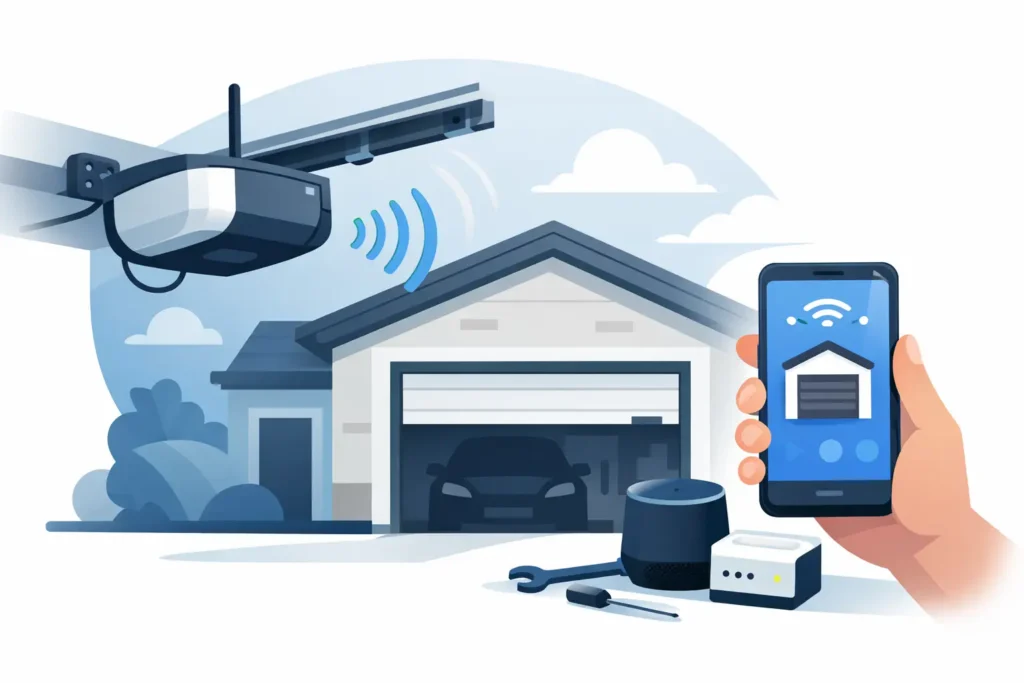
Some openers also have a lock or vacation setting that disables remote operation. If the wall control flashes or the opener light behaves differently than usual, consult the opener manual for the specific indicator pattern. App-connected openers may also show an error message that helps narrow down the issue.
Age matters here. An older opener can sometimes be repaired with a new gear, capacitor, sensor, or control board. In other cases, replacement is the more dependable choice, particularly when a unit lacks modern safety features or has recurring problems. A good recommendation should explain both options clearly rather than pushing a replacement that is not needed.
Safe Checks You Can Make at Home
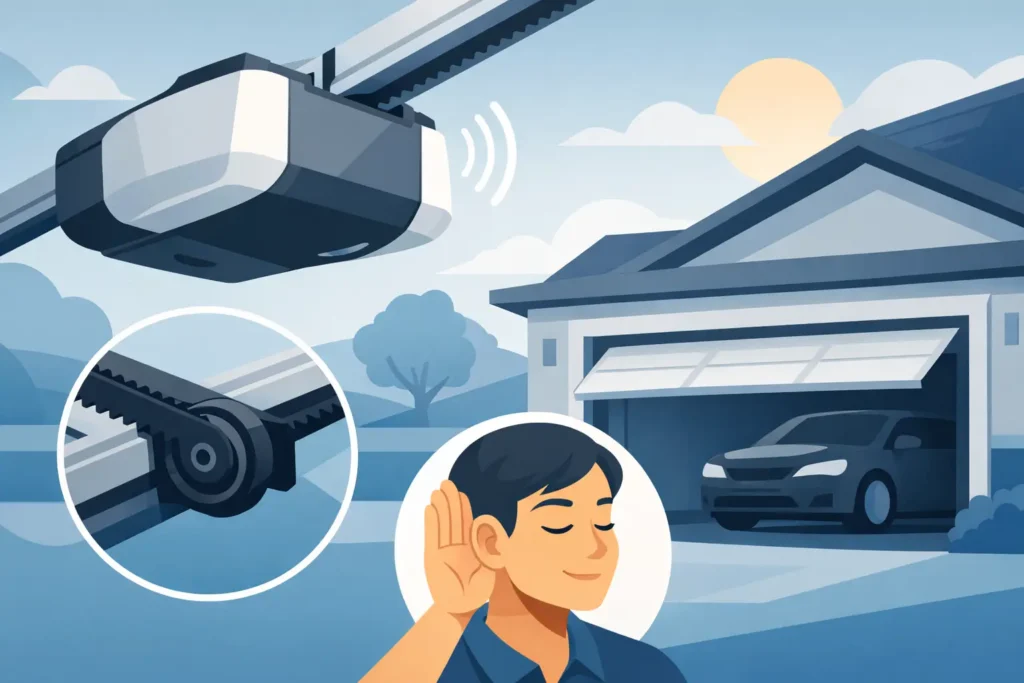
There are a few homeowner checks that are reasonable before scheduling service. Clear the doorway and sensor area, clean the photo-eye lenses, verify that both sensor lights are normal, and make sure the opener has power. You can also inspect the tracks visually for obvious obstructions and listen for unusual sounds when the door attempts to move.
If the door closes when you hold the wall button down continuously but not when using the remote or a normal press of the wall button, that often points to the safety sensors. Treat that as a temporary diagnostic clue, not a permanent workaround. The sensor issue still needs to be corrected before relying on the door again.
Avoid lubricating tracks with heavy grease, spraying random products into the opener, or repeatedly running a door that is jerking or hanging unevenly. Garage door lubricant has a place in routine maintenance, but it will not repair a broken spring, bent track, damaged cable, or failing motor.
When to Call for Garage Door Repair
Professional service is the right call when the door is crooked, stuck, off track, unusually heavy, noisy, or reversing after basic sensor checks. It is also time to schedule service if you see a broken spring, loose cable, bent track, cracked panel, or damaged roller.
For homeowners, the immediate concern is usually getting the car out or securing the garage. The larger concern is preventing a small repair from becoming a damaged door, burned-out opener, or safety hazard. A technician can inspect the complete system, identify the actual source of the problem, and explain whether a targeted repair or replacement makes the most sense.
Patriot Garage Door provides straightforward diagnostics for homeowners who need reliable garage door repair, opener service, spring replacement, or preventative maintenance. The goal should always be a door that closes securely, runs smoothly, and stays dependable through changing New England weather.
A door that will not close is rarely something to ignore overnight. Start with the simple safety checks, keep clear of high-tension components, and get qualified help when the issue involves the door’s movement, balance, or hardware. Prompt attention protects your home, your vehicles, and the people who rely on that garage every day.
Need Help With Your Garage Door?
From broken springs and opener issues to repairs and new installations, Patriot Garage Door provides dependable service when you need it.