
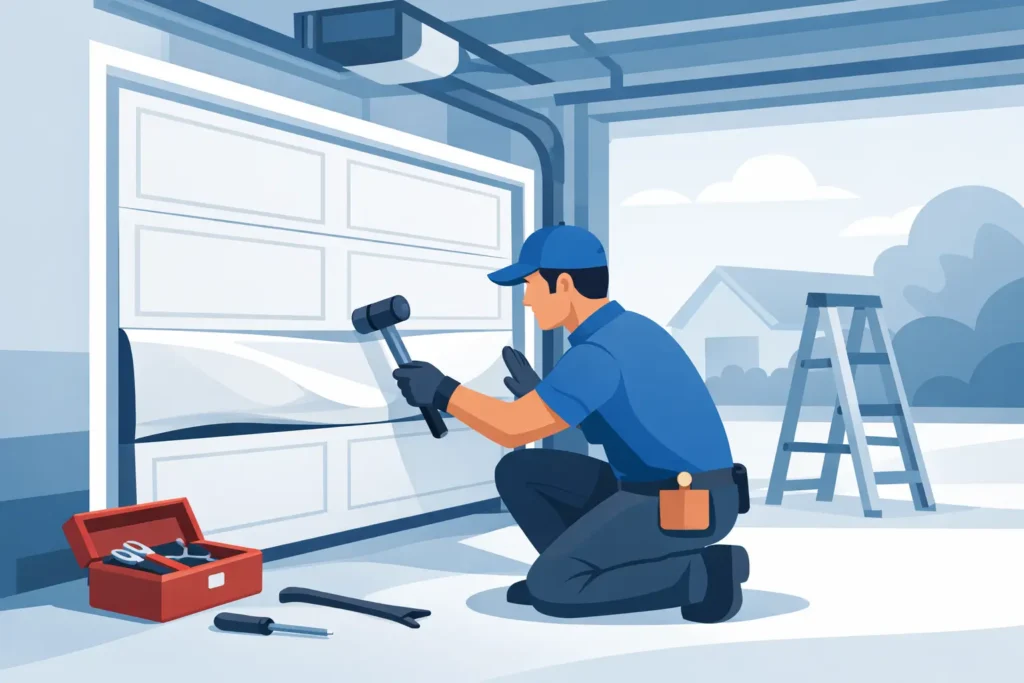
A dented garage door panel can look like a curb-appeal problem, but the real concern is what happens when you press the opener button. A garage door is a moving system under tension. When a panel is bent, it can bind in the tracks, pull hinges out of alignment, strain the opener, or leave your home less secure. Knowing how to repair bent garage door panel damage starts with a careful look at the severity of the bend and the condition of the door around it.
A shallow dent in one section may be repairable. A sharply creased panel, damaged reinforcement strut, or door that no longer moves smoothly calls for a more cautious approach. The goal is not simply to make the door look better. It is to restore safe, reliable operation without creating a larger repair later.
Can You Repair a Bent Garage Door Panel?
Sometimes, yes. Whether a bent panel can be repaired depends on the material, the location of the damage, and whether the door still opens and closes evenly. Steel sectional doors with a small, isolated dent often have the best chance of a practical repair. Aluminum panels can bend more easily and may not return to their original shape as cleanly. Wood doors can crack, split, or absorb moisture after an impact, which changes the repair decision.
The location matters just as much as the size of the dent. Damage near the edge of a panel, hinge, roller bracket, or bottom section has more effect on how the door travels. A bend in the bottom panel also deserves extra attention because that section meets the floor, carries weatherstripping, and is close to cables and brackets under high tension.
If the panel is only cosmetically dented and the door remains straight in the opening, a technician may be able to reshape and reinforce it. If the panel is creased, buckled, cracked, or pulling away from adjacent sections, replacement is usually the more dependable option.
Start With Safety, Not Tools
Before inspecting the door, disconnect the automatic opener only if the door is fully closed and stable. Do not pull the emergency release on a partially open, crooked, or stuck door. A damaged door can shift suddenly, especially if a cable has slipped or a roller has come out of the track.
Keep hands away from the bottom brackets, lift cables, torsion springs, and extension springs. These components store enough force to cause serious injury when handled incorrectly. A bent panel can place added stress on them, even when the damage appears minor.
With the door closed, stand back and look for uneven gaps between panels, loose hinges, bowed sections, cracked paint, damaged insulation, and rollers that sit at an angle. Then check the tracks from a distance. If either track is bent, separating from the wall, or visibly out of line, avoid operating the door until it has been inspected.
These signs point to more than a surface-level panel repair:
- The door jerks, shakes, or makes grinding noises while moving.
- One side rises faster than the other or the door sits unevenly when closed.
- Hinges are bent, screws are pulled from the panel, or rollers are out of the track.
- The opener reverses, struggles, or cannot lift the door normally.
When any of these issues are present, forcing the door through another cycle can damage the opener, tracks, cables, and remaining panels.
What a Professional Bent Panel Repair Involves
A proper repair begins with diagnosing why the panel bent. A basketball, vehicle bumper, snowblower, or bicycle may have caused the initial impact, but an underlying balance or alignment problem can make the result worse. A reliable technician checks the door’s travel, hardware, track condition, springs, rollers, hinges, and opener settings before recommending a fix.
For minor steel-panel damage, repair may involve carefully reshaping the affected area, securing loose hardware, and adding or replacing a reinforcement strut. A strut helps the panel resist flexing as the door moves and can be particularly useful across wider doors. The panel may also need touch-up work to protect exposed steel from corrosion, an important consideration in Massachusetts weather where road salt, moisture, and temperature swings can take a toll.
If a hinge attachment point is torn or weakened, simply pushing the metal back into place is not enough. That hinge has to carry repeated movement every day. Depending on the door design, the safer repair may include reinforcement, a replacement panel, or replacement of multiple connected components.
After the work is complete, the door should be tested by hand and with the opener. It needs to travel smoothly, seal at the floor, stop and reverse properly, and remain balanced. A panel that looks straight but causes the door to bind is not a finished repair.
When Panel Replacement Is the Better Choice
Panel replacement is not an unnecessary upsell when the damage affects the structure of the door. It can be the most cost-effective way to protect the rest of the system. A severely bent panel can continue flexing with every cycle, eventually damaging hinges, rollers, tracks, and the opener.
Replacement is commonly recommended when the panel has a hard crease, split metal, broken insulation, rust around the damaged area, or a distorted edge that prevents it from mating correctly with the next panel. It is also the right path when the door has been hit hard enough to affect more than one section.
Matching a replacement panel can depend on the door manufacturer, model, color, window layout, and age. Some older doors no longer have matching sections available. In that case, homeowners should compare the cost of a close-match repair or multiple-panel replacement with a new door installation. A new door may offer better insulation, quieter operation, updated safety features, and a more consistent appearance, but it is not automatically necessary for every dent.
An honest recommendation accounts for the door’s overall condition. Replacing one panel on a relatively new, otherwise sound door often makes sense. Replacing panels on a door with aging springs, worn rollers, rusted tracks, and repeated service issues may only postpone a more complete solution.
Avoid These Common DIY Mistakes
Homeowners naturally want to try a quick fix, especially when the door still operates. Light cosmetic dents can tempt people to use heat, suction devices, hammers, or improvised braces. Those methods can worsen the damage if they stretch the metal, crack the finish, damage insulation, or create a new bend near a hinge.
Avoid striking the panel from the inside with a hammer. Garage door panels are thinner and more structured than they appear, and a few hard blows can turn a soft dent into a sharp crease. Do not drill into a panel or add a brace without knowing where the internal supports, hinges, and insulation are located. An incorrect fastener can interfere with movement or weaken the section.
Most importantly, do not try to straighten a panel while the door is open, under load, or connected to a strained opener. The convenience of a do-it-yourself attempt is not worth the risk of a falling door or a damaged spring system.
Protect the Door After the Repair
Once the bent panel is repaired or replaced, a little preventative maintenance helps keep the system running well. Keep the tracks clear of leaves, road grit, and stored items. Watch the door as it moves once a month, listening for new scraping or popping sounds. Test the opener’s safety reversal feature according to the manufacturer’s instructions, and arrange service if the door becomes noisy, uneven, or difficult to operate.
If a vehicle caused the damage, wait until the repair is complete before relying on the door for daily use. Even if it closes, a bent section may not seal properly or may fail unexpectedly during the next opening cycle. For a door that will not close securely, protect the opening and arrange prompt service.
Patriot Garage Door can assess bent panel damage, explain whether repair or replacement makes the most sense, and make sure the full door system is operating safely. A straight-looking panel is only part of the job. The real peace of mind comes from knowing your garage door is balanced, secure, and ready to work when you need it.
Need Help With Your Garage Door?
From broken springs and opener issues to repairs and new installations, Patriot Garage Door provides dependable service when you need it.