
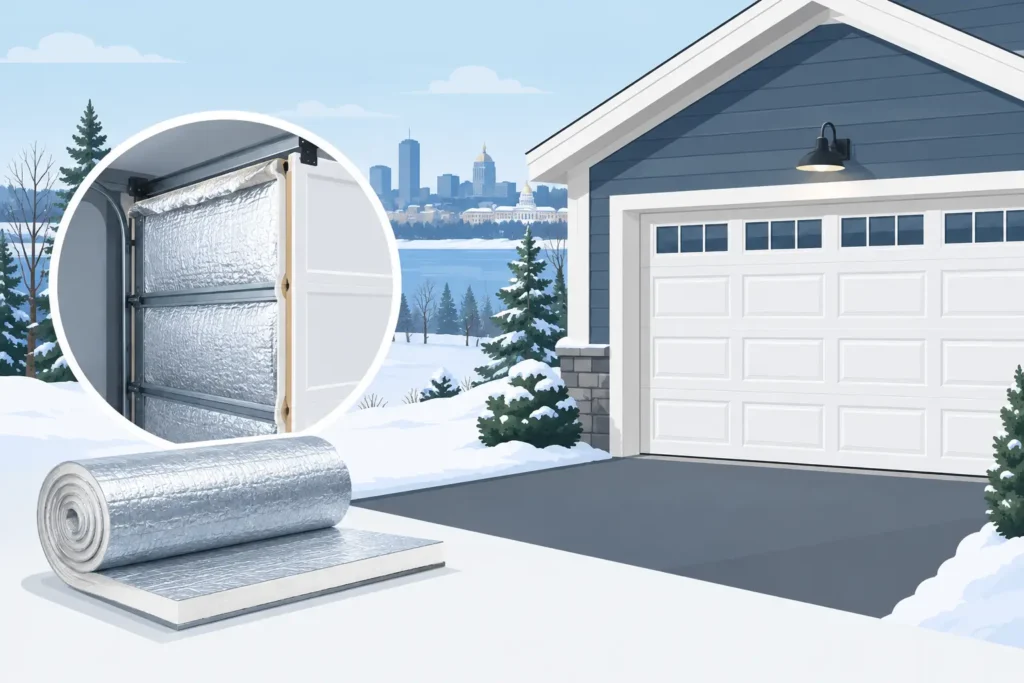
A garage door can be the largest moving wall in your home, and in many Massachusetts houses, it is also one of the least insulated. If your garage feels bitterly cold in winter, overheats in summer, or makes the room above it uncomfortable, this garage door insulation guide can help you decide whether insulation is worth the investment and what type of upgrade makes sense.
Insulation will not turn an unconditioned garage into a finished living space. It can, however, reduce temperature swings, cut down on drafts and outside noise, and make attached rooms more comfortable. The best choice depends on your door’s construction, the way you use the garage, and whether the door and opener are in good working order.
Start With the Garage Door You Have
Before buying an insulation kit, look at the door itself. Most residential garage doors are sectional doors made of steel, aluminum, wood, vinyl, or composite materials. A single-layer steel door has no insulation between the interior and exterior surfaces. It is typically the best candidate for a retrofit kit, but it may also be lighter and more flexible than an insulated replacement door.
Double-layer doors have an exterior steel skin and an insulated core or interior backing. Triple-layer doors usually add a finished interior steel skin over the insulation. If you already have a factory-insulated door, adding more material inside each section may provide limited benefit and can create clearance or balance problems.
Also inspect the door’s condition. Bent panels, loose hinges, worn rollers, damaged weatherstripping, rusted tracks, and frayed cables should be addressed before an insulation project. Insulation cannot correct a door that is noisy, off track, hard to lift, or poorly sealed around the perimeter. In some cases, spending money on repairs and fresh weatherstripping will make a bigger difference than adding insulation alone.
Understand R-Value Without Overthinking It
R-value measures how well a material resists heat flow. A higher number generally means better insulating performance, but the number is only part of the picture. Gaps around the door, thin windows, air leaks at the bottom seal, and an uninsulated garage ceiling can all reduce the real-world benefit.
For a detached garage used primarily for parking and storage, a modest insulation upgrade may be enough to take the edge off cold and heat. For an attached garage beneath or beside living space, a higher R-value door can be a more meaningful comfort upgrade. Homes with a bedroom, home office, or family room above the garage often see the clearest benefit from improving the entire garage envelope.
Do not assume the highest R-value is always the right answer. A premium insulated door may be worthwhile when you are replacing an aging door anyway, but it may not be the most practical choice if your existing door is structurally sound and the garage is rarely used. Honest recommendations should reflect the home, not just the biggest available upgrade.
Common Garage Door Insulation Materials
Most retrofit kits use one of three material types: reflective foil, rigid foam board, or fiberglass batt insulation. Each has a place, but they do not perform the same way.
Reflective foil kits are lightweight and easy to handle. They can help reflect radiant heat and may reduce summer heat gain, especially on doors exposed to direct sun. They usually add less insulation value than foam or fiberglass, so they are best viewed as a light-duty improvement rather than a cold-weather solution.
Rigid foam panels, often made from polystyrene, are a popular option for steel sectional doors. They are relatively lightweight, resist moisture better than fiberglass, and can provide a useful R-value when cut to fit each panel. The fit matters. Panels that are loose, bowed, or poorly secured can rattle when the door operates.
Fiberglass batts can provide solid insulation, but they must be designed for garage-door use and installed with proper retention. Loose fiberglass absorbs moisture, sheds fibers, and can sag over time. It also adds more weight than many homeowners expect. A garage door is carefully balanced, so added weight is never a detail to ignore.
Spray foam is generally not a good do-it-yourself choice for garage doors. It can expand unevenly, add significant weight, make future panel repairs difficult, and interfere with the door’s movement. For most homes, a purpose-made kit or a factory-insulated replacement door is the more dependable route.
A Practical Garage Door Insulation Guide: Retrofit or Replace?
A retrofit kit makes sense when the existing door is in good condition, operates smoothly, and has standard-sized panel sections that can accept insulation. It can be a cost-conscious improvement for homeowners who want less heat loss, lower noise, and better comfort near an attached garage.
Replacement is often the better long-term value when the door has extensive rust, cracked or dented sections, recurring track issues, poor security, or outdated insulation. A new insulated door is built as a complete system. The insulation is contained within the panels, the door is engineered for its finished weight, and the interior typically has a cleaner, more durable appearance.
A replacement can also improve curb appeal and may offer stronger panels, better weather seals, and window options that bring in light without giving up as much efficiency. If you are already facing major panel work or multiple aging components, ask for both repair and replacement options. Comparing the full cost and expected lifespan helps prevent short-term fixes from becoming repeat expenses.
Do Not Skip Weatherstripping and Air Sealing
Insulation slows heat transfer. Weatherstripping blocks moving air. You often need both.
Check the vinyl seal along the bottom of the door, the perimeter seal around the side jambs and header, and the area where the door meets the floor. A bottom seal that is flattened, torn, or hardened can let in cold air, water, leaves, and pests. Gaps along the sides may indicate worn stop molding, shifting framing, or a door that needs adjustment.
If daylight is visible around a closed door, do not simply add thicker seals until the gap disappears. The door may be out of alignment or the track may need service. Forcing a seal against a poorly adjusted door can affect closing performance and strain the opener.
Protect Door Balance and Opener Performance
This is where a simple insulation project can become a service issue. Garage door springs are calibrated to counterbalance the weight of the door. Adding insulation changes that weight. Even a few pounds spread across several sections can make a properly balanced door feel heavier.
After insulation is installed, the door should open and close smoothly without binding, jerking, or excessive strain. A properly balanced door can usually be lifted manually with reasonable effort when the opener is disconnected. If the door slams down, feels unusually heavy, or will not stay partially open, stop using it and have it inspected.
Never adjust torsion springs or extension springs yourself. These components store substantial force and can cause serious injury when handled incorrectly. A qualified technician can assess balance, adjust the system when appropriate, and confirm that the opener’s force settings and safety reversal features still work correctly.
Installation Details That Matter
Measure each garage door section rather than assuming every panel is identical. Many doors have braces, handles, locks, or reinforcing struts that affect available space. Cut insulation carefully so it sits flat without pressing into hinges, rollers, cables, or the track.
Keep insulation clear of moving hardware. The door needs room to bend at each hinge as it travels through the curve of the track. Material that extends into those joints can tear, shift, or interfere with operation.
If the garage has an automatic opener, test the photo-eye sensors and the auto-reverse system after any work. Place a solid object such as a piece of lumber flat on the floor beneath the closing door to verify that the door reverses on contact. If it does not reverse, discontinue use until the system is corrected.
When Professional Help Is the Safer Choice
Call for service before insulating if the door is already shaking, scraping, sagging, making loud grinding sounds, or reversing unexpectedly. The same applies if a cable is loose, a roller has come out of the track, or a spring appears broken. These are mechanical problems, not insulation problems.
Professional guidance is also useful when you are deciding whether an older door is worth upgrading. Patriot Garage Door can evaluate the condition of the full system and explain whether a retrofit, targeted repair, or insulated replacement door offers the best value for your home.
A warmer, quieter garage starts with a door that closes securely, runs safely, and fits the way you use your home. Address the basics first, then choose insulation that improves comfort without compromising the dependable operation your garage door should provide.
Need Help With Your Garage Door?
From broken springs and opener issues to repairs and new installations, Patriot Garage Door provides dependable service when you need it.