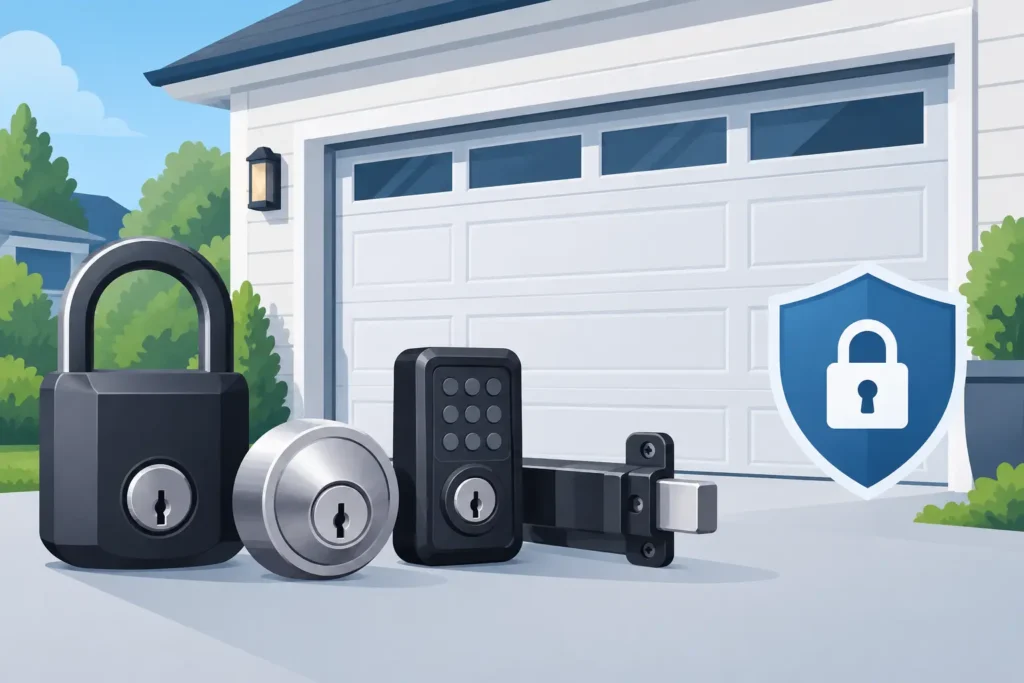
A garage door can be the largest moving entry point in your home, and it often leads straight to the house. That is why the best garage door locks are not necessarily the most expensive models. They are the locks that match your door, your daily routine, and the way your garage is actually used.
For many Massachusetts homeowners, the right answer is not a single lock at all. It is a secure door, a dependable opener, protected emergency-release hardware, and a manual lock used correctly. A lock can add real protection, but it cannot compensate for a damaged bottom section, loose track, failing rollers, or an opener that reverses unexpectedly.
Start With the Way You Use the Garage
Before choosing a lock, decide whether the garage is primarily a vehicle entrance, a storage area, a workshop, or a secondary household entrance. A detached garage that is closed for weeks at a time needs a different solution than an attached garage used every morning.
If you park inside and rely on an automatic opener, convenience matters. A lock that must be manually engaged each night can create a costly problem if someone presses the opener button before releasing it. The opener may strain against the locked door, damage internal gears, bend the lock hardware, or pull the door out of alignment.
For a detached garage that does not use an opener every day, a heavy-duty manual lock may be a practical choice. For an attached garage with frequent traffic, homeowners are often better served by securing the opener system and adding an automatic locking feature designed for powered doors.
Best Garage Door Locks by Door Type
There is no one-size-fits-all garage door lock. The construction and operation of the door should guide the decision.
Interior Slide Locks for Sectional Doors
An interior slide lock is a simple metal bolt mounted on the inside of a sectional garage door. When engaged, the bolt slides into a hole or slot in the vertical track, preventing the door from being lifted. This is one of the most familiar options for standard residential garage doors.
Slide locks are affordable, straightforward, and effective when the garage is not being opened by an automatic opener. They are especially useful for detached garages, seasonal properties, or doors that are manually operated.
The trade-off is user error. A slide lock is only secure when someone remembers to engage it, and it must be released before operating the door. If your door has an opener, consider removing an unused slide lock or clearly labeling it so no one accidentally runs the opener against it.
T-Handle Locks for Older or Manual Garage Doors
T-handle locks are common on older one-piece doors and some manually operated sectional doors. The exterior T-handle turns an interior locking mechanism, often with bars that extend toward both sides of the door.
A quality T-handle lock can provide solid security for a manual garage door, particularly when paired with sound door hardware and a properly fitting door. Look for corrosion-resistant components if the garage is exposed to moisture, road salt, or changing New England weather.
The limitation is that a T-handle system is only as strong as the door panel and its mounting points. A thin, damaged, or deteriorating door can be forced more easily than a well-built insulated steel door with secure tracks and reinforcing hardware.
Deadbolt-Style Locks for Side Entry Doors
Many garage break-ins do not happen through the overhead door. They happen through the side service door, especially when it has a basic knob lock, loose strike plate, or weak frame. If your garage has a walk-through door, a quality deadbolt with a reinforced strike plate can be one of the most worthwhile security upgrades you make.
Choose a deadbolt intended for exterior use, and make sure the strike plate is secured with long screws that reach the wall framing. A strong lock installed in a weak jamb is not a strong security system.
For an attached garage, avoid using a keyed double-cylinder deadbolt on an exit door unless local code and safe emergency egress are fully considered. People need to be able to leave quickly in an emergency.
Automatic Deadbolts and Opener-Integrated Locks
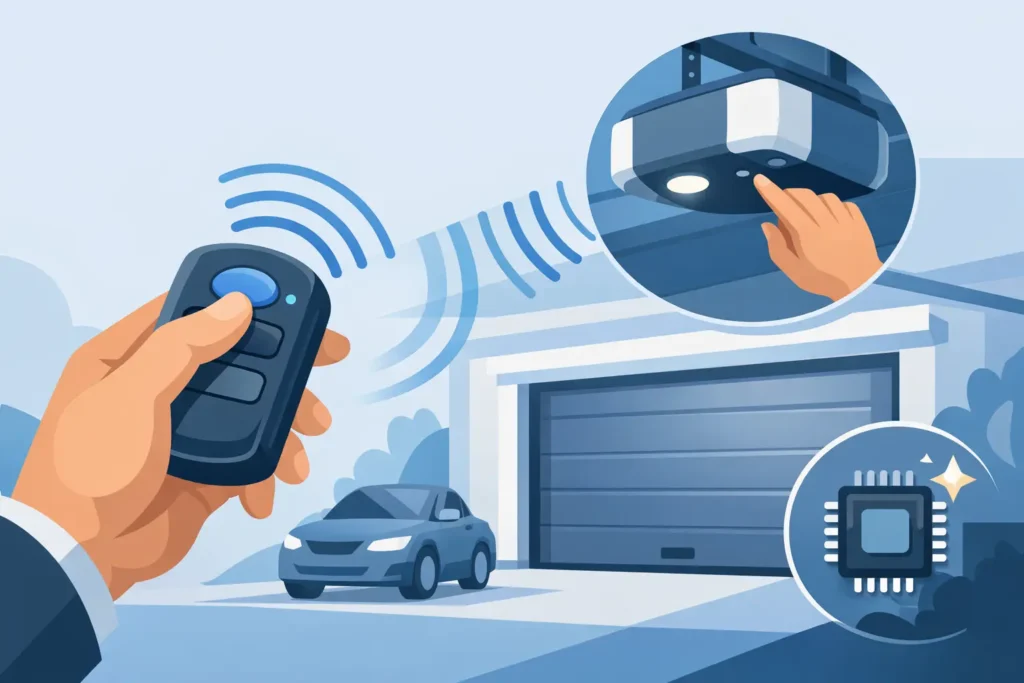
Some newer opener systems include automatic locking features. These devices lock the garage door when it closes and release when the opener activates. For households that use the garage as the primary entrance, this can be a smart balance of security and convenience.
Automatic locks are designed to work with compatible opener systems, so they avoid the biggest risk of manual slide locks: trying to open a door that is still locked. They can also provide peace of mind when you are unsure whether someone remembered to secure the garage before bed.
Compatibility matters here. Not every opener, door, or track arrangement can accept an automatic lock. Professional installation is often worthwhile because the lock must align correctly and work safely with the opener’s travel limits and safety sensors.
What Makes the Best Garage Door Locks Effective?
The best garage door locks do more than add metal to the door. They work with the entire garage door system. A good choice should fit the door’s construction, resist weather and corrosion, operate reliably, and not interfere with normal door movement.
Pay attention to the track and door condition before upgrading locks. A bent vertical track, worn rollers, damaged hinges, or a door that does not close evenly can prevent a lock from aligning properly. Forcing a misaligned lock can make an existing mechanical issue worse.
Also consider visibility. An exterior keyed lock may be convenient, but it creates another component exposed to weather and attempted tampering. Interior locking hardware is less accessible from outside, though it still needs to be used in a way that does not interfere with the opener.
Security is strongest when multiple basic protections work together:
- Keep the overhead door closed when the garage is unattended.
- Use a quality deadbolt on any garage service door.
- Secure windows so valuables and tools are not visible from outside.
- Protect or secure the emergency-release cord when practical without compromising emergency access.
- Use a modern opener with rolling-code technology and app alerts when the garage is part of your daily entry routine.
These measures are not about turning your home into a fortress. They reduce easy opportunities and help you notice problems before they become a larger safety or security concern.
Do Smart Openers Replace a Garage Door Lock?
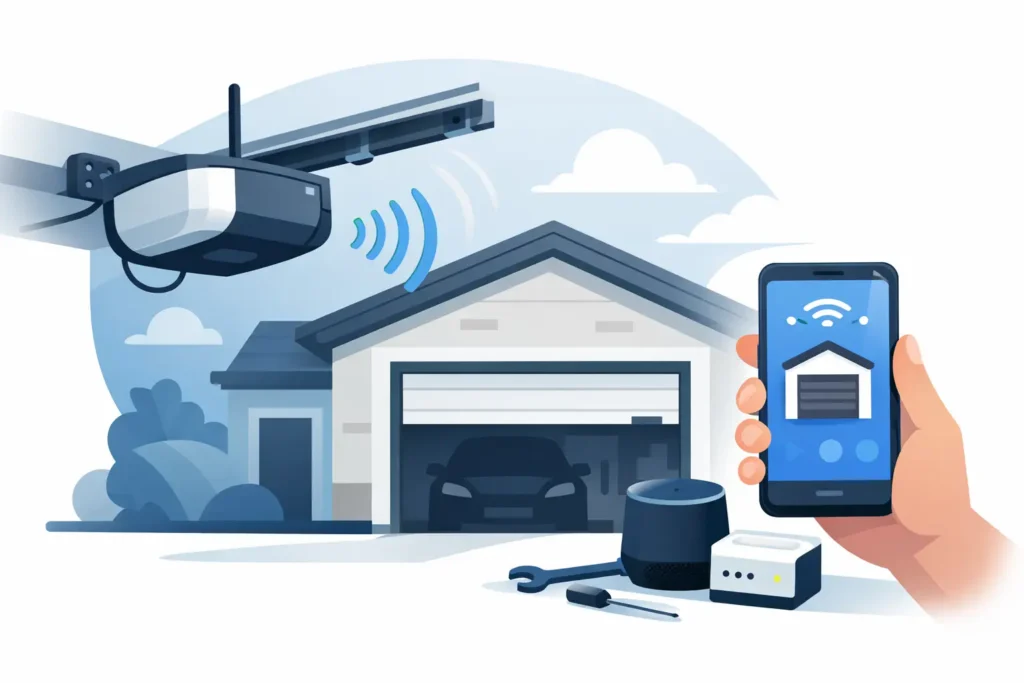
A smart opener does not physically replace a lock in every situation, but it can improve everyday security. App-connected openers can send alerts when the door opens or closes, let you check door status remotely, and allow you to close a door that was left open.
That is valuable for busy households. If you have ever driven away and wondered whether the garage door closed, status alerts can remove the guesswork. Some systems also allow temporary access for family members, delivery needs, or service appointments without handing out a physical remote.
Still, a smart opener depends on power, Wi-Fi, and a properly functioning door. It should be viewed as part of the security plan, not the whole plan. A door that is damaged, poorly balanced, or unreliable needs mechanical attention first.
Avoid These Common Locking Mistakes
The biggest mistake is adding a manual lock to an automatic door without a routine that prevents accidental operation. If more than one person uses the garage, this risk rises quickly. Children, guests, and family members may not know the door is locked.
Another mistake is relying on a lock while overlooking the door itself. A garage door with a broken spring, loose cable, cracked panel, or failing opener is not just inconvenient. It can become unsafe, and it may not close or secure properly.
Do not use a padlock and chain across a garage door track as a regular solution. It can interfere with the door’s movement, create a hazard, and cause damage if the opener is activated. A lock should be designed for the door and installed where it will not compromise safe operation.
Finally, do not disable safety sensors or make adjustments to springs, cables, or opener force settings to accommodate a lock. Those components are under significant tension or control a heavy moving door. If the door will not close, locks do not line up, or the opener is behaving inconsistently, the safer choice is a professional inspection.
When to Call for Garage Door Security Help
A lock upgrade makes the most sense after confirming that the door closes fully, the tracks are secure, the rollers move smoothly, and the opener operates correctly. If the door is noisy, crooked, slow, or difficult to move manually, address that issue before adding security hardware.
Patriot Garage Door can inspect the complete system and explain practical options, whether the solution is a repair, opener upgrade, replacement hardware, or a new door built for better security and daily reliability. You should never have to guess whether a locking change will work safely with your garage door.
The right lock should make your home feel more secure without making the garage harder or less safe to use. Start with a door that works properly, choose hardware suited to your routine, and make security a habit your whole household can follow.
Need Help With Your Garage Door?
From broken springs and opener issues to repairs and new installations, Patriot Garage Door provides dependable service when you need it.