A garage door opener can be working perfectly and still be the wrong fit for your home. The real question in a belt drive versus chain opener decision is not which system is universally better. It is which one matches your door, your garage layout, your budget, and how much sound you are willing to live with every day.
For a detached garage, a dependable chain-drive opener may be all you need. For an attached garage with a bedroom above it, the quieter operation of a belt drive can be worth the additional upfront cost. Understanding the difference helps you make a confident choice without paying for features that do not solve a real problem.
How Belt-Drive and Chain-Drive Openers Work
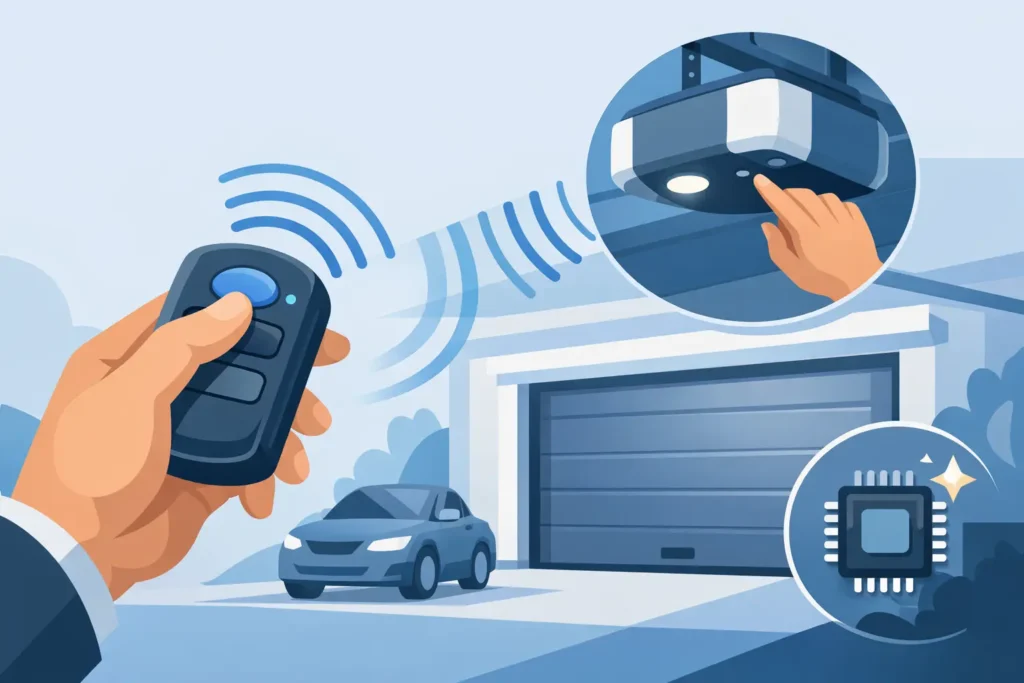
Both systems use a motor to move a trolley along a rail. The trolley is connected to the garage door, allowing the opener to raise and lower it. The difference is in the part that carries the trolley along that rail.
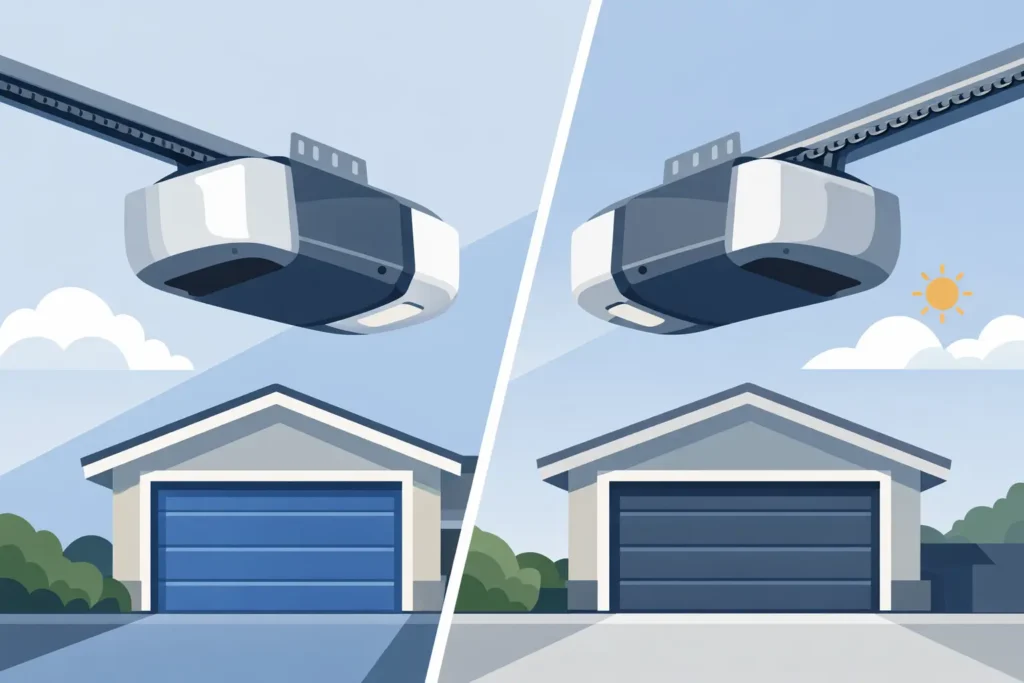
A chain-drive opener uses a metal chain, similar in appearance to a bicycle chain. It is a proven, durable design that has been used in residential garages for decades. When the motor runs, the chain pulls the trolley and moves the door.
A belt-drive opener does the same job with a reinforced rubber belt. These belts are typically made with steel cords or other strong materials inside, so they are not simply soft rubber. They are designed to handle daily use while reducing the metal-on-metal sound associated with a chain.
The drive type affects noise, maintenance needs, and purchase price. It does not, by itself, determine whether an opener has enough lifting ability for a heavy door. The door should be properly balanced by its springs before any opener is expected to move it.
Belt Drive Versus Chain Opener: The Biggest Differences
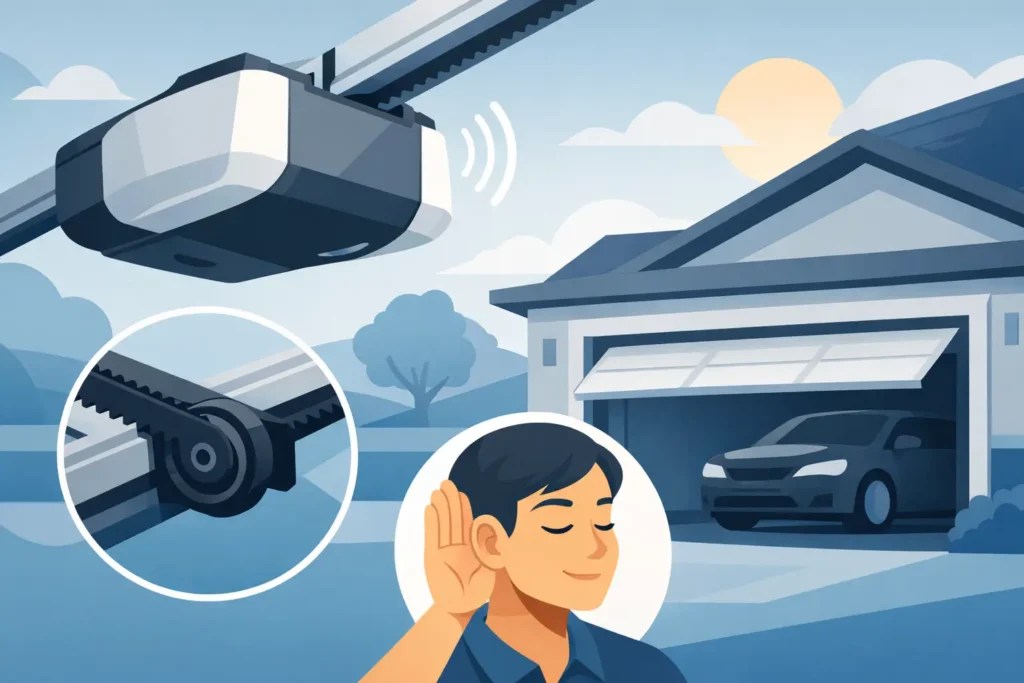
For most homeowners, noise is the deciding factor. A belt-drive opener runs more quietly because the belt creates less vibration and does not produce the same rattling sound as a moving metal chain. You will still hear the door rollers, hinges, and motor, but the overall operation is usually much less disruptive.
That difference matters most when the garage shares a wall with a living room, home office, nursery, or bedroom. It is also valuable when there is finished space directly above the garage. If early departures or late arrivals regularly wake people inside the house, a belt drive is often the better long-term choice.
Chain-drive openers are louder, but that does not make them unreliable or poor quality. A properly installed chain-drive unit is a strong, practical option for many homes. In a detached garage, workshop, or space where noise is not a concern, the sound difference may not justify paying more for a belt drive.
Cost is the other major distinction. Chain-drive openers generally cost less than comparable belt-drive models. That makes them appealing when replacing an older opener on a budget. Belt-drive units usually have a higher initial price, although the difference varies by motor type, smart controls, battery backup, camera features, and installation requirements.
Strength Depends on the Door, Not Just the Drive
It is common to hear that a chain drive is stronger than a belt drive. That is not always true. Modern reinforced belts are built to operate standard residential garage doors, including many insulated steel doors and carriage-style doors.
The more important question is whether the opener is correctly matched to the door’s size, weight, and usage. A large insulated double door, a solid wood door, or a door that opens many times per day may need a higher-capacity opener and a properly reinforced top section. The opener manufacturer’s specifications matter, but so does the condition of the entire garage door system.
A balanced door should stay near its halfway point when disconnected from the opener and moved by hand. If it slams shut, feels unusually heavy, or will not stay open, the issue may be worn springs, cables, or another mechanical problem. Installing a more powerful opener will not safely correct an unbalanced door. It can put extra strain on the motor, rail, and drive system while leaving the underlying problem unresolved.
For heavy residential doors, both belt-drive and chain-drive systems can work well when selected and installed correctly. A garage door technician can assess the door weight, spring balance, track condition, and header support before recommending an opener.
Noise Often Comes From More Than the Opener
Replacing a chain-drive opener with a belt-drive model can make a noticeable difference, but the opener may not be the only source of garage noise. Worn metal rollers, loose hinges, dry bearings, damaged tracks, and a door that is out of balance can all create banging, squealing, or vibration.
If your door has old steel rollers, upgrading to quality nylon rollers may reduce operating noise. Tightening hardware, lubricating the appropriate moving parts, and correcting track or spring issues can also help. A quiet belt-drive opener paired with a neglected door will not be as quiet as it should be.
This is especially relevant for older Massachusetts homes, where garages may have settled over time or where seasonal temperature changes can expose worn components. A professional inspection before installation helps prevent a new opener from being attached to a system that needs repair first.
Maintenance and Reliability Expectations
Chain-drive openers have a reputation for requiring more maintenance because the chain may need periodic inspection and adjustment. Depending on the model, lubrication may also be recommended. A loose or poorly adjusted chain can create extra noise and wear.
Belt-drive openers typically require less routine attention to the drive component. The belt should still be inspected for wear, damage, or improper tension, but it does not have the same metal chain maintenance needs. For homeowners who want quiet operation with minimal upkeep, that is a meaningful advantage.
Neither choice is maintenance-free. The door itself needs attention throughout its service life. Springs, rollers, cables, hinges, sensors, and safety reversal settings all affect dependable operation. Preventative maintenance can catch a small issue before it leaves your vehicle stuck inside the garage or creates a safety concern.
Reliability also comes down to product quality and installation. An opener installed on an improperly supported rail, with misaligned photo-eye sensors, or on a door with failing springs is more likely to develop problems regardless of whether it uses a chain or belt.
When a Chain-Drive Opener Makes Sense
A chain-drive opener remains a smart choice when the garage is detached, noise is not a priority, or controlling the initial cost matters most. It is also a good fit for homeowners who prefer a straightforward, time-tested mechanical design.
It can be a practical choice for a garage that serves primarily as storage, a workshop, or a parking space away from the home’s main living areas. If the door is properly balanced and the opener is matched to the job, a chain drive can deliver years of dependable daily service.
The key is being realistic about its sound. A chain drive will generally be louder than a belt drive, particularly as components age. That may be perfectly acceptable in the right setting.
When a Belt-Drive Opener Is Worth It
A belt-drive opener is usually worth considering for an attached garage, especially when bedrooms or finished rooms sit above or beside it. The quieter operation improves daily comfort without sacrificing the convenience features homeowners expect from a modern opener.
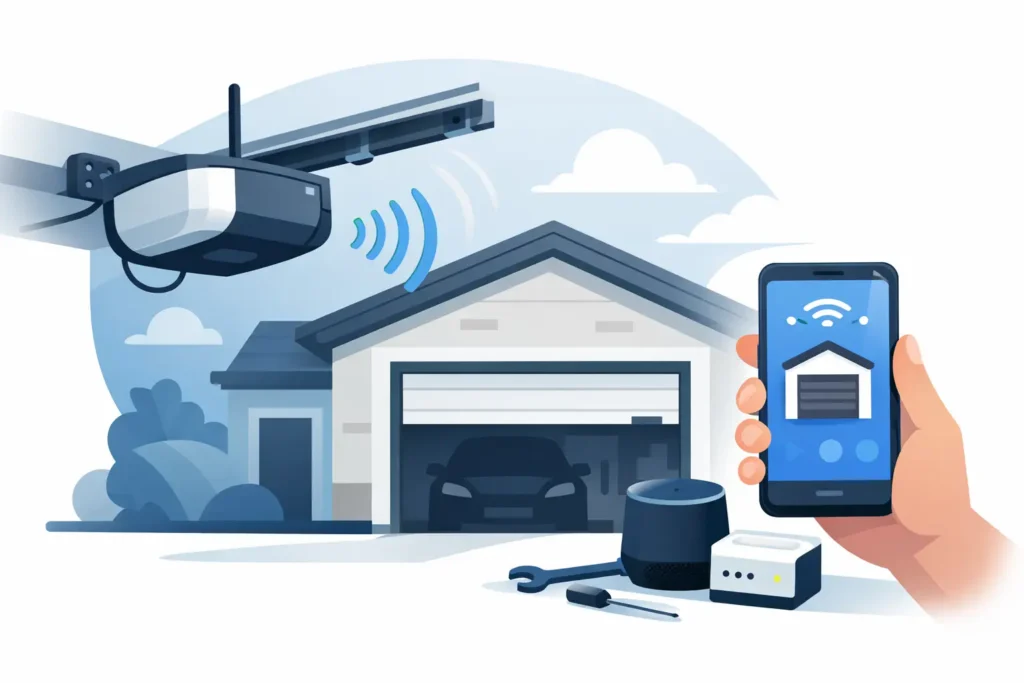
Many belt-drive models are available with Wi-Fi connectivity, smartphone control, battery backup, motion-activated lighting, and integrated cameras. Those features are not exclusive to belt drives, but homeowners replacing an older noisy unit often choose a belt-drive model as part of a broader upgrade.
Battery backup deserves special attention. During a power outage, it can allow you to operate the door without relying on the manual release. That can be helpful during a Massachusetts winter storm, particularly when the garage is your main way in and out of the house.
Do Not Let the Opener Hide a Door Problem
If your current opener is straining, reversing unexpectedly, making grinding sounds, or failing to lift the door, do not assume the opener alone is at fault. Broken springs, damaged rollers, bent tracks, and worn cables can all make an opener appear weak.
Garage door springs are under significant tension and should be handled by a trained technician. Attempting to adjust or replace them without the right tools and experience can cause serious injury or further damage to the door.
An honest assessment should identify whether you need an opener replacement, a repair to the door system, or both. At Patriot Garage Door, the goal is to explain the condition of the system clearly so you can choose a practical repair or replacement option that fits your home.
A quieter garage can be a welcome upgrade, but dependable operation comes first. Choose the drive system that fits your space, then make sure the door it serves is balanced, safe, and ready for the work ahead.
Need Help With Your Garage Door?
From broken springs and opener issues to repairs and new installations, Patriot Garage Door provides dependable service when you need it.