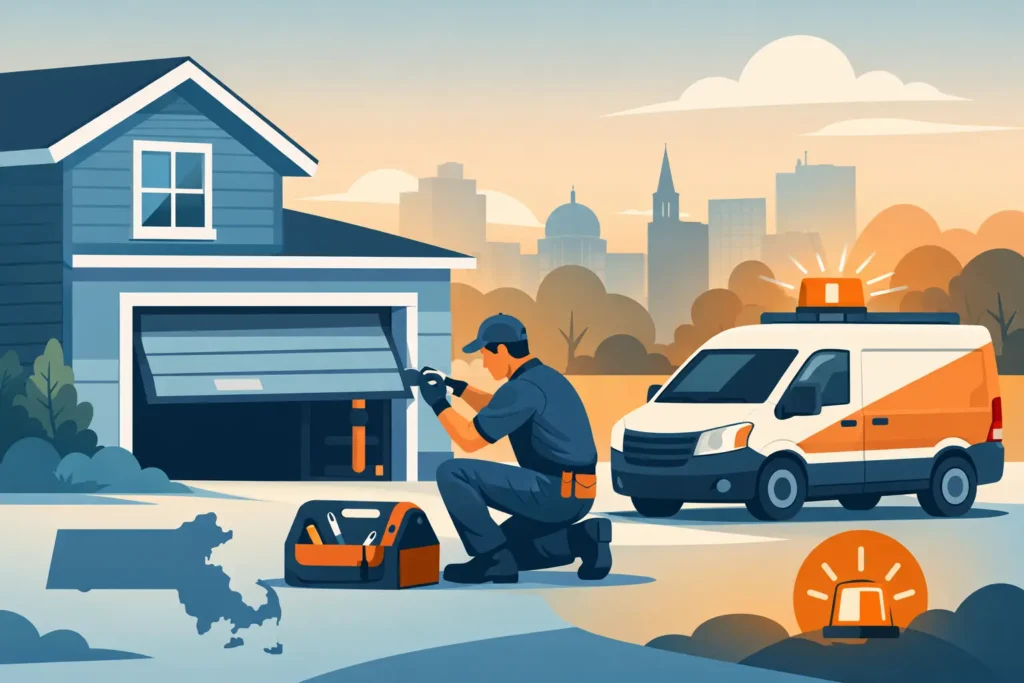
A garage door can fail at the worst possible moment: when you are trying to leave for work, get the kids to school, secure your home for the night, or bring a vehicle in ahead of a Massachusetts storm. Emergency garage door repair Massachusetts homeowners need is not just about getting the door moving again. It is about restoring safe access, protecting the home, and preventing a manageable repair from becoming a larger and more expensive problem.
Garage doors are heavy systems under tension. When a spring breaks, a cable slips, or a door comes off its track, forcing it to operate can put people, vehicles, and the door itself at risk. The right response is calm, practical, and focused on safety first.
When Emergency Garage Door Repair Massachusetts Is Needed
Not every noisy door requires an urgent visit. A door that squeaks but opens and closes normally may be able to wait for a scheduled maintenance appointment. A door that is stuck open, hanging unevenly, or refusing to close securely is different. In those situations, the garage may be exposed to weather, theft, pests, and unsafe access to the home.
Call for prompt professional help when the door will not open and a vehicle is trapped inside, when it will not close and leaves the property unsecured, or when you can see loose cables, a bent track, or a broken spring. A loud bang from the garage is also a common sign of a failed torsion spring. The opener may still hum afterward, but it no longer has the spring support needed to lift the door safely.
A door that is partially off track deserves immediate attention as well. It may look close to normal from a distance, but rollers can bind, cables can unwind, and the door can shift suddenly. Continuing to press the opener button can turn a track repair into damaged panels, broken hardware, or a complete door replacement.
Signs You Should Stop Using the Door
Stop operating the door and arrange service if you notice any of these conditions:
- The door is crooked, sagging, or hanging on one side.
- A cable is loose, frayed, or wrapped around a drum.
- The door has come out of its track or rollers are visibly displaced.
- The opener runs, but the door does not move or only lifts a few inches.
- The door closes and immediately reverses without a clear obstruction.
These are not do-it-yourself problems. Garage door springs and cables carry significant stored energy, even when the door is closed. A well-meaning repair attempt can cause injury or create more damage that could have been avoided with the right tools and training.
What to Do While You Wait for Service
First, keep children, pets, and vehicles away from the door. Do not stand beneath a door that is open but unstable, and do not try to hold it up with lumber, a ladder, or a vehicle. If the door is stuck open and safely supported in its tracks, avoid pulling the emergency release unless a technician tells you to do so. Releasing the opener from a door with a broken spring can allow the full weight of the door to drop.
If the door is closed but the opener will not respond, check the simplest possibilities without disassembling anything. Confirm that the opener has power, the wall control is working, and the photo-eye sensors near the floor are clean and aligned. A box, shovel, or buildup of road salt near the sensor path can prevent a door from closing. If the door still will not operate, stop there.
For a door stuck open, secure the rest of the home as best you can. Close the interior door between the garage and living area, remove valuables from view if it is safe to do so, and avoid leaving the property unattended. If weather is moving in, do not try to force a damaged door down. Water or wind exposure is frustrating, but a falling door is far more serious.
Taking a few photos of the issue can help document what happened and give the technician useful context. Photograph the full door, the tracks, and any visible broken components from a safe distance. Do not climb a ladder to inspect springs or hardware above the door.
Common Failures Behind a Garage Door Emergency
Broken springs are one of the most common causes of a door that suddenly will not open. Springs counterbalance the door’s weight, allowing the opener to guide the door rather than carry the full load. Over time, normal cycles wear the metal down. Cold Massachusetts weather can make an already worn spring more likely to fail, especially when the door is used frequently.
Cables can also fail or slip out of position. This often happens after a spring breaks, but it can also result from worn drums, bent tracks, an obstruction beneath the door, or a door that has become unbalanced. A loose cable is a clear reason to stop using the opener. It can pull the door unevenly and cause it to bind or come off track.
Track damage is another urgent concern. A vehicle backing into the door, a hard impact from stored equipment, loose mounting hardware, or years of vibration can bend or misalign the track. In some cases, a technician can straighten or replace a damaged section. In others, the door panels or rollers may also need attention. The best repair depends on the extent of the damage and whether the door can be returned to safe, balanced operation.
Openers can create emergencies too, though the opener is not always the root cause. A stripped gear, failed motor, damaged trolley, or faulty safety sensor can leave a door stuck. Before replacing an opener, a qualified technician should check the door balance, springs, rollers, and track condition. Installing a stronger opener will not solve a door that is too heavy or mechanically damaged.
Repair or Replacement: Making the Right Call
An emergency does not automatically mean you need a new garage door. Many problems, including broken springs, worn rollers, damaged cables, and opener issues, can be repaired efficiently when the door and panels are otherwise in good condition. Honest service means explaining what failed, why it failed, and what repair will safely restore operation.
Replacement may make more sense when panels are severely crushed, the door has extensive rust or rot, parts are no longer available, or repeated repairs are adding up. Homeowners may also choose replacement when an aging door no longer seals properly, looks worn, or lacks the safety and insulation features they want.
There is a trade-off. Repairing a sound door is often the most cost-conscious choice. Replacing a door can be the better long-term investment when structural damage, age, and recurring service needs make another repair a short-term fix. A clear on-site assessment should give you both options without pressure.
Choosing a Reliable Emergency Garage Door Technician
When the door is stuck, it is easy to choose the first company that answers the phone. Fast response matters, but so do clear communication and workmanship. Look for a licensed and insured local provider that can explain the problem in plain language, identify the parts involved, and provide straightforward pricing before work begins.
Ask whether the technician will inspect the full system, not only the obvious failure. A broken spring, for example, can affect cables, rollers, bearings, and the opener’s operation. A proper repair should address the cause and verify that the door is balanced, aligned, and operating safely afterward.
Patriot Garage Door approaches urgent repairs with that practical standard: assess the system, explain the options, and complete work built to last. For homeowners, that means less guesswork during an already stressful moment and more confidence that the door will operate reliably when the technician leaves.
Preventing the Next Garage Door Emergency
Most garage door emergencies cannot be predicted to the day, but routine maintenance can catch warning signs before a part fails completely. A door that gets louder, shakes during travel, hesitates, or needs repeated opener adjustments is asking for attention. Small changes in performance are often the earliest clues that rollers, springs, cables, or hardware are wearing out.
A professional maintenance visit can include checking balance, lubricating appropriate moving parts, inspecting cables and springs, tightening hardware, testing safety sensors, and confirming the opener’s reversing function. Homeowners can help by keeping the track area clear, watching for damage after winter, and never ignoring a door that has started moving unevenly.
When a garage door becomes unsafe or leaves your home exposed, do not force it and do not wait for the problem to worsen. Protect the area, get a qualified technician involved, and give the repair the careful attention a heavy moving door deserves.
Need Help With Your Garage Door?
From broken springs and opener issues to repairs and new installations, Patriot Garage Door provides dependable service when you need it.