
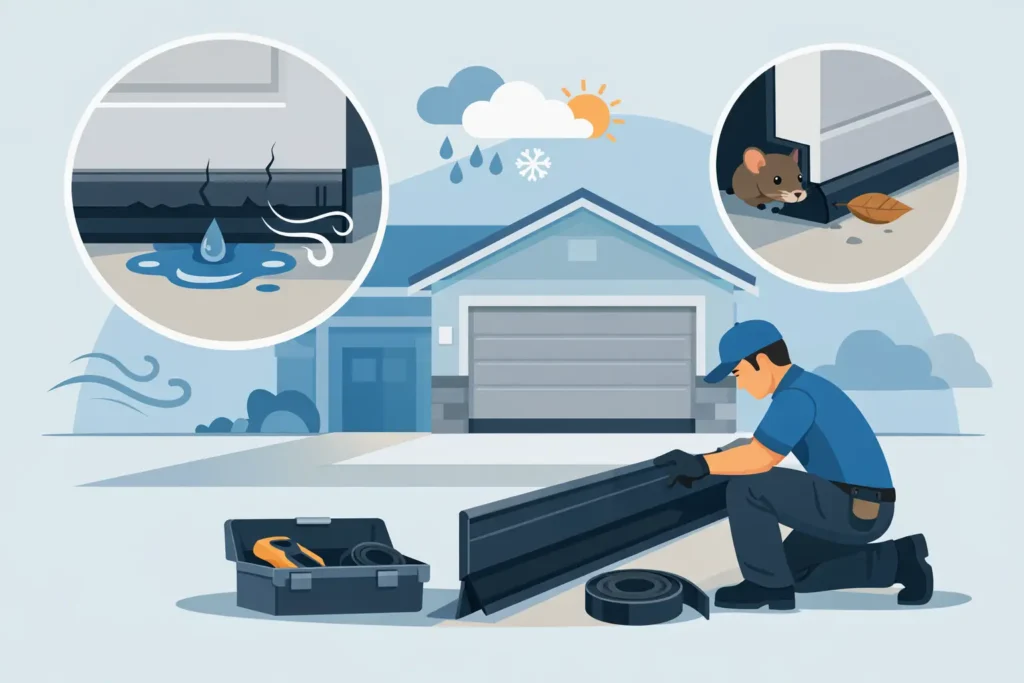
A thin line of daylight under a closed garage door may not look urgent, but it can lead to wet floors, cold drafts, insect activity, and higher energy use. Garage door weather seal replacement is a straightforward way to protect the space where many Massachusetts homeowners store tools, vehicles, seasonal items, and access points to the house.
The right repair depends on where the gap is, the type of door you have, and whether the door is closing evenly. A worn bottom seal is common, but it is not always the only problem. Sometimes the real issue is an uneven floor, a bent track, damaged rollers, or a door that needs adjustment. Identifying the cause before replacing parts helps avoid paying for a fix that does not last.
When Garage Door Weather Seal Replacement Is Needed
Weather seals do more than keep out a little rain. They create a flexible barrier around the bottom and sides of the garage door, helping block wind-driven water, leaves, road grit, pests, and outside air. Over time, rubber and vinyl can flatten, crack, become brittle, or pull out of the retaining track.
Look closely at the bottom of the door while it is fully closed. If you can see daylight, feel a draft, or notice water entering after a storm, the seal may no longer be doing its job. A seal that is torn in one area can also let mice and insects into the garage, especially when temperatures drop.
Other signs include a hard, flattened seal that does not touch the floor evenly, black streaks or moisture along the threshold, and a garage that feels noticeably colder than it used to. If the door closes on the seal but leaves gaps near one corner, do not assume a thicker seal is the answer. The door itself may be out of level or the concrete floor may slope.
Bottom seal problems versus door adjustment problems
A bottom seal should compress slightly against the floor when the door closes. It should not be crushed so tightly that the opener strains, and it should not barely touch the concrete. When the seal is worn evenly across the width of the door, replacement is usually the logical next step.
When one side has a gap and the other side presses down hard, the situation needs a closer inspection. Loose or damaged hardware, worn rollers, cable issues, track alignment, or an improperly set opener limit can affect how the door meets the floor. These are not conditions to correct by adjusting spring tension without training. Garage door springs and cables are under significant force and should be handled by a qualified technician.
The Main Types of Garage Door Seals
Not every garage door uses the same weatherstripping. Matching the replacement seal to the door and retainer channel matters as much as choosing a durable material.
The bottom seal is the long strip attached to the lower edge of the door. Many residential doors use a T-style or bead-style seal that slides into an aluminum retainer. Others use a bulb-shaped seal, which compresses against the floor and can work well where the concrete is slightly uneven. Some older doors use a flat strip secured with fasteners instead of a slide-in channel.
Threshold seals are installed directly on the garage floor just inside or outside the door opening. They can help direct surface water away and close small gaps caused by uneven concrete. A threshold is useful in the right setting, particularly when rainwater enters beneath the door, but it is not a substitute for repairing a failing door seal or correcting a door that is not closing properly.
Side and top weatherstripping attaches to the door frame rather than the moving door. This flexible vinyl trim closes the narrow gaps along both sides and across the header. If you see daylight around the perimeter when the door is closed, frame weatherstripping may be worn, bent, or missing.
For most homes, the best result comes from looking at the entire perimeter. Replacing only the bottom seal may solve the immediate gap, but damaged side or top trim can still allow drafts, rain, and pests inside.
What to Check Before Replacing the Seal
Before buying materials or scheduling service, take a few minutes to inspect the door in daylight. Close it completely and look from inside the garage. Check the bottom corners, the center of the door, and the sides near the tracks. Then inspect the exterior trim for cracks, loose fasteners, or sections that no longer rest against the door.
Also pay attention to how the door operates. A healthy garage door should move smoothly without jerking, scraping, or unusually loud noise. If it stops short of the floor, reverses unexpectedly, or appears crooked as it travels, a seal replacement alone will not address the underlying issue.
Water patterns offer useful clues. Puddles directly beneath the door often point to a bottom seal or threshold concern. Water coming in at one corner may be caused by a sloped driveway, damaged frame trim, or poor drainage nearby. In Massachusetts, repeated freeze-thaw cycles can make small floor cracks and uneven areas more noticeable over time.
Can You Replace a Garage Door Weather Seal Yourself?
For a standard bottom seal on a door that is operating correctly, a careful homeowner can often complete the work. The door should remain fully closed and disconnected from the opener only when appropriate for the installation method. Measure the existing seal and retainer carefully, since similar-looking seal profiles are not always interchangeable.
The old seal may slide out of the retainer after the ends are cleared. Dirt, rust, and sharp edges inside the channel can make the job more difficult. Cleaning the retainer first and using a manufacturer-approved lubricant or a mild soapy solution can help the new material slide through without tearing.
The trade-off is that DIY replacement can become frustrating when the retainer is bent, the seal will not feed evenly, or the door has a floor gap that a new seal does not solve. Cutting a seal too short, using the wrong profile, or forcing it into a damaged channel can create a poor fit and leave the same draft you started with.
Professional service makes more sense when the door is heavy, the opening is unusually wide, the door sits unevenly, or the weatherstrip issue appears alongside noisy operation, damaged tracks, cables, rollers, or opener problems. A technician can identify whether the seal is the only repair needed and recommend the most practical option without pushing an unnecessary door replacement.
Why a Good Seal Matters Through a Massachusetts Winter
An attached garage does not need to be heated to benefit from a weather-tight door. Reducing cold air infiltration can make rooms above or next to the garage more comfortable and may ease the burden on nearby heating systems. It also helps protect stored paint, tools, bicycles, sporting equipment, and other belongings from moisture and temperature swings.
A properly fitted seal helps during spring and summer as well. It limits wind-blown debris, keeps out many crawling pests, and reduces the amount of rainwater that reaches the garage floor. If your garage is used as a workshop, storage area, or daily entry point, those small improvements make the space more usable year-round.
There is a practical limit, however. Weatherstripping will not fix flooding caused by a poorly graded driveway or a drain problem, and it will not insulate an uninsulated garage door to the same level as a fully insulated model. It is one important part of protecting the opening, not a cure for every comfort or water issue.
Get the Fit Right the First Time
A garage door should close securely, operate safely, and keep the weather outside where it belongs. If a new seal is all your door needs, that is a worthwhile repair. If the gap points to a larger alignment or hardware problem, addressing it early can prevent extra wear on the opener and other moving parts.
Patriot Garage Door provides clear, honest evaluations for homeowners who want dependable answers about their garage door system. A proper inspection can confirm the right weather seal, identify hidden issues, and help keep a small gap from becoming a larger repair when the next storm arrives.
Need Help With Your Garage Door?
From broken springs and opener issues to repairs and new installations, Patriot Garage Door provides dependable service when you need it.