A garage door that rattles the bedroom floor at 6 a.m. can turn a simple trip to work into a household disruption. A quiet belt drive garage door opener is designed to reduce that vibration and operating noise, making it a strong option for homes with attached garages, living spaces above the garage, or family members on different schedules.
It is not a magic fix for every noisy door. A worn spring, loose track, damaged roller, or failing hinge can make any opener sound worse than it should. But when the door itself is in good condition, a belt drive opener delivers noticeably smoother, quieter operation than many older chain-drive models.
What Makes a Belt Drive Opener Quieter?
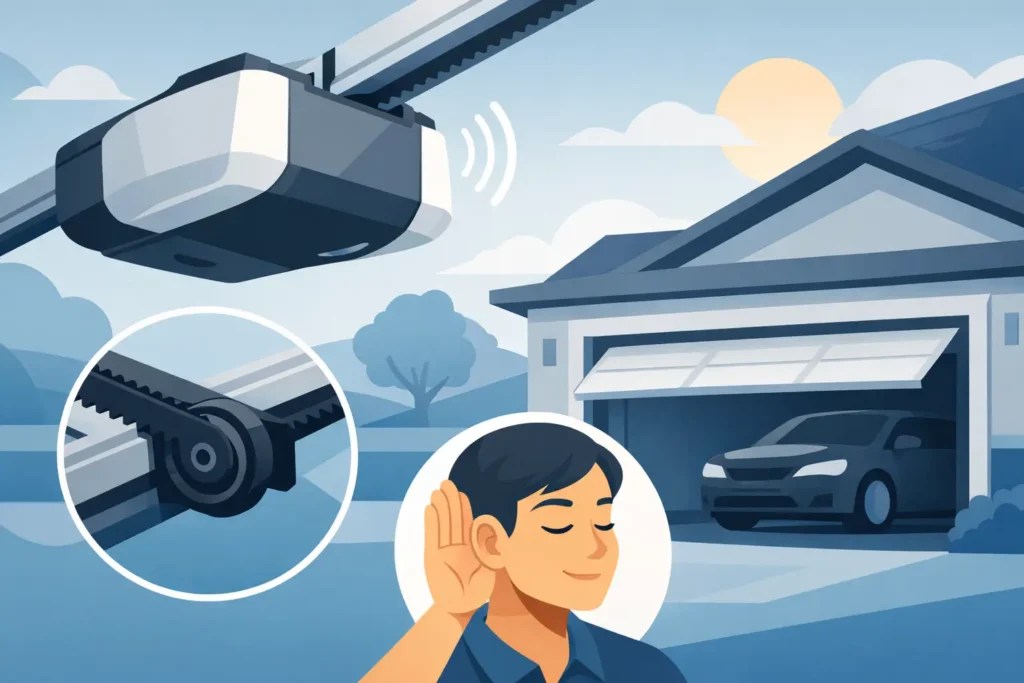
The difference comes down to the part that moves the trolley along the opener rail. A chain-drive opener uses a metal chain, much like a bicycle chain. It is durable and dependable, but metal-on-metal movement creates more sound and vibration. A belt-drive opener uses a reinforced rubber belt, often strengthened with steel cords or fiberglass materials for long-term durability.
That belt absorbs much of the vibration created as the opener lifts and lowers the door. Instead of the familiar clatter and rattle of an older chain system, homeowners usually hear a lower, more controlled hum.
The improvement is most noticeable when the garage shares a wall, floor, or ceiling with living space. In a home with a bedroom over the garage, the difference can be significant. It can also be helpful for early commuters, shift workers, young children, and anyone who uses the garage as the main entrance to the home.
Quiet operation also depends on the opener motor and the condition of the door system. Many current belt-drive openers use DC motors, which tend to start and stop more gently than older AC motors. Soft-start and soft-stop features further reduce the jolt that occurs when a door begins moving or reaches its fully open or closed position.
A Quiet Belt Drive Garage Door Opener Is Not Just About Sound
Less noise is the main reason many homeowners choose a belt drive model, but the practical benefits extend beyond a quieter garage. Reduced vibration can make the entire system feel smoother during operation. That can be especially reassuring with a heavy insulated door, a two-car door, or a door installed near finished living areas.
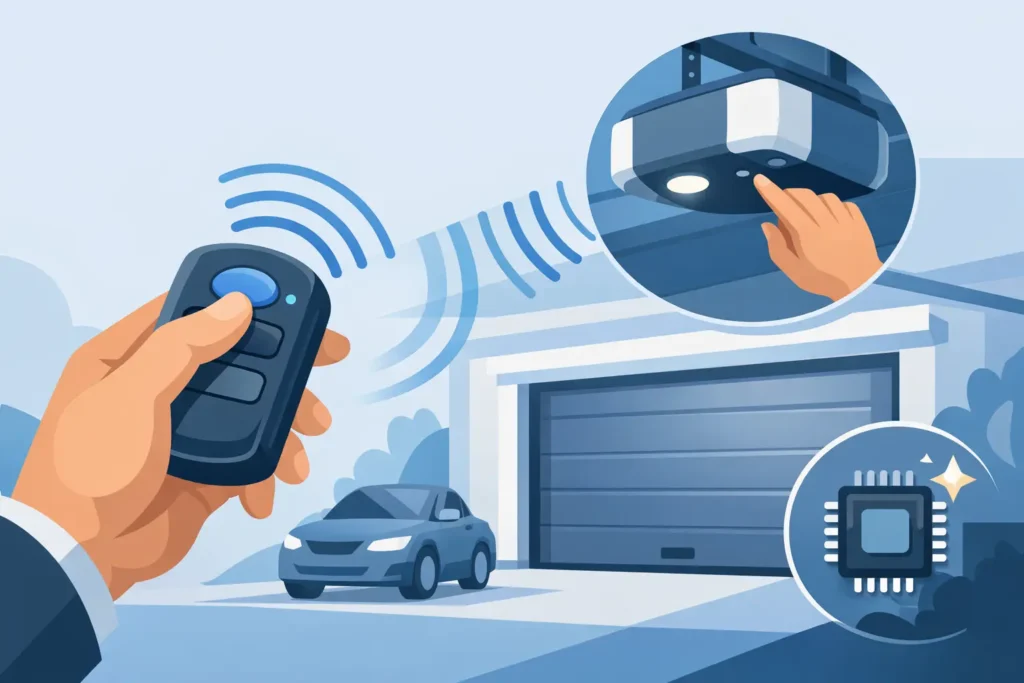
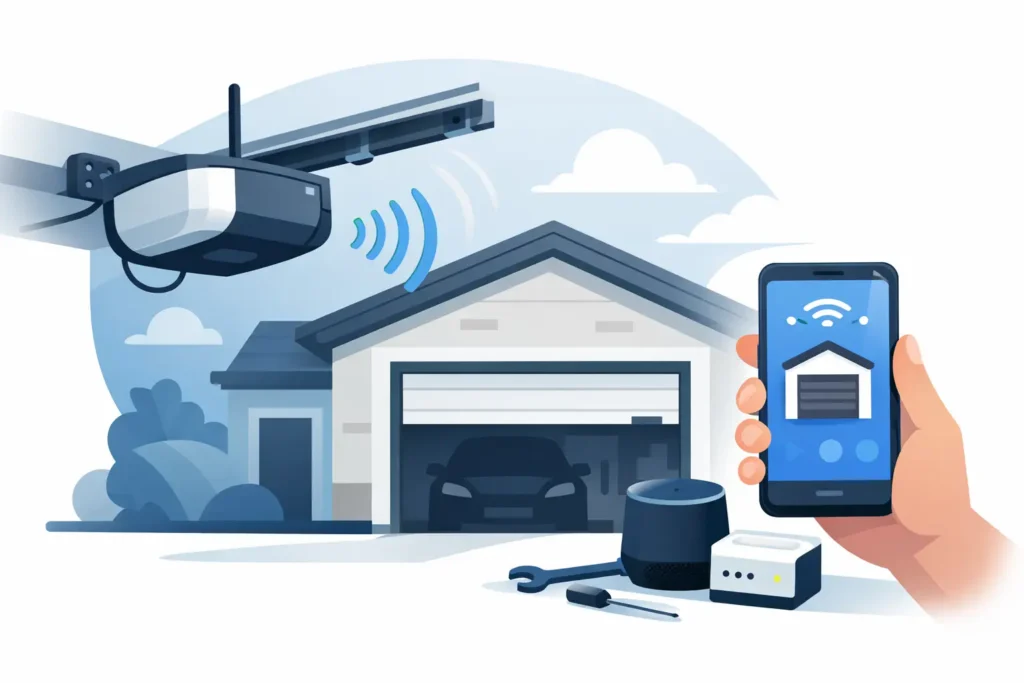
Most belt-drive openers are available with the convenience features homeowners now expect. Depending on the model, that may include battery backup, smartphone controls, keypad entry, motion-detection lighting, automatic closing settings, and real-time alerts when the door is opened or left open.
Battery backup deserves special attention in Massachusetts. A power outage during a winter storm is inconvenient enough without losing your primary way in and out of the house. An opener with battery backup allows the door to operate for a limited number of cycles when household power is unavailable. It does not replace the manual emergency release, but it provides useful everyday access when conditions are difficult.
Smart controls are another worthwhile consideration, particularly for homeowners who cannot always remember whether they closed the garage door. App-enabled openers can confirm the door’s status from your phone and send alerts when it is used. The technology is convenient, but it should be set up carefully with secure account credentials and paired with a properly operating safety system.
When a Belt Drive Is the Right Choice
A belt drive opener is often the best fit when quiet operation is a priority. That includes homes with bedrooms above the garage, garages below family rooms, townhomes with shared walls, and properties where the garage door is used several times a day.
It is also a practical upgrade when replacing an opener that is approaching the end of its life. If the existing unit is loud, inconsistent, slow to respond, or lacks modern safety features, replacing it before it fails completely can prevent an inconvenient lockout. Homeowners often wait until the door will not move at all, but an opener that strains, reverses unexpectedly, or makes new grinding sounds deserves professional attention sooner.
A belt drive is not always the only sensible answer. Chain-drive openers remain a reliable option for detached garages, workshops, and locations where operating noise is not a concern. They are often less expensive upfront and can be a good match for a homeowner focused on a straightforward, durable installation.
The right choice also depends on the door itself. Opener horsepower, or the equivalent lifting capability in newer DC motor models, should match the door’s size and weight. A properly balanced garage door should be easy for the opener to guide, because the springs carry most of the door’s weight. If a door is heavy due to broken or worn springs, installing a stronger opener is not the fix. It can place extra stress on the new equipment and create a safety concern.
Do Not Blame the Opener for Every Garage Door Noise
A new belt drive opener can make an old system quieter, but it cannot correct mechanical problems elsewhere in the door. If the door squeals, scrapes, bangs, shakes, or moves unevenly, the source may be rollers, hinges, tracks, cables, springs, or hardware that has loosened over time.
For example, worn metal rollers can create substantial noise as they travel through the tracks. Replacing them with quality nylon rollers can improve both sound and movement. Loose nuts and bolts may cause vibration, while dry hinges and bearings can squeak during every cycle. Bent tracks or damaged rollers may cause a door to bind, forcing the opener to work harder than it should.
Springs and cables require special care. These components are under high tension and should not be adjusted by a homeowner. A door that feels unusually heavy, opens only partway, slams shut, or will not stay open may have a spring problem. Continuing to run the opener under those conditions can damage the opener and put people or property at risk.
Before installing a new opener, a qualified technician should check the door balance, spring condition, rollers, tracks, safety sensors, and travel limits. This helps ensure the new unit is solving the right problem rather than covering up a larger one.
What to Look for Before You Buy
Start with the layout of your home and how you use the garage. If noise travels into a bedroom or living space, a belt drive is usually worth the added cost. If the garage is detached and used mainly for storage, the quieter operation may be less important than budget and basic reliability.
Then consider the door’s weight, insulation, and size. A standard single door has different needs than a wide, insulated double door or a custom wood-look door. The opener should be selected for the door, not simply by choosing the highest advertised power rating.
Safety features should be non-negotiable. A modern residential opener needs properly aligned photo-eye sensors near the bottom of the tracks, an auto-reverse function, and a wall control that is installed out of a young child’s reach. Test the safety reversal system regularly, and keep the sensor lenses clean and clear of stored items, snow, or cobwebs.
Installation quality matters as much as the opener model. The rail must be properly supported, the opener must be correctly mounted, and the travel and force settings must be adjusted to the door. An improperly installed unit may be noisy, unreliable, or unsafe regardless of whether it uses a belt or chain.
Keep Your New Opener Operating Quietly
Once a quiet opener is installed, a little attention helps preserve its performance. Listen for changes rather than waiting for a complete failure. New squealing, grinding, popping, or shaking is usually a reason to schedule service before a small worn part creates a larger repair.
Homeowners can keep the sensor area clean and visually check for loose hardware or damaged weatherstripping. Avoid applying heavy grease to the opener rail or tracks unless the manufacturer specifically calls for it. Garage doors need the correct lubricant in the correct places, and too much product can collect dirt and make movement worse.
A professional preventative maintenance visit can identify worn rollers, weak springs, loose brackets, and balance issues early. That is particularly valuable for doors that are used multiple times every day or exposed to changing New England temperatures.
A quiet garage should still be a safe, reliable garage. If your door has become loud, jerky, or difficult to operate, Patriot Garage Door can assess the complete system, explain the honest options, and help you decide whether a belt-drive opener, a targeted repair, or routine maintenance makes the most sense for your home.
Need Help With Your Garage Door?
From broken springs and opener issues to repairs and new installations, Patriot Garage Door provides dependable service when you need it.